Category: Obadele Kambon Lectures

Category for the exclusive lectures by Ɔbenfo (Professor) Ọbádélé Bakari Kambon, PhD. “Ɔbenfo” Ọbádélé Bakari Kambon, Nana Kwame Pɛbi Datɛ I, helps Black people repatriate and get Ghanaian citizenship at RepatriateToGhana.com. He is a world-renowned master linguist, multi-award-winning scholar and the architect of Abibitumi the oldest and largest Black social education network on the planet. He completed his PhD in Linguistics at the University of Ghana in 2012, winning the prestigious Vice-Chancellor’s award for the Best PhD Thesis in the Humanities. He also won the 2016 and 2024 Provost’s Publications Awards for best published work in the UG College of Humanities. In 2019 he was the recipient of the [Nana] Marcus Mosiah Garvey Foundation award for excellence in Afrikan Studies and Education. Ɔbenfo Ọbádélé Kambon was awarded the 2020/2021 University of Lagos (UNILAG) Lagos Area Cluster Centre (LACC) Fellowship where he contributed significantly to the work of “reconfiguring” Afrikan Studies. In 2025, he was awarded the Kwame Nkrumah Award for Pan-African Leadership by the Pan-African Leadership Institute (PALI). He is an Associate Professor and served as Head of the Language, Literature and Drama Section of the Institute of African Studies at the University of Ghana and also served as Editor-in-Chief of the Ghana Journal of Linguistics (2016-2023). He served as Secretary of the African Studies Association of Africa from 2015-2020. He also played an instrumental role in 34 Abibifo ‘Black People’ of the Diaspora receiving Ghanaian citizenship in 2016 and many more receiving citizenship in 2019, 2022, and 2024. Having contributed to the Government of Ghana’s official Diaspora Engagement Policy, he now assists others interested in repatriation via RepatriateToGhana.com‘s Decade of Our Repatriation (DOOR Initiative), which has been endorsed by the Government of Ghana (Diaspora Affairs, Office of the President and Ghana Tourism Development Company). His multidisciplinary research interests include Serial Verb Construction Nominalization, Historical Linguistics, sbAyt nt Kmt(yw) ‘Studies of Black People’, & Abibifahodie ‘Black Liberation’.

  • Why Decolonization Is Not Enough — And What Afrikan People Must Build Instead

    Why Decolonization Is Not Enough — And What Afrikan People Must Build Instead

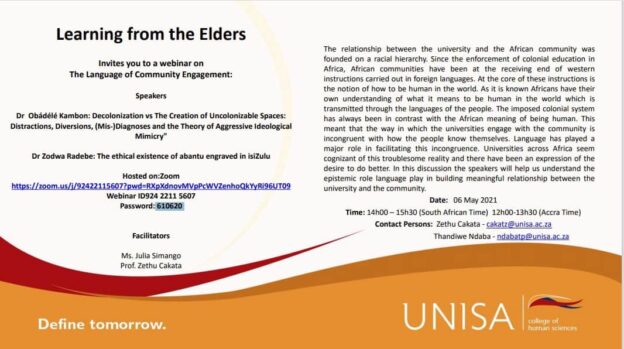
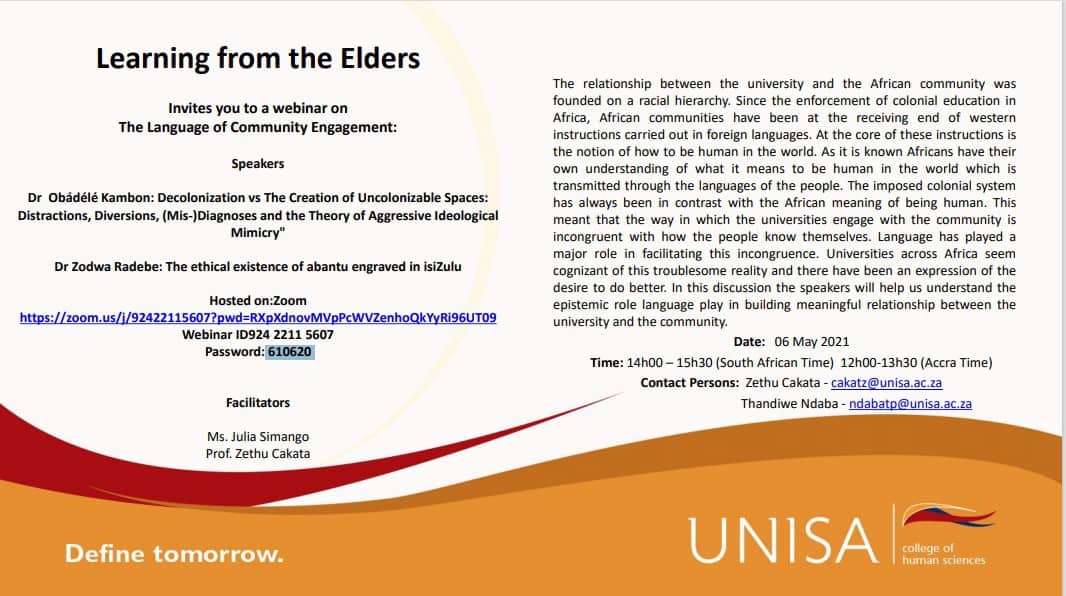
    uncolonizable spaces for Afrikan liberation

    The creation of uncolonizable spaces for Afrikan liberation is not a metaphor — it is a mandate. Colonial education was never designed to free us. Furthermore, it was engineered to replace our understanding of what it means to be human with a foreign one. As a result, the call to “decolonize” institutions built on racial hierarchy often becomes a distraction. Most importantly, it keeps Afrikan people reforming systems that were never ours to begin with.

    Ɔbenfo Ọbádélé Bakari Kambon — Pan-Afrikan linguist, scholar, and architect of Abibitumi — confronts this contradiction with surgical precision. He identifies how western academic institutions weaponize Afrikan languages, cultures, and concepts against Afrikan people themselves. This is what he terms Aggressive Ideological Mimicry. In addition, he exposes how misdiagnoses of our condition lead communities toward reforms instead of revolution. His analysis is not theoretical comfort — it is a call to decisive, grounded action.

    Building Uncolonizable Spaces for Afrikan Liberation Beyond the Colonial University

    The colonial university does not exist to serve Afrikan communities. However, many of our brightest minds spend lifetimes seeking validation within its walls. Ɔbenfo Kambon challenges this directly. He argues that true Abibifahodie — Black Liberation — requires us to build spaces the colonial system cannot penetrate, dilute, or redirect. These are not simply physical spaces. Furthermore, they are ideological, linguistic, and spiritual foundations rooted in Afrikan thought, Afrikan languages, and Afrikan humanity. Ma’at is not a concept we borrow — it is a framework we live.

    This lecture is essential for every Afrikan scholar, student, parent, and community builder ready to move beyond symbolic resistance. The analysis is sharp, the evidence is clear, and the path forward is unapologetic. Abibitumi exists precisely to make resources like this accessible to Afrikan people worldwide. Do not miss this opportunity to deepen your understanding and sharpen your tools for liberation. Watch the full lecture and own it for your continued study today.

    Watch / Get it here: Decolonization vs The Creation of Uncolonizable Spaces — $20.00

  • Ma’at vs. Egalitarianism: What Ayi Kwei Armah Got Wrong About Kmt

    Ma’at vs. Egalitarianism: What Ayi Kwei Armah Got Wrong About Kmt

    Ma'at vs egalitarianism

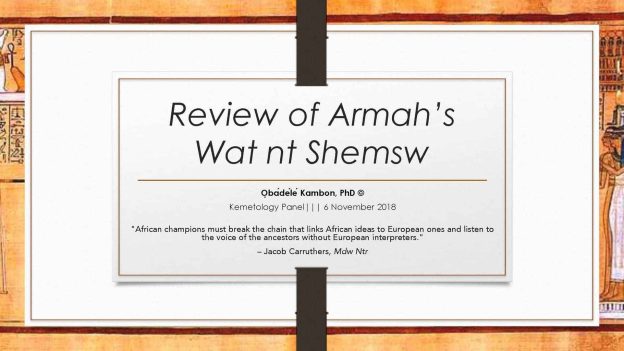
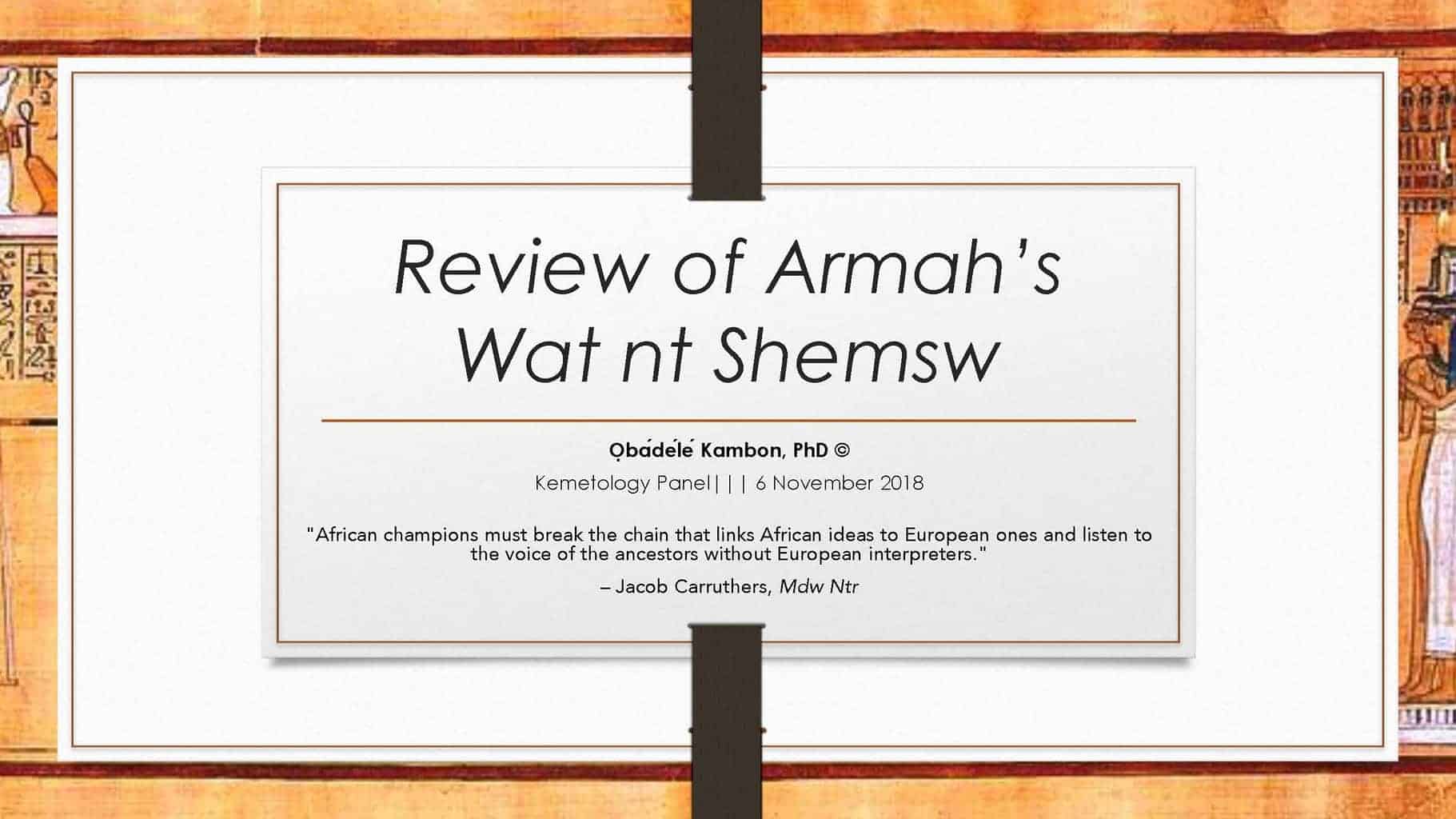
    The debate around Ma’at vs egalitarianism strikes at the very heart of how we understand our Afrikan ancestral civilization. Many scholars accept distorted frameworks without question. However, Ɔbenfo Ọbádélé Bakari Kambon refuses that surrender. In this powerful lecture, he delivers a rigorous, unflinching critique of Ataa Ayi Kwei Armah’s Wat Nt Shemsw: The Way of Companions. Furthermore, he exposes how the text misrepresents the culture, myths, and history of classical Kmt — the Land of Black People.

    Ataa Armah’s work follows a deeply flawed Egyptological convention. It artificially splits Kmt’s continuous historical flow into so-called pre-dynastic and dynastic periods. As a result, it frames these periods as diametric opposites. The former receives praise as “egalitarian” and positive. The latter — characterized as monarchy — is cast as its corrupt opposite. Most importantly, Ɔbenfo Kambon demonstrates that this framing carries no evidentiary support. It distorts the lived reality of the Kmtyw people entirely.

    Why the Ma’at vs Egalitarianism Distinction Matters for Abibifahodie

    This is not a small academic disagreement. Distorting the ethical and spiritual principles of our ancestors has real consequences. Replacing Ma’at — the divine, ordered principle of truth, justice, and cosmic balance — with Western egalitarianism misrepresents what the Kmtyw actually built and believed. In addition, it smuggles foreign ideological frameworks into Afrikan thought under the cover of liberation rhetoric. Ɔbenfo Kambon makes clear that Abibifahodie demands we hold our ancestral record with precision and integrity.

    This lecture is essential viewing for every serious student of Afrikan history, spirituality, and liberation philosophy. Ɔbenfo Ọbádélé Kambon equips us with the analytical tools to defend our ancestral truth against distortion — whether intentional or not. Therefore, we must study deeply, critique boldly, and build our understanding on solid Afrikan ground. Do not miss this critical contribution to Pan-Afrikan scholarship. Watch and get it here: AI Maat vs Egalitarianism — Abibitumi.com.

  • Afrikan Thought vs. European Ideology: What Every Black Scholar Must Know

    Afrikan Thought vs. European Ideology: What Every Black Scholar Must Know

    Afrikan thought and European ideology

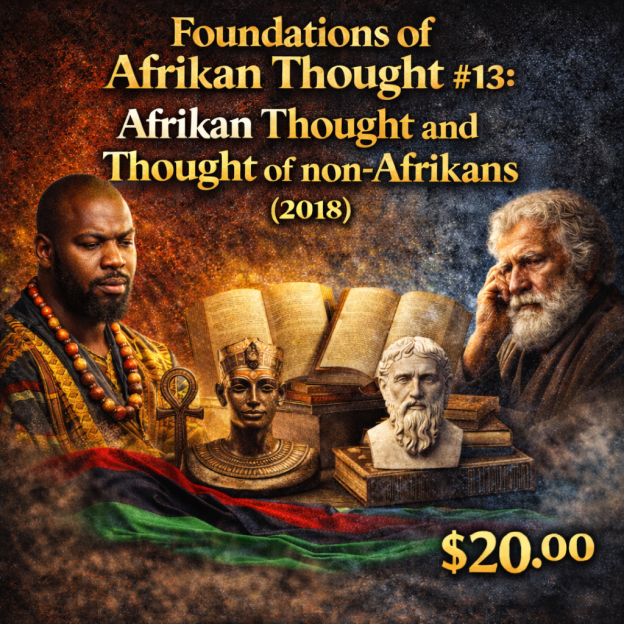
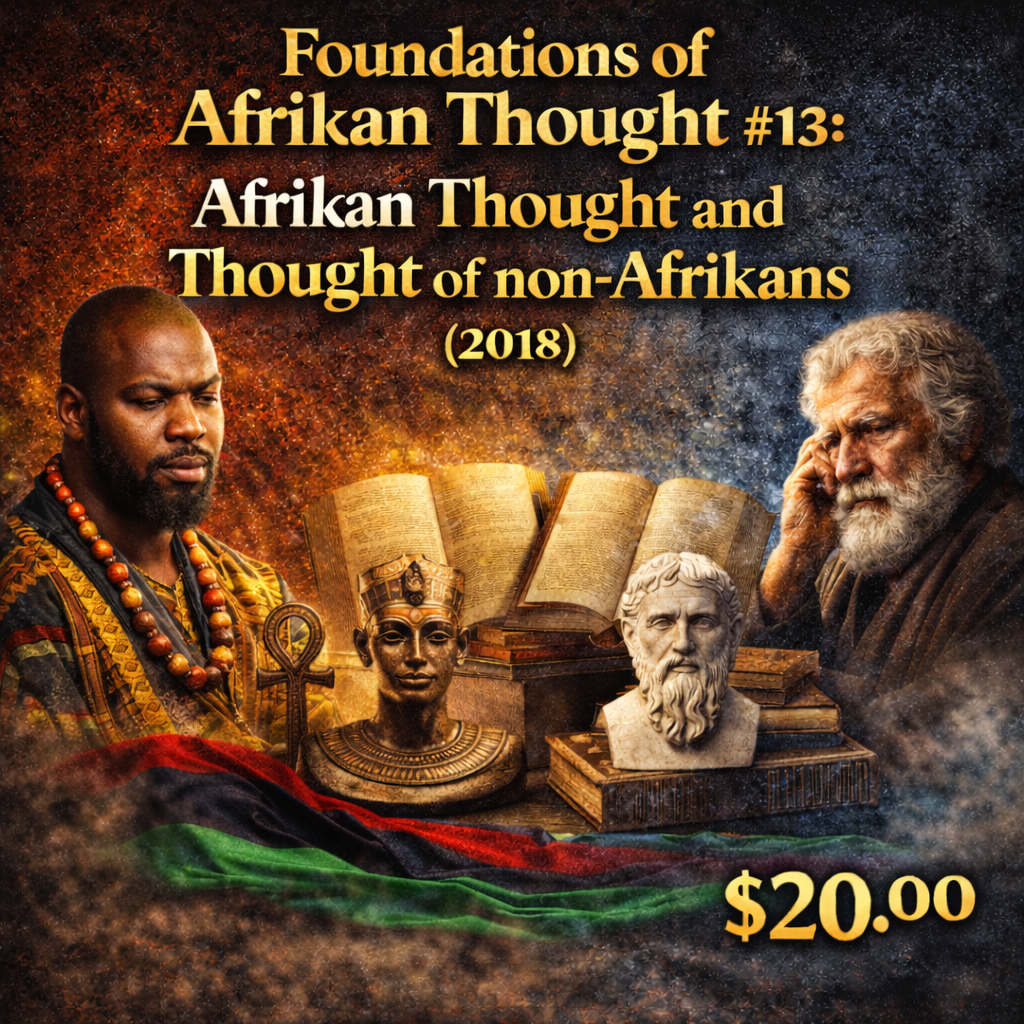
    Afrikan thought and European ideology stand in direct opposition — and understanding that opposition is a revolutionary act. For too long, Afrikan people have studied the world through frameworks built to exclude and diminish them. However, this lecture cuts through that fog with precision, power, and purpose. Ɔbenfo Ọbádélé Bakari Kambon delivers a four-hour, thirty-six-minute masterclass that every serious Afrikan scholar must experience. Furthermore, this session forms Week 13 of the acclaimed Foundations of Kmtyw (Afrikan=Black) Thought course — a program designed to fill critical gaps in Afrikan epistemological education at the highest academic levels.

    How Ɔbenfo Kambon Dismantles European Ideology Through an Afrikan Thought Framework

    This lecture draws directly from foundational texts by Marimba Ani, Jacob H. Carruthers, and Cheikh Anta Diop. Ani’s Yurugu provides a devastating Afrikan-centered critique of European cultural thought and behavior. In addition, Carruthers’ Intellectual Warfare arms students with the conceptual tools to fight on the battlefield of ideas. Diop’s Cultural Unity of Black Africa grounds everything in historical truth. Together, these readings form a powerful intellectual arsenal. Most importantly, Ɔbenfo Kambon synthesizes all of it with clarity that transforms how you see the world.

    The product includes a full-length video recording plus a secured PDF of 87 slides. As a result, students gain both the live lecture experience and a structured visual reference for deep study. This is not passive content — it demands your full engagement and rewards it fully. Abibifahodie requires that Afrikan people think clearly, strategically, and unapologetically. Therefore, this lecture is not just education. It is preparation for liberation. The Kmtyw deserve knowledge systems that reflect their genius, their history, and their future.

    Whether you are a graduate student, a community educator, or a lifelong learner committed to Abibifahodie, this lecture will sharpen your thinking and strengthen your foundation. Abibitumi continues to provide Afrikan people globally with the highest-quality liberation education available anywhere. Furthermore, at only $20.00, this resource places world-class Afrikan scholarship directly in your hands. Do not wait to claim it. Your intellectual liberation matters — and it starts here.

    Watch / Get it here: Foundations of Afrikan Thought #13 — Abibitumi.com

  • How Akan Serial Verb Constructions Reveal the Depth of Afrikan Language Structure

    How Akan Serial Verb Constructions Reveal the Depth of Afrikan Language Structure

    Akan serial verb constructions

    Akan serial verb constructions stand at the heart of one of the most intellectually powerful linguistics lectures in Pan-Afrikan scholarship today. In October 2015, Ɔbenfo Ọbádélé Bakari Kambon delivered a landmark presentation at the Inaugural School of Languages Conference. His work cuts through colonial frameworks and centers Afrikan language on its own terms. This is liberation through linguistics — precise, unapologetic, and transformative.

    Serial verb constructions (SVCs) appear across four well-defined global regions. However, Benue-Congo languages of West Afrika represent one of the most linguistically rich sites of SVC development. Furthermore, when these constructions undergo nominalization — becoming noun phrases derived from verb sequences — they reveal extraordinary complexity. Ɔbenfo Kambon, alongside collaborators Osam and Amfo, defines SVCs as sequences of verbs acting together as a single predicate. Notably, they operate without overt markers of coordination or subordination. As a result, understanding them demands serious analytical precision and deep cultural grounding.

    Why Akan Serial Verb Constructions Matter for Afrikan Language Liberation

    Most importantly, this lecture does not merely describe grammar — it builds the intellectual infrastructure for Abibifahodie. Ɔbenfo Kambon demonstrates that Akan serial verb construction nominalization (SVCN) carries layers of semantic meaning that standard Western linguistic models fail to capture. In addition, his 47-slide PowerPoint presentation supports every argument with rigorous evidence. The 33-minute video is dense, focused, and deeply rewarding. Scholars, students, and community builders will find essential tools here. This is the kind of scholarship Abibitumi was built to carry forward.

    Therefore, whether you study linguistics, teach Akan, or simply love Afrikan languages, this resource belongs in your collection. Ɔbenfo Kambon’s analysis of Akan serial verb constructions opens doorways that mainstream academia has long ignored. Furthermore, this combo bundle — including the video and secured PDF — gives you a portable, replayable learning experience. Invest in your intellectual arsenal. Invest in Abibifahodie. Watch and download this essential lecture today.

    Watch / Get it here: Lexicalization and Issues of Semantic Analysis In Serial Verb Construction Nominalization — $20.00

  • Does Afrikan Philosophy Have Validity? Ɔbenfo Kambon Answers Definitively

    Does Afrikan Philosophy Have Validity? Ɔbenfo Kambon Answers Definitively

    Afrikan philosophy validity

    Afrikan philosophy validity is not a question — it is a declaration. For too long, colonial frameworks have attempted to erase, dismiss, and delegitimize the profound intellectual traditions of Afrikan people. However, that erasure ends here. In this landmark 2016 lecture, Ɔbenfo Ọbádélé Bakari Kambon — Pan-Afrikan linguist, scholar, and architect of Abibitumi — delivers a masterful defense and affirmation of Kmtyw philosophical thought. Furthermore, he grounds that affirmation in thousands of years of documented Afrikan genius.

    This is Week 9 of the Foundations of Kmtyw (Afrikan=Black) Thought course series. In nearly three hours of rigorous instruction, Ɔbenfo Kambon draws from essential texts by Chukwunyere Kamalu, Théophile Obenga, Emmanuel Eze, and Kwasi Wiredu. Most importantly, he centers Kemet — ancient Black civilization — as the philosophical bedrock of Afrikan people globally. As a result, students walk away with an unshakeable intellectual foundation. In addition, the accompanying 32-slide secured PDF reinforces every key concept presented in the lecture.

    Why This Lecture on Afrikan Philosophy Validity Belongs in Every Black Scholar’s Collection

    This lecture does not ask for permission to exist. Instead, it commands intellectual space for Afrikan thought on its own terms. Obenga’s African Philosophy: The Pharaonic Period grounds the discussion in pre-colonial truth. Moreover, Wiredu’s comparative framework sharpens students’ critical analysis across traditions. Ɔbenfo Kambon synthesizes these texts with extraordinary clarity and purpose. Consequently, this course session equips scholars, students, parents, and community builders with the tools to dismantle anti-Afrikan intellectual attacks. Abibifahodie — Black Liberation — demands this level of philosophical grounding.

    Abibitumi was built precisely for this work. Every product on this platform serves the liberation of Afrikan people worldwide. Therefore, this lecture is not merely academic — it is an act of resistance and reclamation. Whether you are a seasoned researcher or beginning your journey into Kmtyw thought, this session will sharpen your mind and strengthen your commitment to Abibifahodie. Do not wait to secure this resource for yourself and your community.

    Watch and get it here: Foundations of Kmtyw (Afrikan=Black) Thought #9 — Abibitumi.com