Category: Obadele Kambon Lectures

Category for the exclusive lectures by Ɔbenfo (Professor) Ọbádélé Bakari Kambon, PhD. “Ɔbenfo” Ọbádélé Bakari Kambon, Nana Kwame Pɛbi Datɛ I, helps Black people repatriate and get Ghanaian citizenship at RepatriateToGhana.com. He is a world-renowned master linguist, multi-award-winning scholar and the architect of Abibitumi the oldest and largest Black social education network on the planet. He completed his PhD in Linguistics at the University of Ghana in 2012, winning the prestigious Vice-Chancellor’s award for the Best PhD Thesis in the Humanities. He also won the 2016 and 2024 Provost’s Publications Awards for best published work in the UG College of Humanities. In 2019 he was the recipient of the [Nana] Marcus Mosiah Garvey Foundation award for excellence in Afrikan Studies and Education. Ɔbenfo Ọbádélé Kambon was awarded the 2020/2021 University of Lagos (UNILAG) Lagos Area Cluster Centre (LACC) Fellowship where he contributed significantly to the work of “reconfiguring” Afrikan Studies. In 2025, he was awarded the Kwame Nkrumah Award for Pan-African Leadership by the Pan-African Leadership Institute (PALI). He is an Associate Professor and served as Head of the Language, Literature and Drama Section of the Institute of African Studies at the University of Ghana and also served as Editor-in-Chief of the Ghana Journal of Linguistics (2016-2023). He served as Secretary of the African Studies Association of Africa from 2015-2020. He also played an instrumental role in 34 Abibifo ‘Black People’ of the Diaspora receiving Ghanaian citizenship in 2016 and many more receiving citizenship in 2019, 2022, and 2024. Having contributed to the Government of Ghana’s official Diaspora Engagement Policy, he now assists others interested in repatriation via RepatriateToGhana.com‘s Decade of Our Repatriation (DOOR Initiative), which has been endorsed by the Government of Ghana (Diaspora Affairs, Office of the President and Ghana Tourism Development Company). His multidisciplinary research interests include Serial Verb Construction Nominalization, Historical Linguistics, sbAyt nt Kmt(yw) ‘Studies of Black People’, & Abibifahodie ‘Black Liberation’.

  • The Transformative Power of Black Music, Arts, and Culture — Decoded by Ɔbenfo Kambon

    The Transformative Power of Black Music, Arts, and Culture — Decoded by Ɔbenfo Kambon

    Black people's music and culture

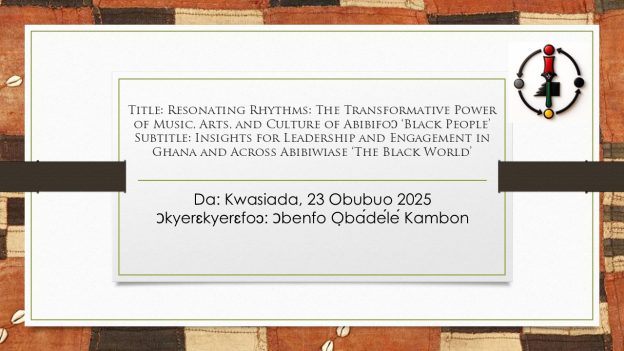
    Black people’s music and culture carry the heartbeat of an entire civilization. From the sacred rhythms of ancient Abibiman to the global dominance of Afrobeat, Abibifoɔ artistic traditions have never been merely entertainment. They are tools of resistance, identity, and collective power. This truth demands our deepest attention and study.

    Ɔbenfo Ọbádélé Bakari Kambon — world-renowned Pan-Afrikan linguist and architect of Abibitumi — delivers this truth with precision and fire. In Resonating Rhythms: The Transformative Power of Abibifoɔ Music, Arts, and Culture Pt. 2, he guides us through a profound journey across Afrikan cultural memory. Furthermore, he connects ancient drumming traditions to contemporary expressions that still move millions worldwide. This session is not background noise. It is a masterclass in Abibifahodie through sound and art.

    Why Black People’s Music and Culture Is Central to Liberation

    Our music has always organized us. It connected diasporas across oceans. It encoded resistance when open speech was forbidden. Most importantly, it preserved Afrikan identity under the most brutal conditions in human history. Ɔbenfo Kambon illuminates exactly how this happened — and why it still matters today. In addition, he demonstrates how Abibifoɔ arts have shaped leadership, spiritual life, and communal bonds across generations. This is not nostalgia. This is a living inheritance we must claim with intention.

    This recording runs 1 hour, 55 minutes and includes the full presentation plus Q&A and accompanying slides. As a result, you receive both the depth of Ɔbenfo’s scholarship and the practical tools to carry it forward. Whether you are a student, educator, parent, or community builder, this session will sharpen your understanding of who we are. However, more than knowledge, it will fuel your commitment to Abibifahodie. Do not let this resource pass you by. Own it, study it, and share it with your community.

    Get the full recording and slides for $20. Watch and study here: Resonating Rhythms Pt. 2 — Watch / Get It Here.

  • When Schools Fail Afrikan Children: The Achimota Dreadlocks Case Decoded

    When Schools Fail Afrikan Children: The Achimota Dreadlocks Case Decoded

    Afrikan education colonialism

    Afrikan education colonialism is not a relic of the past — it operates today, inside Afrikan institutions, enforced by Afrikan hands. The 2021 Achimota School dreadlocks controversy in Ghana made this devastatingly clear. A school on Afrikan soil rejected Afrikan children for wearing their hair in its natural, ancestral state. Furthermore, the institution defended this rejection using the very logic European colonizers installed generations ago. This is not education. This is occupation dressed in a school uniform.

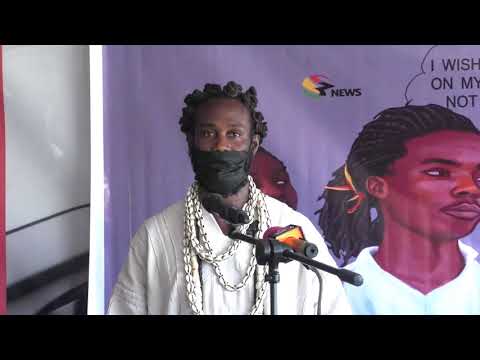
    Ɔbenfo Ọbádélé Bakari Kambon — Pan-Afrikan linguist, scholar, and architect of Abibitumi — convened a press conference to address this crisis directly. He did not mince words. In this 34-minute presentation, Ɔbenfo Kambon names the root problem: Afrikan institutions producing graduates shaped by krakkkacademic frameworks that serve white supremacy, not Afrikan liberation. As a result, these institutions graduate people who enforce colonial standards against their own. Too much schooling. Too little education. The distinction matters enormously for Abibifahodie — the total liberation of Afrikan people.

    Reclaiming Afrikan-Centred Knowledge Beyond Afrikan Education Colonialism

    Most importantly, Ɔbenfo Kambon centers a critical question: who produces knowledge, and for whom? Afrikan people — both on the continent and throughout the Diaspora — carry wounds from enslavement, colonialism, and neo-colonialism. However, those wounds do not stop at the body. They penetrate the mind and reshape what Afrikan people accept as normal, authoritative, and legitimate. In addition, when Afrikan institutions police Afrikan aesthetics, they reveal how deeply this miseducation runs. The Kmtyw and all Afrikan people deserve institutions that affirm — not erase — who we are.

    This lecture is essential viewing for every Pan-Afrikan scholar, parent, student, and community builder. It connects a local controversy to a global pattern. Furthermore, it challenges us to build knowledge systems rooted in Ma’at — truth, justice, and Afrikan sovereignty. Abibitumi exists precisely for this purpose: to provide Afrikan-centred education that colonial institutions refuse to offer. Therefore, do not wait. Study this presentation. Share it within your community. Use it to sharpen your analysis and strengthen your commitment to Abibifahodie. Watch and get it here: Press Conference on Ghana Achimota “Dreadlocks” Controversy.

  • Kamose Stelae Decoded: Afrikan Languages, Strategy & Black Liberation at ASCAC 2025

    Kamose Stelae Decoded: Afrikan Languages, Strategy & Black Liberation at ASCAC 2025

    Kamose Stelae Black liberation

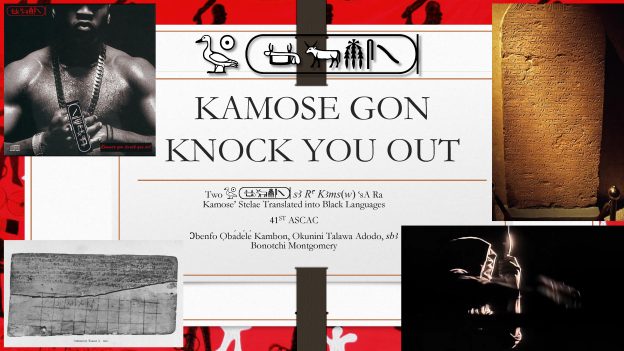
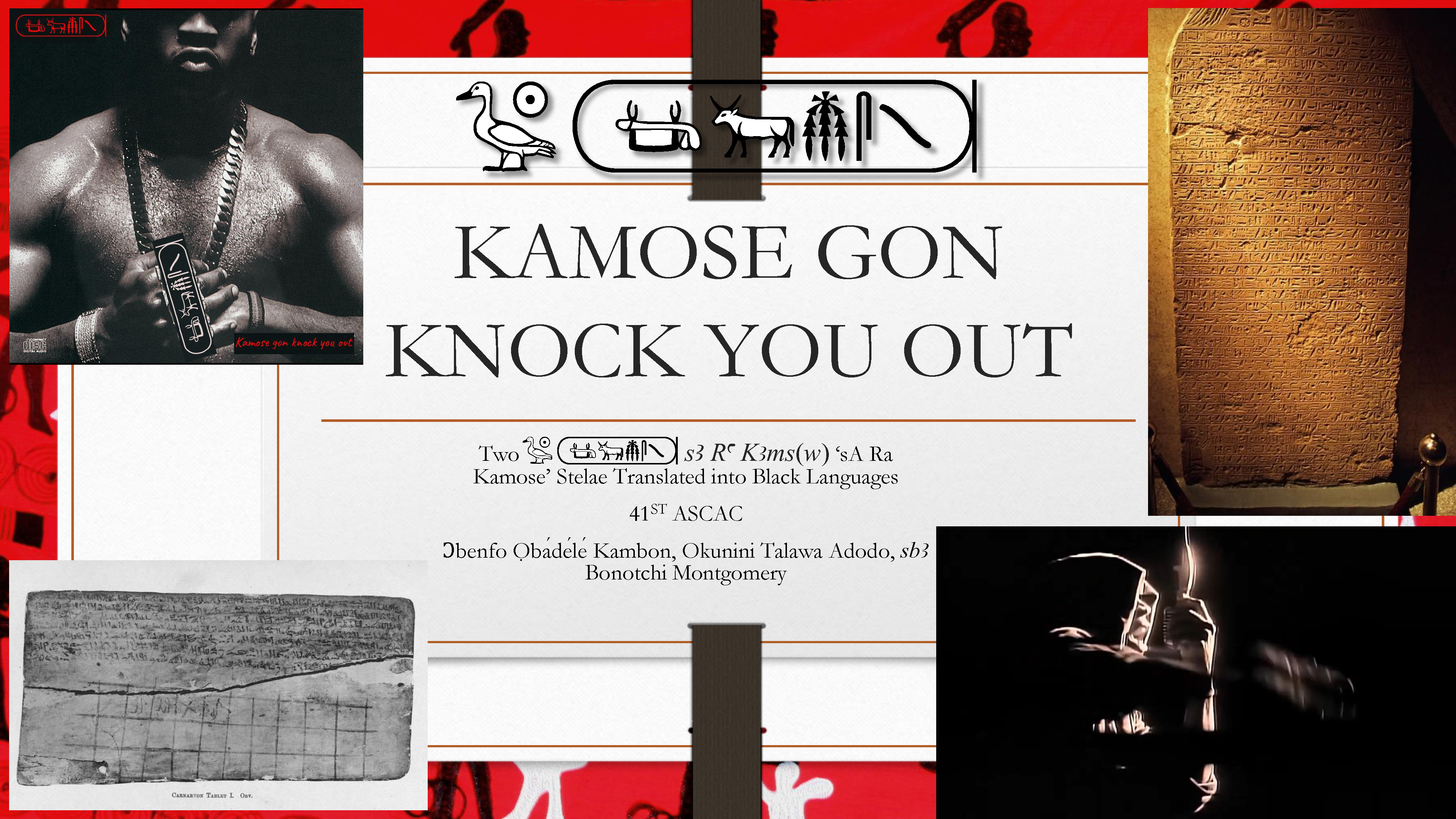
    The Kamose Stelae Black liberation analysis delivered at ASCAC 2025 is exactly the scholarship our people need right now. Ɔbenfo Ọbádélé Bakari Kambon — architect of Abibitumi and world-renowned Pan-Afrikan linguist — joined forces with Okunini Talawa Adodo and sbA Bonotchi Montgomery. Together, they brought a 49-minute intellectual and strategic masterclass to the 41st annual ASCAC conference. Furthermore, this presentation does not simply translate ancient text. It resurrects the living voice of our ancestors and points it directly toward Abibifahodie.

    Ɔbenfo Kambon grounds his scholarship in Afrikan languages, Afrikan thought, and the unapologetic pursuit of Black liberation. As a result, his work never sits comfortably inside colonial academic frameworks. Instead, it dismantles them. In this presentation, he and his colleagues move through the Kamose Stelae with linguistic precision, cultural authority, and strategic clarity. Most importantly, they demonstrate that the Kmtyw were not passive victims of history. They were warriors, planners, and liberators. That legacy belongs to us.

    Why the Kamose Stelae Black Liberation Framework Matters Today

    Pharaoh Kamose did not wait. He organized, strategized, and moved against the forces occupying Kemet. In addition, his recorded words — preserved in the stelae — carry strategic wisdom that speaks directly to our current struggle. Ɔbenfo Kambon and the presenters decode that wisdom using Afrikan languages, including Twi and Yoruba. Furthermore, they connect ancient military and political strategy to the living reality of Pan-Afrikan liberation today. This is not nostalgia. This is a roadmap.

    This exclusive recording is available now through Abibitumi — the premier platform for Pan-Afrikan education and community-centered liberation scholarship. Scholars, students, community builders, and parents fighting for their children’s minds will all find deep value here. Moreover, at just $20.00, this 49-minute presentation delivers irreplaceable knowledge that no mainstream institution will ever offer. However, access to this kind of scholarship requires that we support the infrastructure that makes it possible. Therefore, invest in your liberation today. Watch the full presentation and download the slides now.

    Watch / Get it here: Kamose Gon Knock You Out – ASCAC 2025 | Abibitumi

  • Integration or Liberation? What Pan-Afrikanism Really Demands for Afrikan People

    Integration or Liberation? What Pan-Afrikanism Really Demands for Afrikan People

    Pan-Afrikan integration Afrika

    Pan-Afrikan integration in Afrika is not a neutral concept — and Ɔbenfo Ọbádélé Bakari Kambon refuses to let us pretend otherwise. In this powerful 2017 lecture, he cuts through the comfortable lies and forces a necessary reckoning. Who is integrating with whom? Furthermore, whose interests does that integration truly serve? These are not abstract questions. They are survival questions for Afrikan=Black people everywhere.

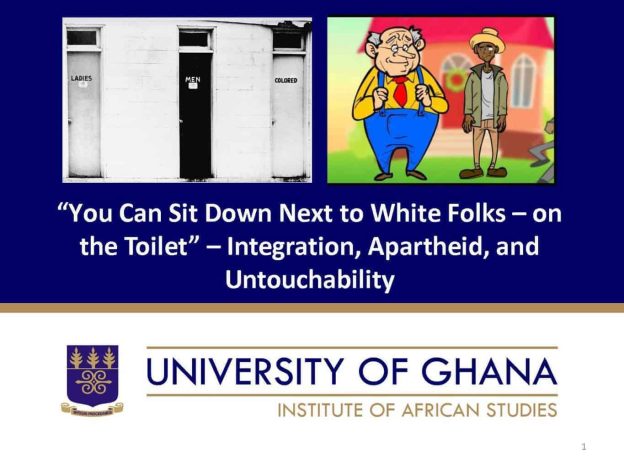
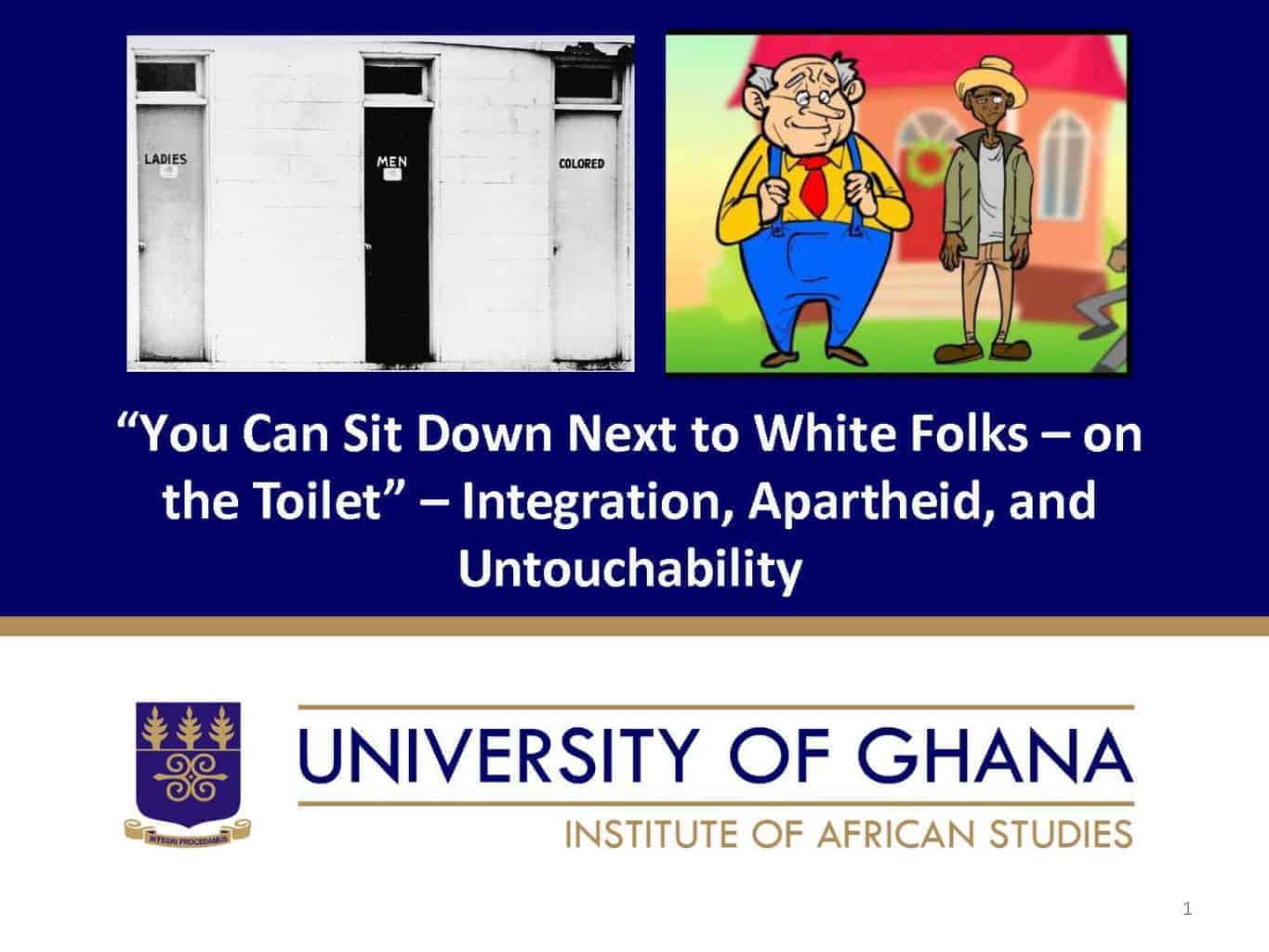
    Ɔbenfo Kambon draws on three concrete historical instances where integration was offered as a solution to anti-Black oppression. However, in each case, the so-called solution protected systems of domination rather than dismantling them. The title alone — “You Can Sit Down Next to white Folks – on the Toilet” — delivers the verdict with surgical precision. In addition, it names the humiliation embedded in a “progress” that never touched real power. As a result, we must distinguish between authentic Pan-Afrikanism and its counterfeit, anti-Black imitation.

    The AU’s Agenda 2063 and the Problem of Pan-Afrikan Integration in Afrika

    The African Union’s Agenda 2063 calls for an integrated Afrika. Most importantly, Ɔbenfo Kambon asks whether that integration centers the Afrikan=Black indigenes of the continent. He examines the dangerous tradition in which anyone present on Afrikan soil is treated as equally “Afrikan” — regardless of settler history or anti-Black practice. Furthermore, this framework echoes the same counterfeit integrationism that was used to neutralize liberation movements in South Africa, the United States, and beyond. Therefore, Afrikan intellectuals and educators must interrogate every policy that uses the language of unity while undermining Black sovereignty.

    This lecture is essential study for scholars, students, community builders, and every Afrikan person committed to Abibifahodie — Black Liberation. Abibitumi exists precisely to deliver this level of uncompromising, community-centered education. Moreover, this work does not ask permission from systems designed to erase us. It builds our own foundation of knowledge, in our own interest, on our own terms. Watch this lecture, study it carefully, and share it widely within your community.

    Watch / Get it here: Integration, Apartheid, and Untouchability — Lecture by Ɔbenfo Ọbádélé Kambon

  • How Afrikan People Emancipated Themselves: The Truth History Buried

    How Afrikan People Emancipated Themselves: The Truth History Buried

    Afrikan people emancipated themselves

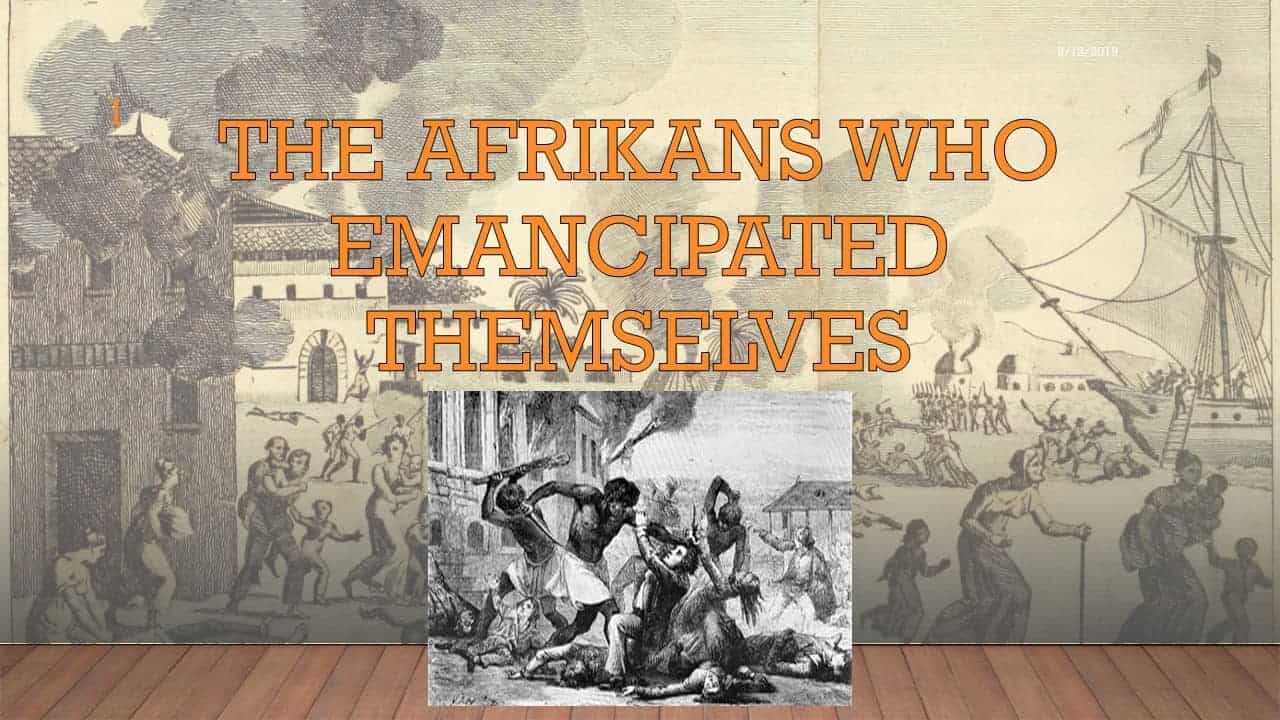
    Afrikan people emancipated themselves — and the evidence is overwhelming. For too long, dominant historical narratives have credited white moral conscience as the driving force behind the abolishment of enslavement. However, this framing erases the agency, resistance, and organized power of Afrikan people themselves. Furthermore, it serves a specific political purpose: to position Afrikan people as passive recipients of white benevolence rather than as the architects of their own liberation.

    Ɔbenfo Ọbádélé Bakari Kambon — Pan-Afrikan linguist, scholar, and founder of Abibitumi — confronts this distortion head-on. In this powerful lecture, he presents a counter-narrative grounded in documentation and evidence. Most importantly, he restores the historical record to its rightful place. This is not revisionism. This is correction. Ɔbenfo Kambon’s scholarship consistently centers Afrikan people as sovereign, capable, and self-determining — because that is precisely what the record shows.

    Reclaiming the History of How Afrikan People Emancipated Themselves

    This CIEE Black History Month lecture spans 1 hour and 50 minutes across 44 carefully constructed slides. As a result, it delivers a comprehensive and rigorous examination of the historical forces that actually ended enslavement. In addition, it challenges students, scholars, parents, and community builders to interrogate what they were taught — and why. Abibifahodie, Black Liberation, demands this kind of intellectual courage. Therefore, this lecture is not simply educational. It is a liberation tool.

    The Abibitumi platform exists to equip Afrikan people globally with knowledge that serves our freedom. Consequently, this lecture belongs in every classroom, study circle, and community space committed to truth. Whether you are a seasoned scholar or just beginning your journey toward Abibifahodie, this presentation will sharpen your understanding and strengthen your resolve. Do not allow the false narrative to stand unchallenged. Instead, arm yourself with what actually happened. Watch the full lecture and reclaim this history for yourself and your community.

    Watch / Get it here: The Afrikan=Black People Who Emancipated Themselves — CIEE BHM Lecture