Tag: Kemet

  • Maat as Lived Practice: What Kemetic Wisdom Reveals About Death and the Afterlife

    Maat and the afterlife

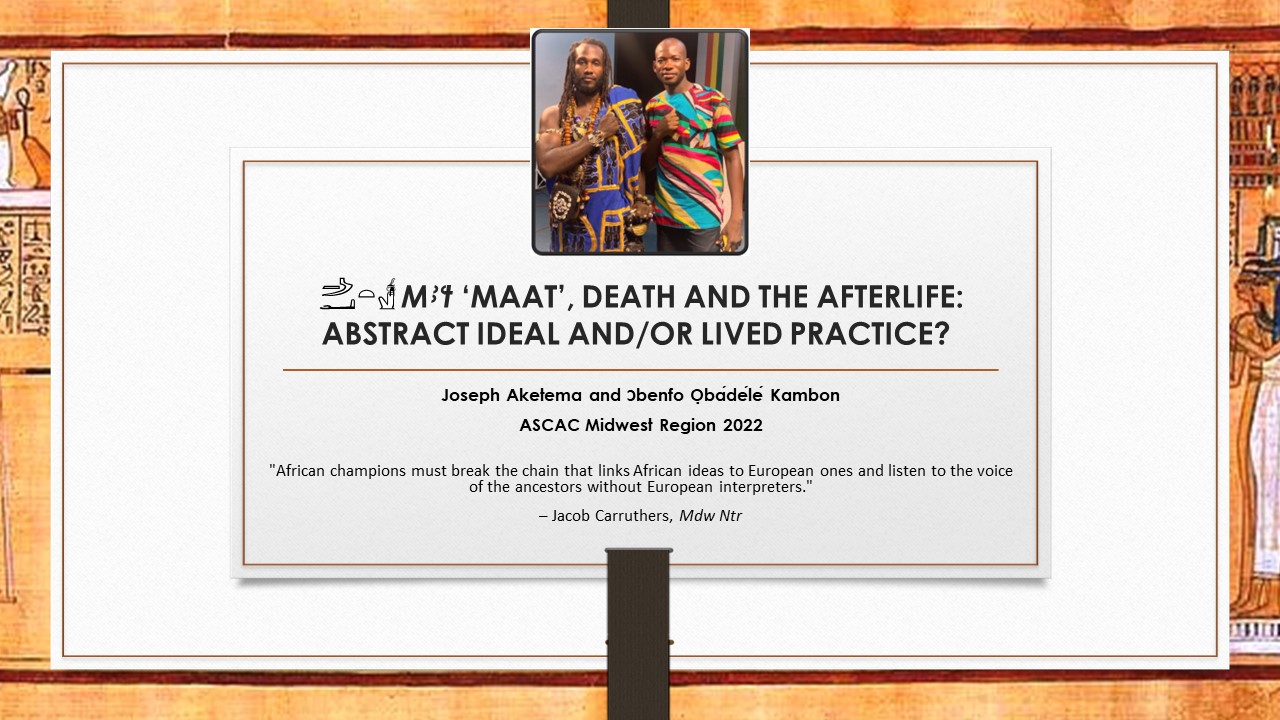
    Maat and the afterlife are not separate philosophical concerns — they are one continuous, living reality in Afrikan thought. Across millennia, Afrikan people have understood that how you live directly shapes what awaits you after death. This is not abstract theology. This is ancestral science, encoded in the classical texts of Kmt and confirmed in the lived practices of Afrikan communities today.

    Ɔbenfo Ọbádélé Bakari Kambon — Pan-Afrikan linguist, scholar, and architect of Abibitumi — delivers a masterful study that bridges the ancient and the contemporary. He draws on textual evidence from classical Kmt, the Black Nation, the land of the Kmtyw. Furthermore, he brings in attested cultural practices from the Kasena-Nankana people of contemporary Afrika. As a result, we see clearly that this knowledge never died. It endured. It transformed. Most importantly, it still guides Afrikan people today.

    How Maat and the Afterlife Shape Afrikan Living Practice

    Ɔbenfo Kambon demonstrates that one’s treatment of the body after death reflects deep communal values rooted in Mꜣꜥt. Additionally, he shows how conceptions of the spiritual afterlife directly influence how Afrikans choose to act in the physical world. This is Abibifahodie — Black liberation — in its most profound form. However, this wisdom has been deliberately suppressed, distorted, and erased. That suppression ends here. This lecture reclaims what was always ours.

    In addition, this presentation challenges us to move beyond surface-level engagement with Maat. Maat and the afterlife demand that we interrogate how we actually live — not merely what we profess to believe. Ɔbenfo Kambon’s scholarship, rooted in Abibitumi’s mission of Pan-Afrikan education, equips us to walk in alignment with our ancestors’ highest standards. Therefore, this lecture is not simply academic. It is a call to live rightly, die prepared, and continue contributing to our people across all planes of existence. Watch this essential lecture now and invest in your liberation.

    Watch / Get it here: Mꜣꜥt ‘MAAT’, Death and the Afterlife — $20.00

  • Does Kemetic Philosophy Deserve a Seat at the Table? Ɔbenfo Kambon Says It Built the Table.

    Kemetic philosophy validity

    Kemetic philosophy validity is not a question — it is a declaration. For too long, Western academia has dismissed or stolen the intellectual legacy of the Kmtyw. Ɔbenfo Ọbádélé Bakari Kambon confronts that theft directly. In this landmark lecture, he rebuilds the epistemological foundation that Afrikan people deserve and require. Furthermore, he does so with rigorous scholarship rooted in liberation.

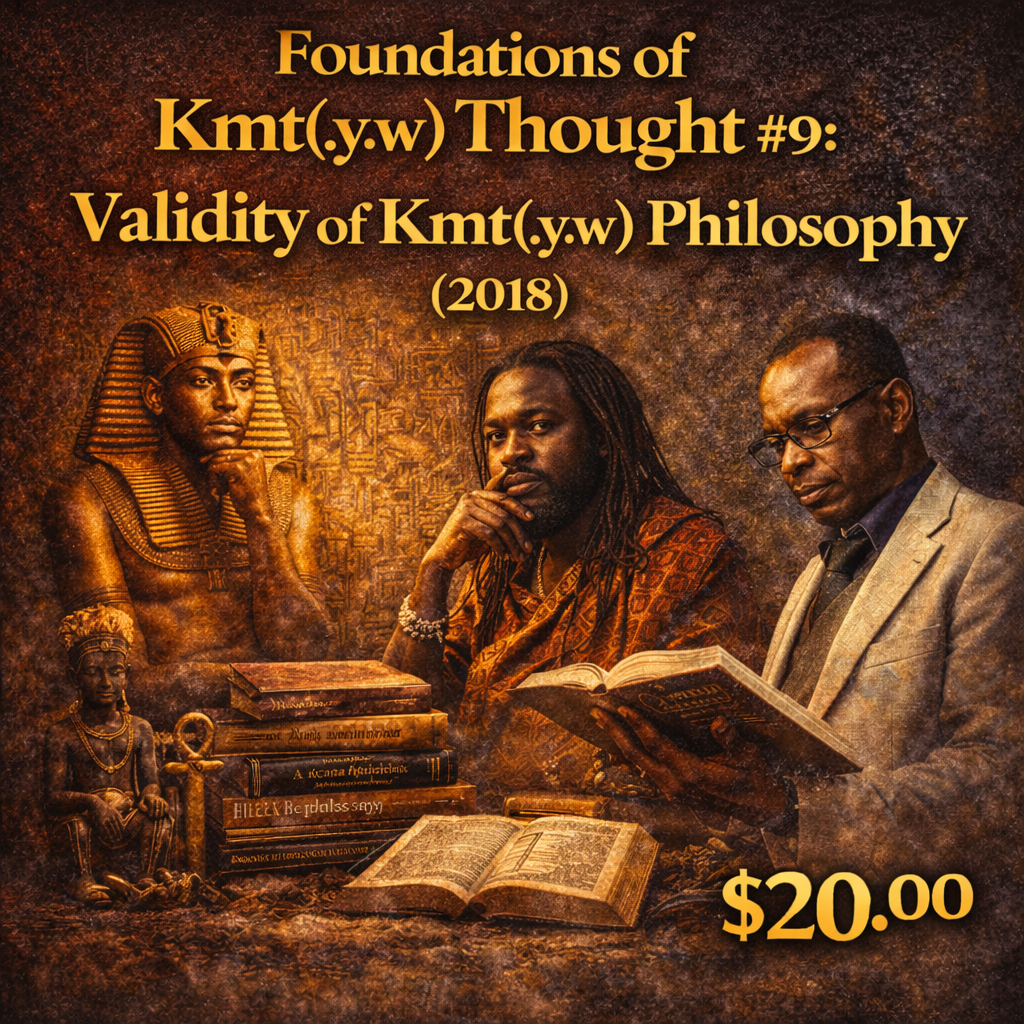
    This is Week 9 of the Foundations of Kmt(.y.w) Thought series. The session runs nearly three hours — two hours, fifty-three minutes of uncompromising intellectual work. Ɔbenfo Kambon draws from essential texts by Chukwunyere Kamalu, Théophile Obenga, and Kwasi Wiredu. As a result, the lecture does not simply argue for Afrikan philosophy. It demonstrates it. In addition, the accompanying 32-slide secured PDF gives students a structured guide through every major concept covered. This is not passive learning. Most importantly, it is active reclamation.

    Why the Validity of Kemetic Philosophy Changes Everything for Abibifahodie

    Recognizing the validity of Kemetic philosophy shifts the entire axis of Black intellectual life. It places Afrikan people at the origin — not the margin — of human thought. Ɔbenfo Kambon challenges students to reject borrowed frameworks. He insists that our ancestors in Kmt produced a complete, coherent, and powerful philosophical system. However, that system has been systematically buried. This lecture unearths it. Furthermore, it equips scholars, students, and community builders with the language and logic to defend Afrikan intellectual sovereignty. Abibitumi was built precisely for this purpose.

    The Kmtyw Thinkers Program fills a critical gap in global epistemology. It does not ask for permission from European institutions. Instead, it centers the Afrikan mind as the standard. This course belongs in every home, classroom, and liberation circle in the Afrikan world. Moreover, the $20 investment returns generational value. The lecture is available as a video and secured PDF combo — structured, substantive, and built for serious study. Do not wait to reclaim what has always been yours.

    Watch it and get the PDF here: Foundations of Kmt(.y.w) Thought #9 — Validity of Kmt(.y.w) Philosophy (2018)

  • The Ancient Roots of Pan-Afrikanism: Kmt(yw) Consciousness and the Origins of Black Unity

    Classical Kmt Pan-Afrikanism

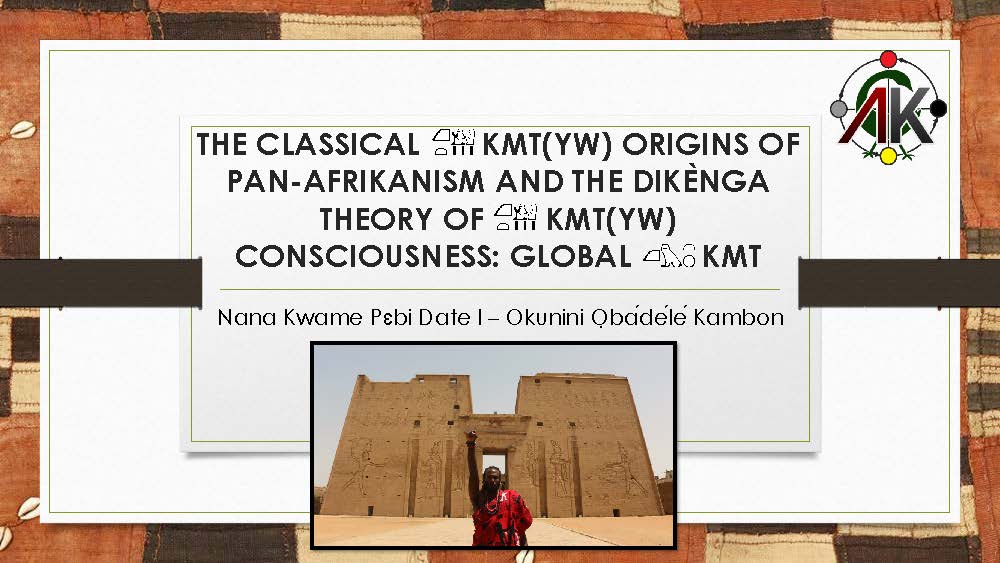
    Classical Kmt Pan-Afrikanism did not begin with enslavement. It did not begin as a reaction to whiteness. In fact, the unification of Kmt(yw) — Black people — stretches back thousands of years into antiquity. Most scholars treat Pan-Afrikanism as a modern political movement. However, Ɔbenfo Ọbádélé Bakari Kambon challenges that assumption with devastating scholarly precision. In this powerful 72-minute presentation spanning 97 slides, he traces the deep ancestral roots of Afrikan=Black power directly to the classical civilization of Kmt.

    Furthermore, Ɔbenfo Kambon dismantles the myth that Black identity emerged simply as a response to Bacon’s Rebellion or the rise of capitalism. Instead, he grounds Kmt(yw) identity in something far more ancient and enduring. Blackness, he demonstrates, encompasses genotype, phenotype, allegiance, culture, and politics. As a result, Black Pan-Afrikanism reveals itself as a timeless strategy of self-preservation. It is the ongoing project of Afrikan=Black people protecting and advancing their own survival across centuries and continents.

    The Dikènga Theory and Classical Kmt Pan-Afrikanism as a Living Framework

    In addition to tracing these ancient origins, Ɔbenfo Ọbádélé Bakari Kambon introduces the Dikènga Theory of Kmt(yw) Consciousness. This framework maps the cyclical nature of Afrikan=Black consciousness and liberation. Moreover, it connects the spiritual and political traditions of ancient Kmt directly to our present-day struggle for Abibifahodie. The Dikènga is not merely academic. It is a living tool that Afrikan people can use to understand where we are in our collective journey. Most importantly, it points clearly toward where we must go next.

    This lecture belongs in the home, the classroom, and every liberation study circle. Scholars, students, parents, and community builders will all find deep nourishment here. Abibitumi exists precisely to place this level of Afrikan-centered scholarship directly in our hands. Therefore, do not wait to engage this knowledge. Every minute of these 72 minutes builds the intellectual foundation that Abibifahodie demands. Watch it, study it, and share it with your community.

    Watch / Get it here: RBG100: Classical Kmt Origins of Pan-Afrikanism — Abibitumi

  • Reclaiming Kemet: The Political History of Black People Across Space and Time

    Reclaiming Kemet: The Political History of Black People Across Space and Time

    political history of Kemet

    The political history of Kemet stretches far beyond what colonial education systems have ever dared to teach. Ɔbenfo Ọbádélé Bakari Kambon — world-renowned Pan-Afrikan linguist and architect of Abibitumi — delivers exactly the scholarship our people deserve. In this third installment of the Free The Youth Lecture Series, he brings university-level knowledge directly into the community. Furthermore, he does so with clarity, depth, and uncompromising Afrikan-centered truth.

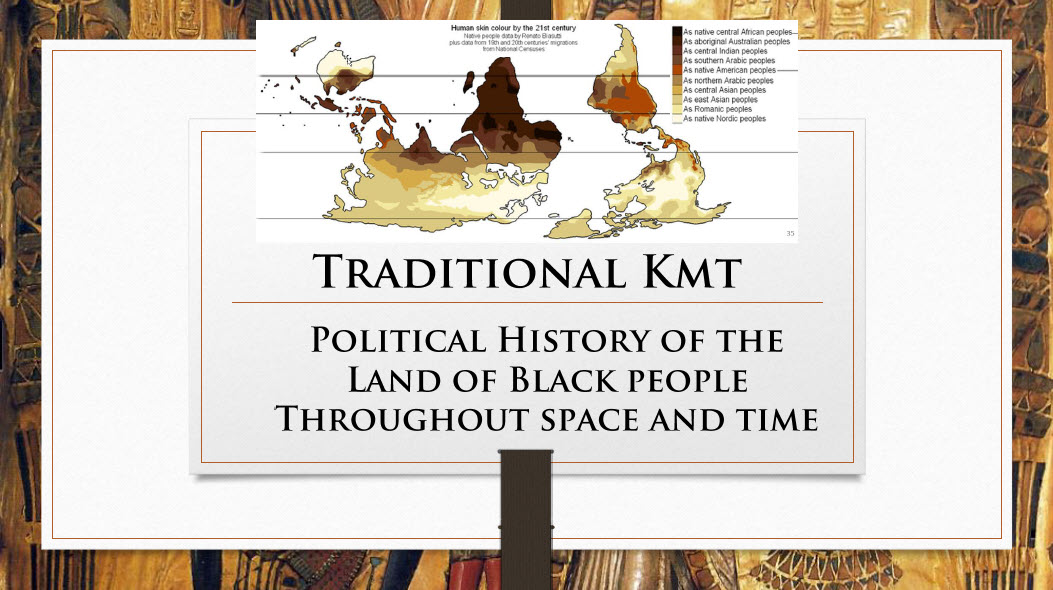
    This lecture opens with a compelling, evidence-based case for abandoning the term “Africa” altogether. Ɔbenfo demonstrates why the Greco-Roman label erases our identity and disconnects us from our land. Instead, he centers Kemet — the land of Black people — as the proper framework. As a result, every slide reorients the listener toward self-knowledge and Abibifahodie. In addition, the lecture surveys multiple societies across the land of Black people, the Kmtyw, with rigor and ancestral reverence.

    The Mbôngi and the Political History of Kemet’s Organizational Power

    Most importantly, Ɔbenfo gives a thorough and detailed discussion of the Mbôngi — the traditional political institution of Afrikan people. This ancient structure reveals that our ancestors built sophisticated, community-centered governance long before colonization. Moreover, understanding the Mbôngi equips us with a model for organizing today. This is not abstract theory. This is living liberation strategy rooted in the political history of Kemet and its people. The lecture spans 173 slides and over three hours of dense, transformative scholarship.

    Abibitumi exists to break knowledge free from the ebony tower and place it in Afrikan hands. This lecture delivers exactly that — at just $20, it is an investment in collective consciousness. Therefore, whether you are a scholar, student, parent, or community builder, this lecture speaks directly to you. Our people are building. Our people are studying. Our people are rising. Watch it, share it, and let it fuel your work toward Ma’at and liberation.

    Watch / Get it here: Free The Youth Lecture #3 — Traditional Kemet Throughout Space and Time

  • Why Kemet Matters: Reclaiming the Black Identity of Ancient Kmt

    Why Kemet Matters: Reclaiming the Black Identity of Ancient Kmt

    why Kemet matters

    Why Kemet matters is not an academic curiosity — it is a question of liberation. For generations, non-Black Egyptologists have waged a deliberate campaign of disinformation. They replaced the indigenous term Kmt — meaning “Land of Black people” — with the hollow phrase “Ancient Egypt.” Furthermore, they replaced Kmtyw — meaning “Black people” — with the equally obscuring “Ancient Egyptians.” As a result, the entire legacy of a Black civilization became buried under layers of academic malpractice and intellectual fraud.

    This erasure is not accidental. It is systematic. It strips Afrikan people of their ancestral identity, their spiritual inheritance, and their civilizational greatness. Moreover, it renders the very language, culture, and philosophy of the Kmtyw unintelligible to their own descendants. In addition, it empowers anti-Black collaborators within academia to continue rewriting our story without our consent. Abibifahodie — Black Liberation — demands that we reclaim these names, these truths, and this history for ourselves.

    How Ɔbenfo Kambon’s Lecture Restores the Truth of Why Kemet Matters

    Ɔbenfo Ọbádélé Bakari Kambon — world-renowned Pan-Afrikan linguist and architect of Abibitumi — dismantles this fraud with precision and power. In this three-hour, twenty-six-minute seminar, he delivers 129 slides of evidence-based, liberation-centered scholarship. He uses the names the Kmtyw called themselves. Consequently, what was once obscured becomes brilliantly clear. Most importantly, Ɔbenfo Kambon grounds every argument in the indigenous language of Kmt itself — not in the distortions of outsiders. This is the kind of scholarship that builds free minds and free people.

    This lecture belongs in every Afrikan household, classroom, and community space. Students gain intellectual grounding. Scholars gain a rigorous framework. Parents gain tools to teach their children the truth. Furthermore, community builders gain a shared foundation rooted in Ma’at — truth, justice, and cosmic order. Abibitumi exists precisely to deliver this caliber of knowledge directly to Afrikan people worldwide. Therefore, do not wait. Invest in your liberation today.

    📺 Watch it now and get the slides: SSS Video Recording + Slides: Why Kemet Matters — Available at Abibitumi.com