Category: Obadele Kambon Lectures

Category for the exclusive lectures by Ɔbenfo (Professor) Ọbádélé Bakari Kambon, PhD. “Ɔbenfo” Ọbádélé Bakari Kambon, Nana Kwame Pɛbi Datɛ I, helps Black people repatriate and get Ghanaian citizenship at RepatriateToGhana.com. He is a world-renowned master linguist, multi-award-winning scholar and the architect of Abibitumi the oldest and largest Black social education network on the planet. He completed his PhD in Linguistics at the University of Ghana in 2012, winning the prestigious Vice-Chancellor’s award for the Best PhD Thesis in the Humanities. He also won the 2016 and 2024 Provost’s Publications Awards for best published work in the UG College of Humanities. In 2019 he was the recipient of the [Nana] Marcus Mosiah Garvey Foundation award for excellence in Afrikan Studies and Education. Ɔbenfo Ọbádélé Kambon was awarded the 2020/2021 University of Lagos (UNILAG) Lagos Area Cluster Centre (LACC) Fellowship where he contributed significantly to the work of “reconfiguring” Afrikan Studies. In 2025, he was awarded the Kwame Nkrumah Award for Pan-African Leadership by the Pan-African Leadership Institute (PALI). He is an Associate Professor and served as Head of the Language, Literature and Drama Section of the Institute of African Studies at the University of Ghana and also served as Editor-in-Chief of the Ghana Journal of Linguistics (2016-2023). He served as Secretary of the African Studies Association of Africa from 2015-2020. He also played an instrumental role in 34 Abibifo ‘Black People’ of the Diaspora receiving Ghanaian citizenship in 2016 and many more receiving citizenship in 2019, 2022, and 2024. Having contributed to the Government of Ghana’s official Diaspora Engagement Policy, he now assists others interested in repatriation via RepatriateToGhana.com‘s Decade of Our Repatriation (DOOR Initiative), which has been endorsed by the Government of Ghana (Diaspora Affairs, Office of the President and Ghana Tourism Development Company). His multidisciplinary research interests include Serial Verb Construction Nominalization, Historical Linguistics, sbAyt nt Kmt(yw) ‘Studies of Black People’, & Abibifahodie ‘Black Liberation’.

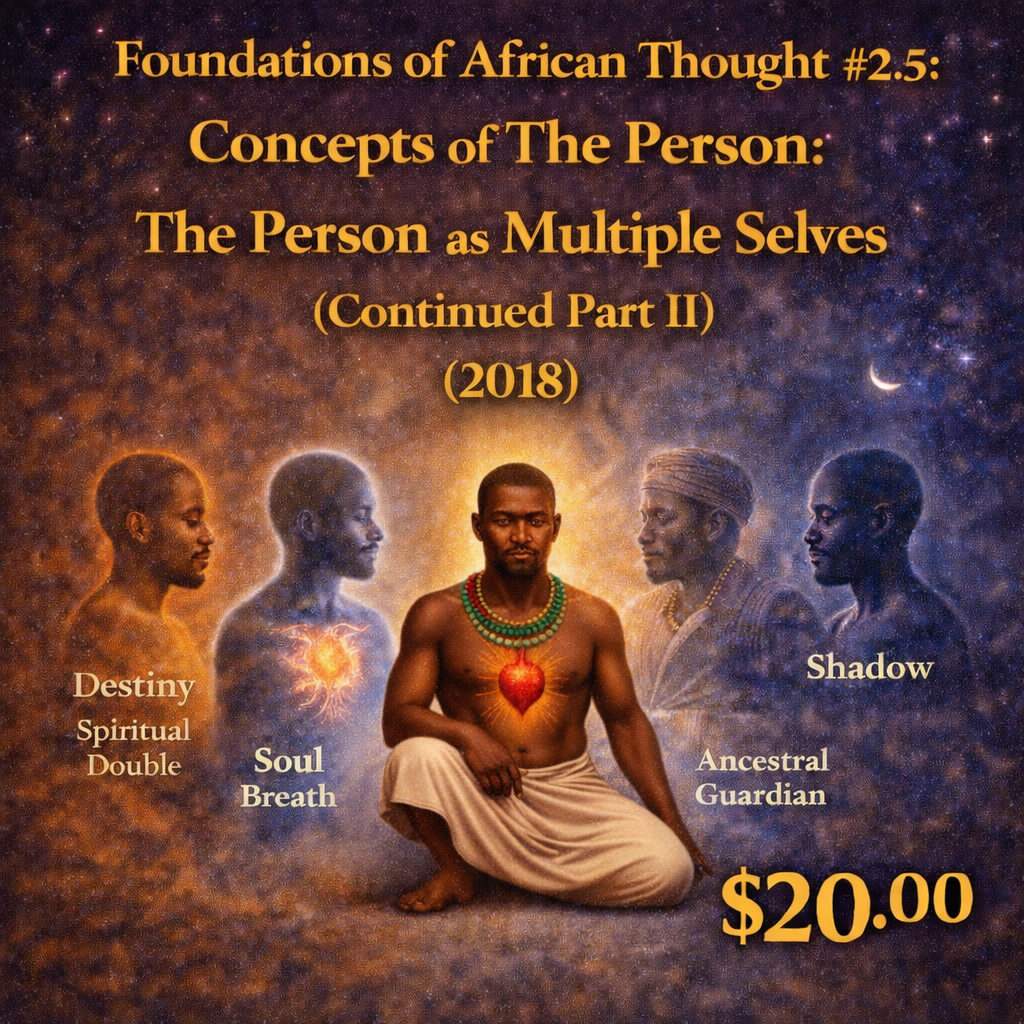
  • Who Are You, Really? The Kmtyw Understanding of the Person as Multiple Selves

    Who Are You, Really? The Kmtyw Understanding of the Person as Multiple Selves

    Kmtyw concepts of the person

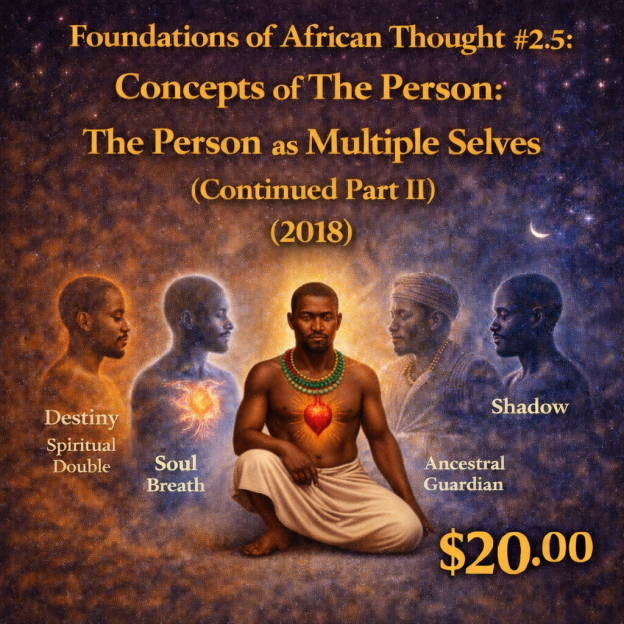
    Kmtyw concepts of the person challenge everything the Western world has told us about who we are. For centuries, colonial thought reduced human beings to isolated individuals — biological units with no deeper cosmological identity. However, our Afrikan ancestors understood something far more profound. The person is not a single, fixed self. Instead, the person is a dynamic, relational, and multi-dimensional being — fully embedded in the cosmos, the community, and the moral order of Ma’at.

    In this essential lecture, Ɔbenfo Ọbádélé Bakari Kambon — linguist, Pan-Afrikan scholar, and architect of Abibitumi — guides us through the classical intellectual traditions of Kmt. Drawing on both continental and diasporan sources, he dismantles the atomized view of personhood completely. Furthermore, he demonstrates how each dimension of the self carries its own ontological, moral, and cosmological function. This is not abstract philosophy. Most importantly, this is a framework for liberation — for understanding ourselves as Kmtyw people on our own terms.

    Why Kmtyw Concepts of the Person Matter for Abibifahodie

    Liberation begins in the mind. Therefore, reclaiming how we define ourselves is one of the most revolutionary acts we can perform. This session — Week 2.5 of the Foundations of Kmtyw Thought series — runs nearly four hours and includes 69 slides in a secured PDF. It covers the person as a composite being, with multiple interdependent selves operating simultaneously. In addition, Ɔbenfo situates all of this within a cosmological framework that honors the depth and genius of Afrikan thought. This is exactly the kind of knowledge that schools will never teach our children.

    As a result, this lecture is essential for scholars, students, parents, and community builders across the Afrikan world. Whether you are new to Kmtyw studies or deepening an existing foundation, this session will sharpen your understanding profoundly. It will also strengthen your ability to pass this knowledge to the next generation. This is the work of Abibitumi — building a liberated Afrikan mind, one lesson at a time. Do not wait to access this knowledge.

    Watch / Get it here: Foundations of Kmtyw Thought #2.5 — The Person as Multiple Selves

  • What Makes Black People Black? Ɔbenfo Kambon Breaks Down Afrikan Identity and White Supremacy

    What Makes Black People Black? Ɔbenfo Kambon Breaks Down Afrikan Identity and White Supremacy

    what makes Black people Black

    Understanding what makes Black people Black is one of the most liberating questions Afrikan people can study. Too often, we accept definitions handed to us by systems designed to erase us. However, Ɔbenfo Ọbádélé Bakari Kambon — world-renowned Pan-Afrikan linguist and architect of Abibitumi — refuses that erasure. In this essential lecture, he goes to the root. He dissects Afrikan identity with precision, love, and revolutionary clarity.

    What Makes Black People Black — and What Makes Krakkkaz Krakkk

    This presentation does not stop at identity affirmation. Furthermore, it names and analyzes the system working against us. Ɔbenfo Kambon examines the biological, cultural, and ideological forces that define Blackness on our own terms. In addition, he exposes the mechanisms that sustain white supremacist behavior and thinking. As a result, viewers leave with sharper tools for understanding the world — and their place of power within it. This is Abibifahodie scholarship in action.

    Most importantly, this lecture comes with downloadable presentation slides. Therefore, students, educators, and community builders can study, teach, and share this knowledge beyond the screen. The slides make this resource ideal for study circles, classrooms, and organizational development sessions. Abibitumi was built to put transformative Afrikan knowledge directly into Black hands. This lecture delivers exactly that. Every frame challenges anti-Black miseducation at its foundation.

    What makes Black people Black is not a question of confusion — it is a question of reclamation. Moreover, this lecture gives our community the language, evidence, and ancestral grounding to answer it with confidence. The Kmtyw and all Afrikan people deserve scholarship that builds rather than begs. Ɔbenfo Kambon’s work does precisely that. Do not miss this opportunity to strengthen your ideological foundation. Watch the lecture and download the slides today.

    Watch / Get it here: Ɔbenfo Obadele Kambon — What Makes Black People Black ($20.00)

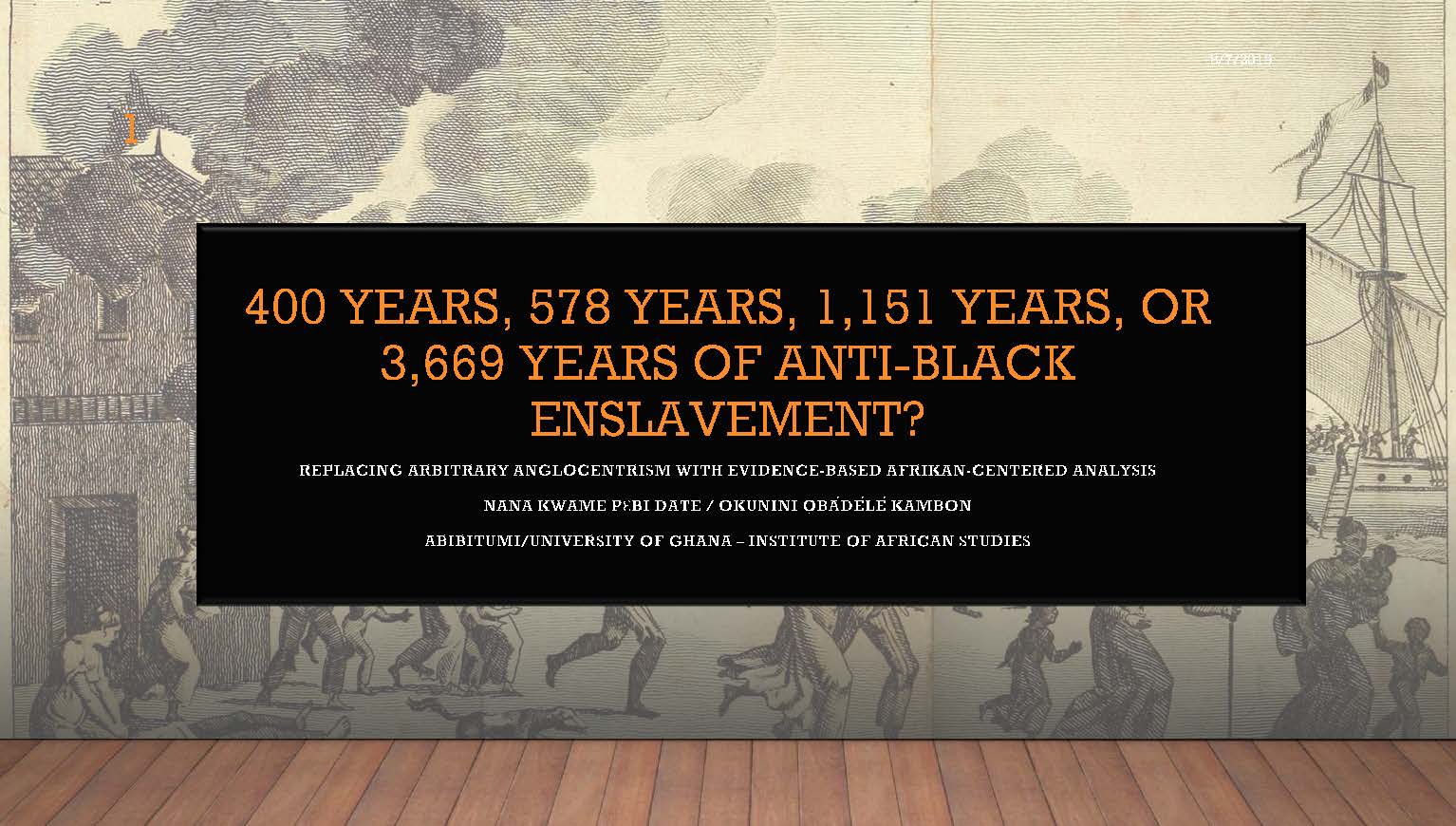
  • The Truth About 400 Years: Centering Afrikan History Before 1619

    The Truth About 400 Years: Centering Afrikan History Before 1619

    Afrikan history before 1619

    Afrikan history before 1619 is far deeper, more powerful, and more liberatory than mainstream narratives ever acknowledge. The Anglo-American educational system has long anchored the Afrikan experience in the so-called “New World” to one date: 1619. However, that anchor is arbitrary. It is anglocentric. Furthermore, it erases centuries of Afrikan resistance, self-liberation, and nation-building that demand our full attention and respect.

    In 1526, enslaved Afrikans at San Miguel de Guadalupe — in what the Spanish called Florida — launched a successful rebellion. They drove off their captors. They won their freedom. As a result, they became permanent settlers in the western hemisphere long before any British colony took root. Throughout the 1500s and into the early 1600s, Afrikan people established the first free Black republics and settlements of the modern era. Most importantly, these acts of resistance were not isolated. They formed a continuous tradition of Abibifahodie — Black liberation — written in Afrikan blood, courage, and collective will. In addition, the transatlantic trade in enslaved Afrikans itself began as early as 1441, pushing the true timeline back nearly two centuries before 1619.

    How Ɔbenfo Kambon’s Afrikan-Centered Analysis Reclaims the Full Timeline

    Ɔbenfo Ọbádélé Bakari Kambon — master linguist, Pan-Afrikan scholar, and architect of Abibitumi — dismantles the 1619 framework with precision and power. He replaces anglocentric periodization with a rigorously Afrikan-centered analysis rooted in Ma’at. Furthermore, Ɔbenfo Kambon draws a direct line from the ancient Kmtyw through the resistance movements of the 1500s to our liberation struggles today. This is not revision for revision’s sake. Rather, it is the restoration of truth. His work equips Afrikan people globally — scholars, students, parents, and community builders — with the intellectual tools to see our full story clearly and act accordingly.

    This lecture is an essential resource for every serious student of Afrikan liberation. In it, Ɔbenfo Kambon challenges us to reject borrowed timelines and build our analysis from Afrikan ground. Abibitumi exists precisely for this purpose — to center Afrikan knowledge in service of Afrikan freedom. Therefore, do not let this pass you by. Watch this presentation, share it with your community, and invest in the scholarship that moves us toward Abibifahodie. Get it here for just $20: Watch / Get it here →

  • Thomas Sankara’s Legacy Lives: How Ibrahim Traoré Is Reigniting Burkina Faso’s Revolution

    Thomas Sankara’s Legacy Lives: How Ibrahim Traoré Is Reigniting Burkina Faso’s Revolution

    Ibrahim Traoré revolution

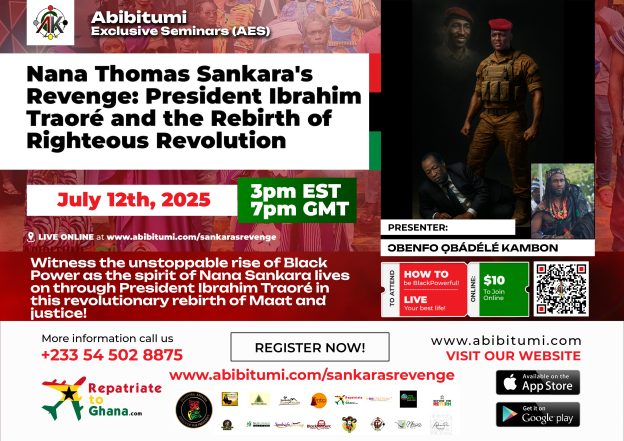
    The Ibrahim Traoré revolution is not an accident — it is an answer. Burkina Faso is rising again, and the world is paying attention. Afrikan people across the globe are watching a young leader boldly reclaim sovereignty, dignity, and direction. This is precisely the moment Ɔbenfo Ọbádélé Bakari Kambon foresaw and prepared us to understand.

    Ɔbenfo Kambon — architect of Abibitumi and tireless servant of Abibifahodie — delivers this lecture with the precision and power our people deserve. He connects Nana Thomas Sankara’s revolutionary legacy directly to the present moment. Furthermore, he strips away the colonial media’s distortions and replaces them with clarity. As a result, we see Traoré not as a military figure alone, but as a vessel carrying unfinished liberation work. This is Pan-Afrikan scholarship doing what it must — arming our people with truth.

    Why the Ibrahim Traoré Revolution Matters for Pan-Afrikan Liberation

    Sankara did not simply govern Burkina Faso. He modeled what self-determination looks like under fire. In addition, he showed Afrikan people that sovereignty requires sacrifice and strategic courage. However, colonialism struck him down before his work was complete. Now, decades later, Traoré stands in that same fire. Most importantly, he is refusing to be extinguished. Ɔbenfo Kambon traces these connections with the depth and rigor that only a scholar rooted in Ma’at can provide. This lecture is essential viewing for every Afrikan serious about liberation.

    This re-air by popular demand proves our community recognizes quality. Afrikan students, scholars, parents, and community builders all need this analysis. Moreover, understanding this moment in Burkina Faso helps us see the larger pattern of righteous revolution across the continent. The Kmtyw did not build civilization by ignoring their moment — and neither should we. Therefore, do not sleep on this lecture. Watch it, study it, share it with your people. For just $10.00, you gain access to transformative Pan-Afrikan knowledge delivered by one of our greatest living scholars. Get it here and let the revolution inside you be ignited: Watch / Get it here.

  • Before 1619: Reclaiming the Full Truth of Afrikan Resistance and Freedom

    Before 1619: Reclaiming the Full Truth of Afrikan Resistance and Freedom

    Afrikan resistance before 1619

    Afrikan resistance before 1619 is far older, far bolder, and far more victorious than mainstream narratives dare to teach. Most people have been handed 1619 as the beginning of the Afrikan story in the western hemisphere. However, that starting point is a deliberate misorientation. In truth, by 1526 — nearly a century earlier — enslaved Afrikans at San Miguel de Guadalupe had already defeated the Spanish and established free settlements. Their victory was real. Their freedom was won. Furthermore, this was not an isolated moment but the beginning of a long, powerful chain of resistance.

    In addition, the history reaches back even further. By 1441, the European trafficking of Afrikans had already begun — more than 175 years before Jamestown. These are not footnotes. They are foundations. Most importantly, when we accept 1619 as the starting point, we erase generations of Afrikan freedom fighters who triumphed long before that date. As a result, our understanding of ourselves becomes fractured and incomplete. Abibifahodie demands that we reclaim every year, every victory, and every name.

    How Ɔbenfo Kambon’s Lecture Reorients Afrikan Resistance Before 1619

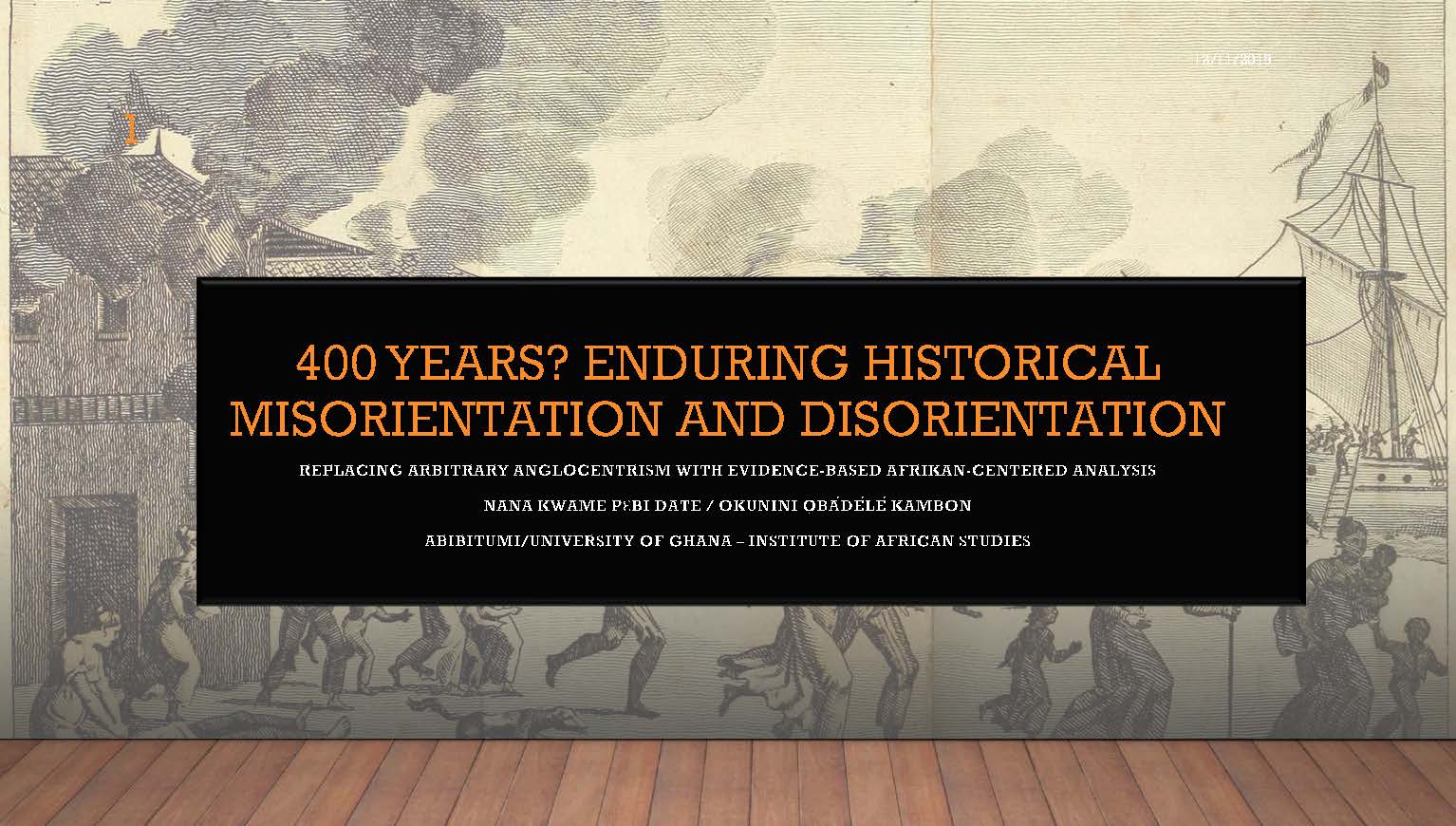
    Ɔbenfo Ọbádélé Bakari Kambon — linguist, scholar, and architect of Abibitumi — delivers this truth with scholarly precision and unapologetic clarity. His lecture, Nakumbuka: 400 Years? Enduring Historical Misorientation and Disorientation, dismantles the colonial timeline piece by piece. Furthermore, he does not simply critique — he rebuilds. He equips Afrikan people with accurate historical grounding. Moreover, the accompanying slides make this knowledge accessible for students, educators, and community builders alike. This is the kind of scholarship that Abibitumi was built to carry.

    Knowledge rooted in Ma’at is knowledge that liberates. Therefore, this lecture is not merely academic — it is a tool for Abibifahodie. Every Afrikan who watches it walks away more grounded, more equipped, and more dangerous to the systems built on our disorientation. In addition, at only $20, this exclusive video and slide package puts world-class Pan-Afrikan scholarship directly in your hands. Do not let another year pass on a false timeline. Reclaim the full story of your people. Watch and get it here: Nakumbuka — Exclusive Video & Slides at Abibitumi.