Tag: video

  • Return to the Motherland: The SankɔFa Journey 2025 Calls You Home

    Return to the Motherland: The SankɔFa Journey 2025 Calls You Home

    Sankɔfa Journey Ghana 2025

    The Sankɔfa Journey Ghana 2025 is calling Afrikan people worldwide to gather, reconnect, and reclaim what was never truly lost. For 27 powerful years, this sacred rite of passage has transformed lives. Furthermore, it has restored broken connections between Afrikan people and our ancestral homeland. This is not tourism. This is liberation in motion.

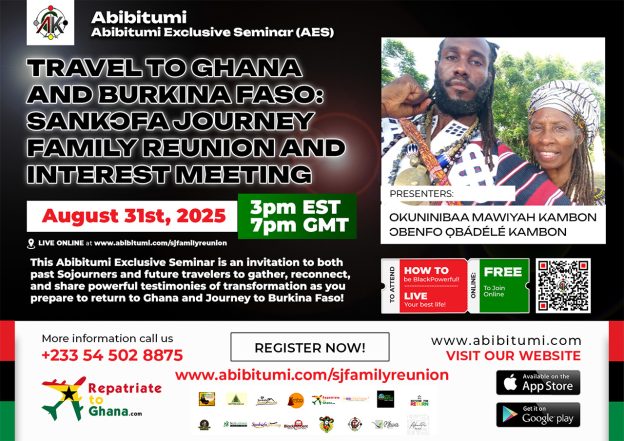
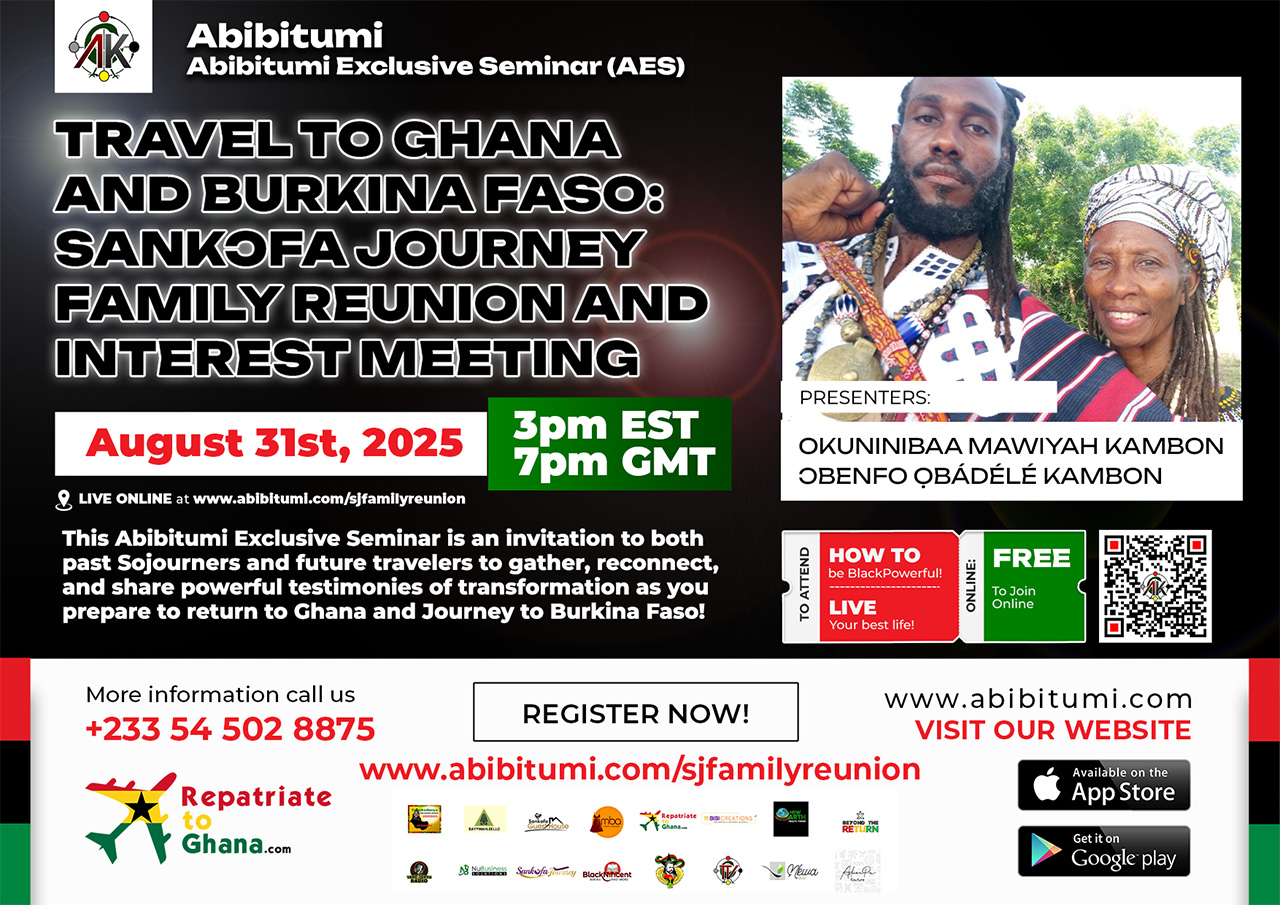
    Ɔbenfo Ọbádélé Bakari Kambon — architect of Abibitumi and world-renowned Pan-Afrikan linguist — invites both past Sojourners and future travelers to an exclusive online gathering. Mark your calendar: August 31st, 2025, at 7pm GMT / 3pm EDT. Most importantly, this powerful interest meeting is completely FREE. Sojourners will share testimonies of transformation from Cape Coast, Elmina, Assin Manso, and the sacred lands of Burkina Faso. As a result, every attendee will leave spiritually grounded and practically informed.

    Why the Sankɔfa Journey Ghana 2025 Is a Sacred Necessity for Our People

    This journey does more than move bodies across an ocean. It moves souls back into alignment with Abibifahodie — Black Liberation through conscious return. Participants retrace the footsteps of our grandcestors along the Slave Route. In addition, they engage deeply with land, language, and legacy across two Afrikan nations. The Kmtyw have always known: to move forward, we must first reach back. SankɔFa is not metaphor. It is methodology.

    The 2025 Family Reunion and Interest Meeting offers a powerful retrospective celebrating 27 years of the SankɔFa Journey. However, it also looks forward — opening the door for the next generation of Sojourners to step through. This is Abibitumi at its highest purpose: building liberated Afrikan community through knowledge, action, and return. Do not miss this opportunity to be part of something eternal. Register now and take your rightful place in the liberation movement.

    Watch / Get it here: Sankɔfa Journey 2025 — Family Reunion and Interest Meeting

  • The Transformative Power of Black Music, Arts, and Culture — Decoded by Ɔbenfo Kambon

    The Transformative Power of Black Music, Arts, and Culture — Decoded by Ɔbenfo Kambon

    Black people's music and culture

    Black people’s music and culture carry the heartbeat of an entire civilization. From the sacred rhythms of ancient Abibiman to the global dominance of Afrobeat, Abibifoɔ artistic traditions have never been merely entertainment. They are tools of resistance, identity, and collective power. This truth demands our deepest attention and study.

    Ɔbenfo Ọbádélé Bakari Kambon — world-renowned Pan-Afrikan linguist and architect of Abibitumi — delivers this truth with precision and fire. In Resonating Rhythms: The Transformative Power of Abibifoɔ Music, Arts, and Culture Pt. 2, he guides us through a profound journey across Afrikan cultural memory. Furthermore, he connects ancient drumming traditions to contemporary expressions that still move millions worldwide. This session is not background noise. It is a masterclass in Abibifahodie through sound and art.

    Why Black People’s Music and Culture Is Central to Liberation

    Our music has always organized us. It connected diasporas across oceans. It encoded resistance when open speech was forbidden. Most importantly, it preserved Afrikan identity under the most brutal conditions in human history. Ɔbenfo Kambon illuminates exactly how this happened — and why it still matters today. In addition, he demonstrates how Abibifoɔ arts have shaped leadership, spiritual life, and communal bonds across generations. This is not nostalgia. This is a living inheritance we must claim with intention.

    This recording runs 1 hour, 55 minutes and includes the full presentation plus Q&A and accompanying slides. As a result, you receive both the depth of Ɔbenfo’s scholarship and the practical tools to carry it forward. Whether you are a student, educator, parent, or community builder, this session will sharpen your understanding of who we are. However, more than knowledge, it will fuel your commitment to Abibifahodie. Do not let this resource pass you by. Own it, study it, and share it with your community.

    Get the full recording and slides for $20. Watch and study here: Resonating Rhythms Pt. 2 — Watch / Get It Here.

  • Raising Revolutionary Afrikan Girls: Grandmother Wisdom for Nation-Building Families

    Raising Revolutionary Afrikan Girls: Grandmother Wisdom for Nation-Building Families

    raising revolutionary Afrikan girls

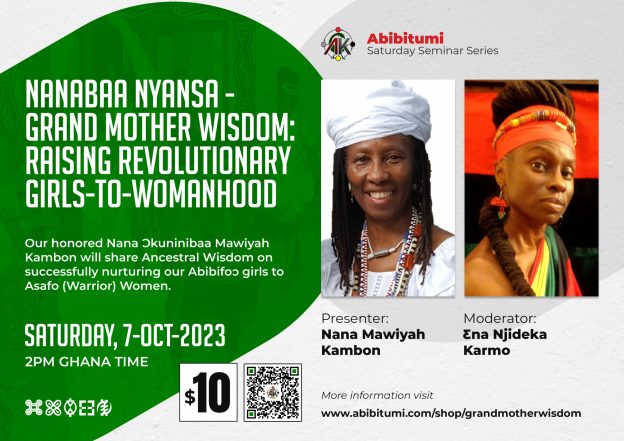
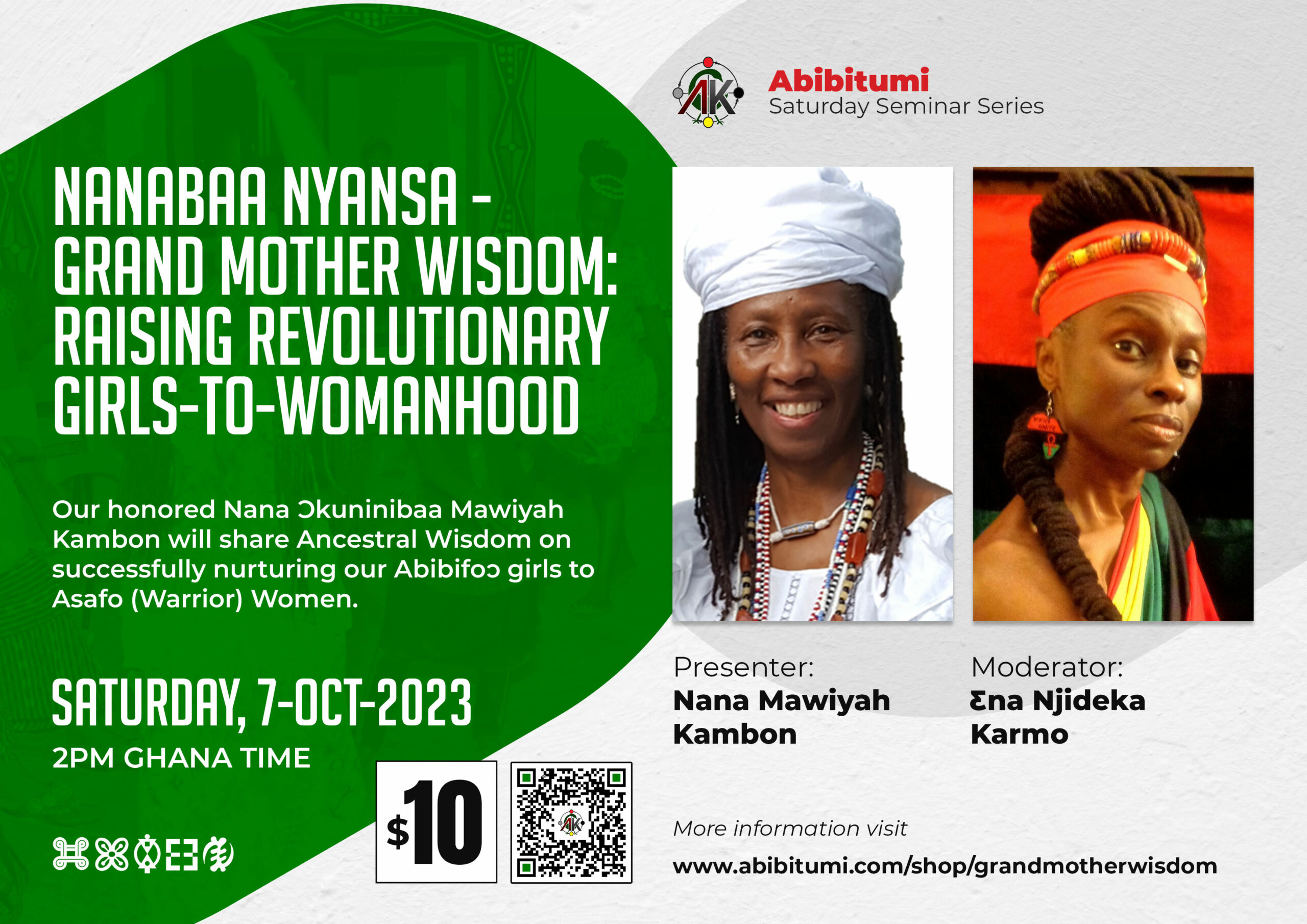
    Raising revolutionary Afrikan girls into powerful, nation-building women requires more than good intentions — it demands Ancestral Wisdom. On October 7, 2023, Abibitumi hosted a profound Saturday Seminar dedicated entirely to this sacred work. Nana Okuninibaa Mawiyah Kambon brought deep, lived wisdom to Abibifoɔ families across the globe. Furthermore, her guidance speaks directly to parents, grandparents, and community builders committed to Abibifahodie.

    Ancestral Guidance for Raising Revolutionary Afrikan Girls to Asafo Womanhood

    Nana Mawiyah Kambon — honored elder, mother, and cornerstone of the Abibitumi community — shared transformative insights on nurturing our daughters. Her teachings draw from Ancestral tradition, not colonial frameworks. As a result, families receive tools rooted in our own cultural genius. Moderator Ɛna Njideka Karmo guided the conversation with clarity and purpose. Together, they created a seminar that empowers every family system to act with intentionality.

    Most importantly, this seminar answers a critical question: how do we shape our girls into Asafo — Warrior Women — ready to serve and defend our people? Nana Mawiyah Kambon does not offer generic advice. Instead, she delivers Nanabaa Nyansa — Grandmother Wisdom — that honors the full dignity of Afrikan girlhood. In addition, her approach reinforces the family as the first and most powerful site of liberation. Our daughters deserve nothing less than our highest commitment.

    Raising revolutionary Afrikan girls is not accidental. It is a disciplined, conscious, and communal act. This recording gives families direct access to wisdom that strengthens homes and builds nations. Therefore, whether you are a parent, aunt, uncle, elder, or community builder, this seminar belongs in your liberation toolkit. Abibitumi continues to provide the scholarship and spiritual grounding that our people need to walk in Ma’at. Watch the full recording and begin transforming your family’s approach today.

    Watch / Get it here: https://stg-abibitumi-rpd-3fbq.ue1.rapydapps.cloud/product/grandmotherwisdom/

  • When Schools Fail Afrikan Children: The Achimota Dreadlocks Case Decoded

    When Schools Fail Afrikan Children: The Achimota Dreadlocks Case Decoded

    Afrikan education colonialism

    Afrikan education colonialism is not a relic of the past — it operates today, inside Afrikan institutions, enforced by Afrikan hands. The 2021 Achimota School dreadlocks controversy in Ghana made this devastatingly clear. A school on Afrikan soil rejected Afrikan children for wearing their hair in its natural, ancestral state. Furthermore, the institution defended this rejection using the very logic European colonizers installed generations ago. This is not education. This is occupation dressed in a school uniform.

    Ɔbenfo Ọbádélé Bakari Kambon — Pan-Afrikan linguist, scholar, and architect of Abibitumi — convened a press conference to address this crisis directly. He did not mince words. In this 34-minute presentation, Ɔbenfo Kambon names the root problem: Afrikan institutions producing graduates shaped by krakkkacademic frameworks that serve white supremacy, not Afrikan liberation. As a result, these institutions graduate people who enforce colonial standards against their own. Too much schooling. Too little education. The distinction matters enormously for Abibifahodie — the total liberation of Afrikan people.

    Reclaiming Afrikan-Centred Knowledge Beyond Afrikan Education Colonialism

    Most importantly, Ɔbenfo Kambon centers a critical question: who produces knowledge, and for whom? Afrikan people — both on the continent and throughout the Diaspora — carry wounds from enslavement, colonialism, and neo-colonialism. However, those wounds do not stop at the body. They penetrate the mind and reshape what Afrikan people accept as normal, authoritative, and legitimate. In addition, when Afrikan institutions police Afrikan aesthetics, they reveal how deeply this miseducation runs. The Kmtyw and all Afrikan people deserve institutions that affirm — not erase — who we are.

    This lecture is essential viewing for every Pan-Afrikan scholar, parent, student, and community builder. It connects a local controversy to a global pattern. Furthermore, it challenges us to build knowledge systems rooted in Ma’at — truth, justice, and Afrikan sovereignty. Abibitumi exists precisely for this purpose: to provide Afrikan-centred education that colonial institutions refuse to offer. Therefore, do not wait. Study this presentation. Share it within your community. Use it to sharpen your analysis and strengthen your commitment to Abibifahodie. Watch and get it here: Press Conference on Ghana Achimota “Dreadlocks” Controversy.

  • Why Your Name Holds the Key to Afrikan Liberation

    Why Your Name Holds the Key to Afrikan Liberation

    Pan-Afrikan name power

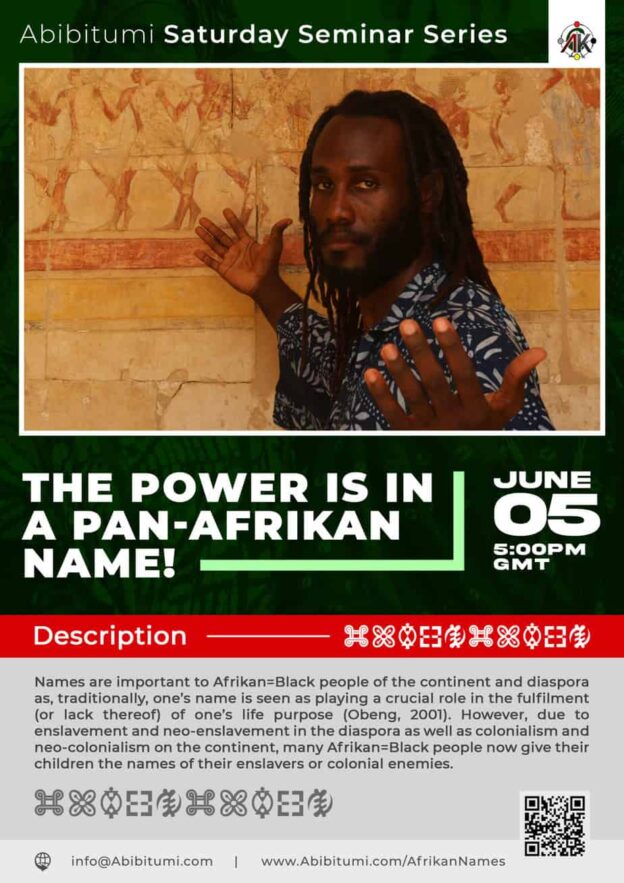
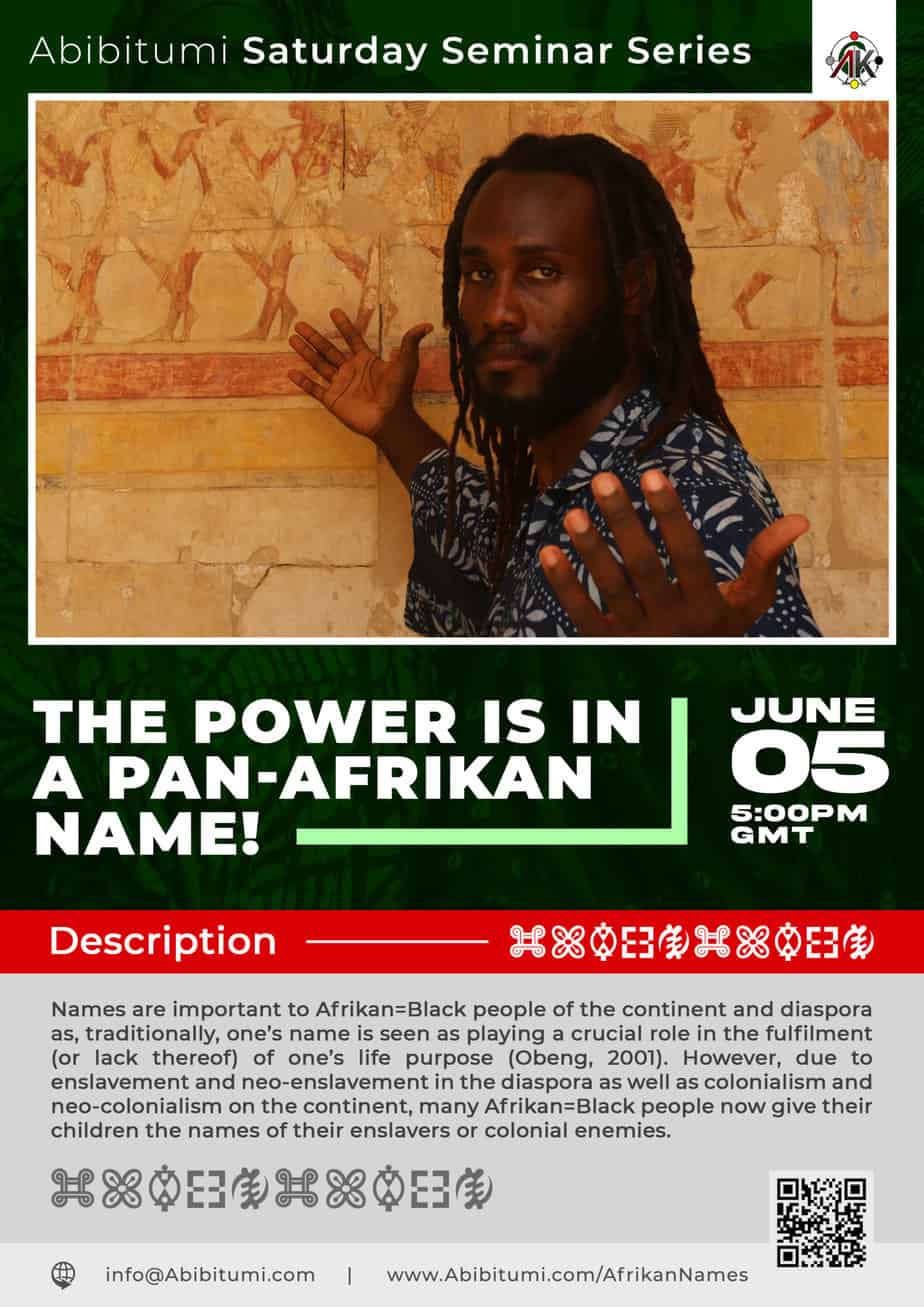
    Pan-Afrikan name power is not a trend — it is a spiritual and cultural truth our ancestors have always known. Names, in traditional Afrikan thought, shape destiny. They carry purpose, lineage, and life force. However, colonialism and enslavement severed millions of Afrikan=Black people from that sacred connection. As a result, many of us today carry the names of our oppressors without question.

    Ɔbenfo Ọbádélé Bakari Kambon — world-renowned Pan-Afrikan linguist and architect of Abibitumi — addresses this wound directly. In this powerful Saturday Seminar, he examines how naming practices among Afrikan=Black people have been deliberately disrupted. Furthermore, he traces how neo-colonialism on the continent and neo-enslavement in the diaspora both continue this erasure. This is not abstract scholarship. This is Abibifahodie in action.

    Reclaim Pan-Afrikan Name Power for Your Family and Future

    Giving our children the names of enslavers is not innocent tradition. It is a continuation of cultural warfare. Ɔbenfo Kambon draws on foundational research — including Obeng (2001) — to show that a name fulfils or undermines one’s life purpose. In addition, he connects naming to the broader work of cultural restoration across the continent and diaspora. Most importantly, he equips us with the knowledge to make conscious, liberating choices for our children and ourselves.

    This seminar belongs in every Afrikan household, classroom, and community space. Students, parents, scholars, and community builders will all find it transformative. Abibitumi continues to provide the tools our people need to walk fully in purpose and power. Do not let another generation grow up disconnected from the names — and the destiny — that belong to them. Watch and get it here: The Power Is in a Pan-Afrikan Name.