Tag: video

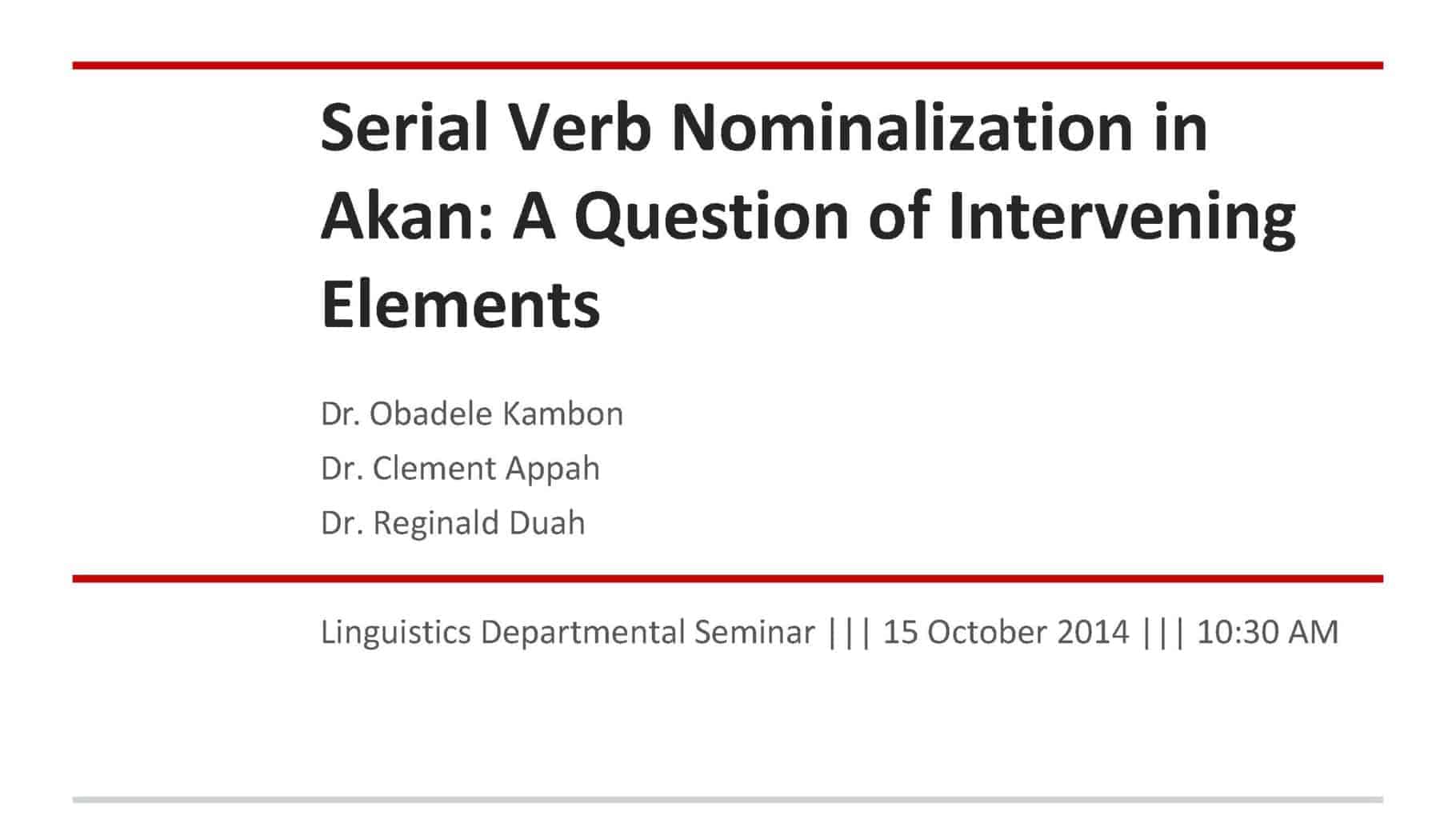
  • How Akan Serial Verb Nominalization Reveals the Living Power of Afrikan Language

    How Akan Serial Verb Nominalization Reveals the Living Power of Afrikan Language

    Akan serial verb nominalization

    Akan serial verb nominalization is one of the most dynamic and generative forces in Afrikan linguistics today. It shows how language grows from the inside — organically, communally, and on its own terms. Furthermore, this is not a peripheral topic. It sits at the very heart of how Akan-speaking people create meaning, name new realities, and sustain cultural continuity across generations. Most importantly, understanding this process affirms that Afrikan languages are living, structured, and intellectually sovereign systems.

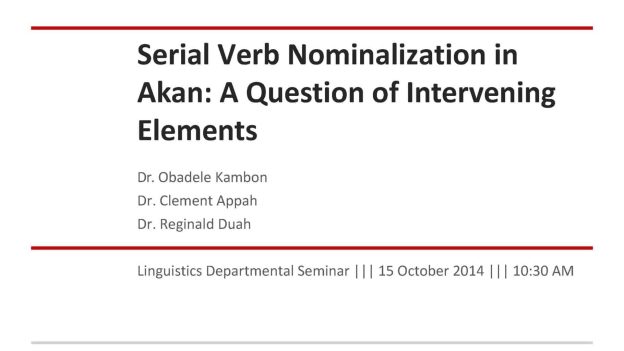
    In this lecture, Ɔbenfo Ọbádélé Bakari Kambon — joined by Dr. Clement Appah and Dr. Reginald Duah — presents a rigorous scholarly examination of how new nominal forms emerge in Akan. Ɔbenfo Kambon argues that novel forms follow morphosyntactic base templates. In other words, speakers do not form new words randomly. Instead, they apply structured patterns by analogy to meet the speech community’s evolving needs. As a result, the language expands without losing its internal logic or cultural grounding. This insight connects powerfully to Booij’s (2007) word formation schema theory — yet it centers Akan on its own linguistic foundations.

    Why Akan Serial Verb Nominalization Demands Our Full Scholarly Attention

    Afrikan languages have long been misrepresented in Western academic spaces. However, scholarship like this dismantles those distortions directly. This 54-minute lecture, available through Abibitumi.com, includes 34 downloadable PowerPoint slides for deeper study. Together, they provide a thorough and accessible resource for linguists, students, and community educators alike. In addition, the lecture raises critical questions about intervening elements — asking which morphosyntactic structures permit or block nominalization processes. These are not abstract puzzles. They reveal how Akan encodes thought, structures knowledge, and builds community language in real time.

    Abibitumi exists to place this quality of scholarship directly in the hands of Afrikan people worldwide. Every lecture we carry serves Abibifahodie — the liberation of Black people through knowledge, culture, and self-determination. This resource is no exception. Furthermore, whether you are a professional linguist, a parent teaching your children Akan, or a student building your intellectual foundation, this lecture speaks to you. Do not sleep on the tools your liberation requires. Watch the full lecture and download the slides today.

    Watch / Get it here: Serial Verb Nominalization in Akan — Video + PDF Bundle ($20.00)

  • Why Decolonization Is Not Enough — And What Afrikan People Must Build Instead

    Why Decolonization Is Not Enough — And What Afrikan People Must Build Instead

    uncolonizable spaces for Afrikan liberation

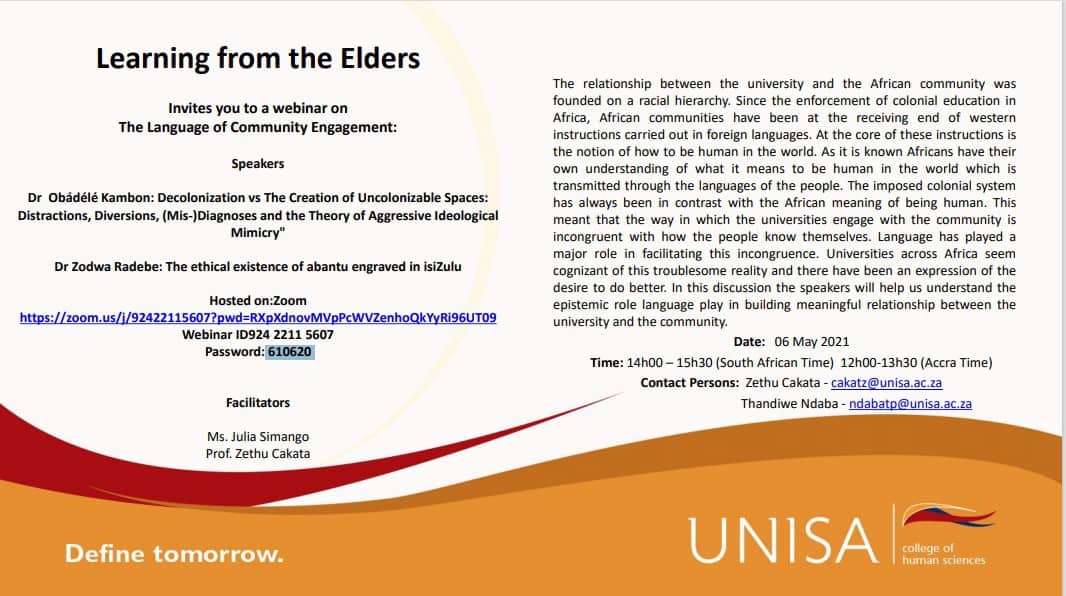
    The creation of uncolonizable spaces for Afrikan liberation is not a metaphor — it is a mandate. Colonial education was never designed to free us. Furthermore, it was engineered to replace our understanding of what it means to be human with a foreign one. As a result, the call to “decolonize” institutions built on racial hierarchy often becomes a distraction. Most importantly, it keeps Afrikan people reforming systems that were never ours to begin with.

    Ɔbenfo Ọbádélé Bakari Kambon — Pan-Afrikan linguist, scholar, and architect of Abibitumi — confronts this contradiction with surgical precision. He identifies how western academic institutions weaponize Afrikan languages, cultures, and concepts against Afrikan people themselves. This is what he terms Aggressive Ideological Mimicry. In addition, he exposes how misdiagnoses of our condition lead communities toward reforms instead of revolution. His analysis is not theoretical comfort — it is a call to decisive, grounded action.

    Building Uncolonizable Spaces for Afrikan Liberation Beyond the Colonial University

    The colonial university does not exist to serve Afrikan communities. However, many of our brightest minds spend lifetimes seeking validation within its walls. Ɔbenfo Kambon challenges this directly. He argues that true Abibifahodie — Black Liberation — requires us to build spaces the colonial system cannot penetrate, dilute, or redirect. These are not simply physical spaces. Furthermore, they are ideological, linguistic, and spiritual foundations rooted in Afrikan thought, Afrikan languages, and Afrikan humanity. Ma’at is not a concept we borrow — it is a framework we live.

    This lecture is essential for every Afrikan scholar, student, parent, and community builder ready to move beyond symbolic resistance. The analysis is sharp, the evidence is clear, and the path forward is unapologetic. Abibitumi exists precisely to make resources like this accessible to Afrikan people worldwide. Do not miss this opportunity to deepen your understanding and sharpen your tools for liberation. Watch the full lecture and own it for your continued study today.

    Watch / Get it here: Decolonization vs The Creation of Uncolonizable Spaces — $20.00

  • The BlackNificent Legacy of Nana Kamau Kambon — A Documentary Every Afrikan Must See

    The BlackNificent Legacy of Nana Kamau Kambon — A Documentary Every Afrikan Must See

    Nana Kamau Kambon documentary

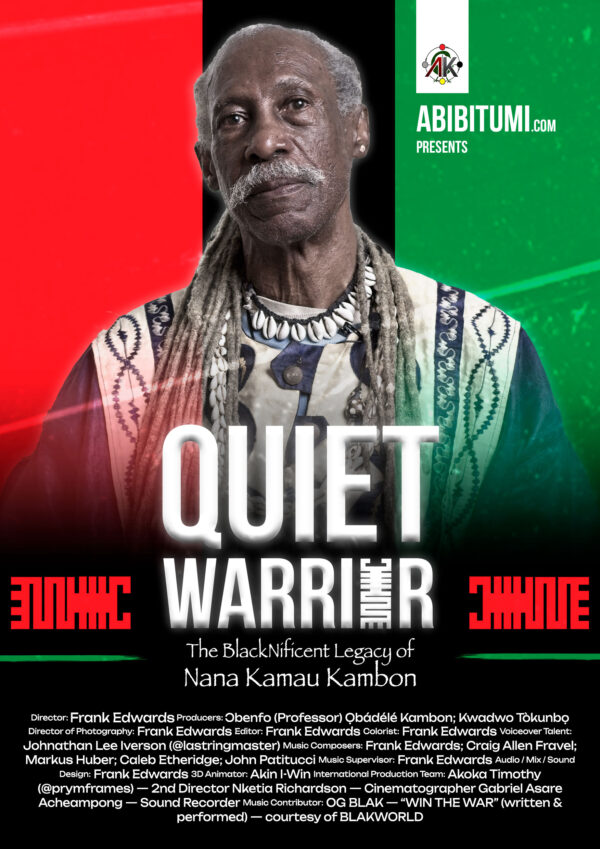
    The Nana Kamau Kambon documentary arrives as a necessary force for every Afrikan committed to liberation. Ɔbenfo Ọbádélé Bakari Kambon and the Abibitumi platform present this exclusive screening with profound intention. This is not entertainment. This is ancestral medicine.

    Quiet Warrior: The BlackNificent Legacy of Nana Kamau Kambon traces a life shaped by purpose, struggle, and unbreakable devotion to Kmtyw people. Through his own autobiographical words, Nana Kambon walks us through the crucible that forged his worldview. Furthermore, he reveals how systemic oppression became the very fire that sharpened his vision. His rejection of mainstream ideologies stands as a radical, necessary act. Most importantly, his embrace of Kmtyw-centered education offers our communities a living blueprint. As a result, this film functions as both history and instruction.

    Why the Nana Kamau Kambon Documentary Belongs in Every Afrikan Home

    Nana Kambon’s intellectual journey is inseparable from the broader struggle for Abibifahodie. He did not theorize from a distance. Instead, he built — communities, consciousness, and commitment from the ground up. In addition, his work reminds us that Black liberation demands warriors who are quiet in their discipline and thunderous in their impact. Ɔbenfo Kambon curates this presentation through the uncompromising lens of Abibitumi — a platform where Afrikan knowledge serves Afrikan people. This screening belongs in study circles, family gatherings, and liberation classrooms across the diaspora.

    The Nana Kamau Kambon documentary is available now exclusively through Abibitumi for just $10. However, its value to our collective awakening is immeasurable. Do not wait for the right moment. Moreover, share it with your children, your elders, and your study circles. This is how we honor the warriors who fought for us. This is how we build the world they envisioned. Watch it, study it, and carry it forward.

    👉 Watch / Get it here: Quiet Warrior Screening — Abibitumi Exclusive

  • Ma’at vs. Egalitarianism: What Ayi Kwei Armah Got Wrong About Kmt

    Ma’at vs. Egalitarianism: What Ayi Kwei Armah Got Wrong About Kmt

    Ma'at vs egalitarianism

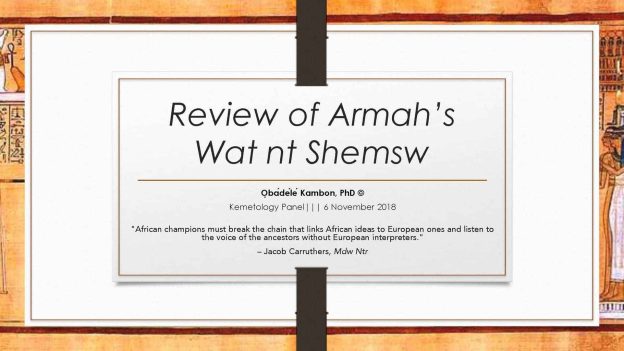
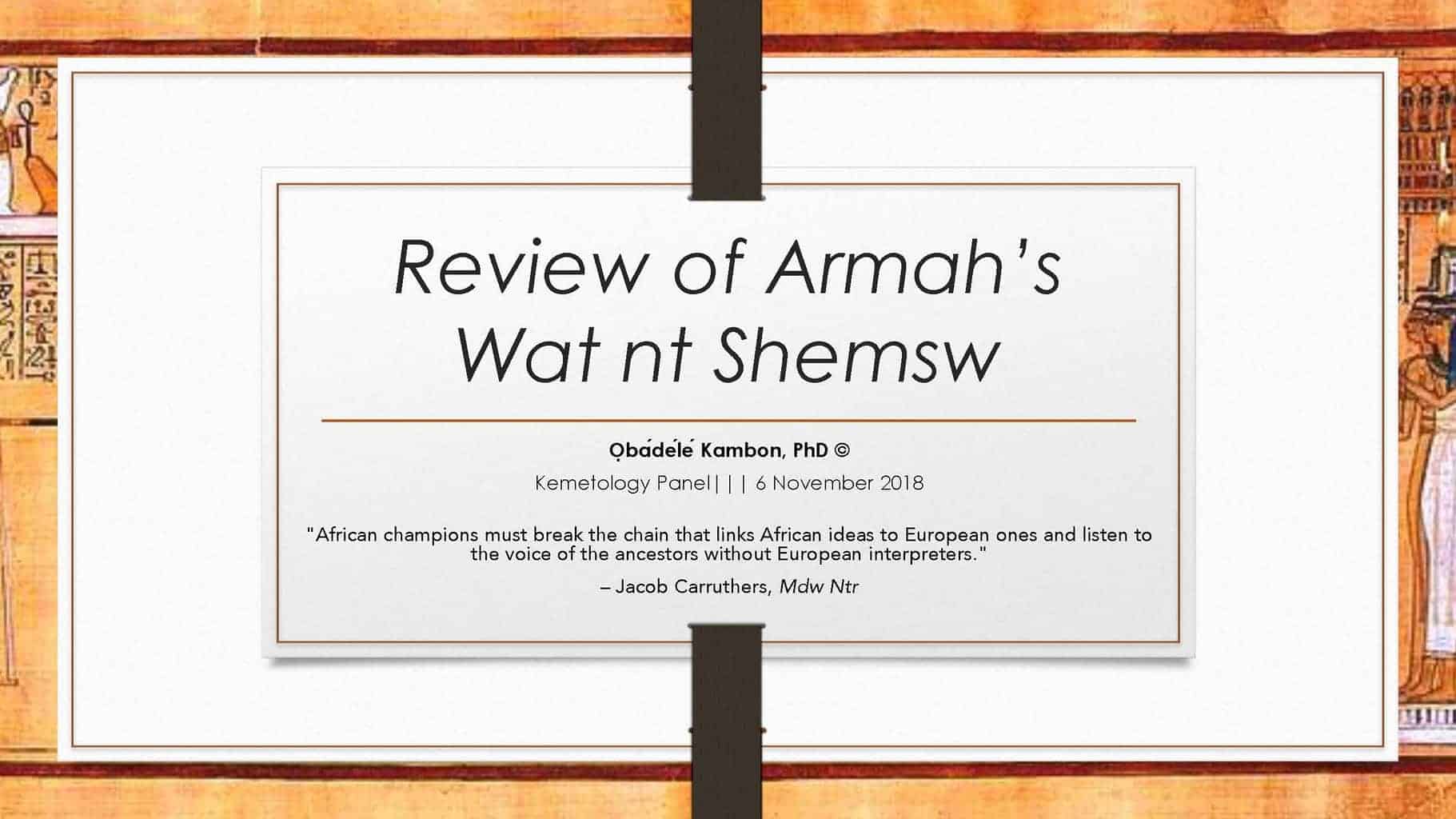
    The debate around Ma’at vs egalitarianism strikes at the very heart of how we understand our Afrikan ancestral civilization. Many scholars accept distorted frameworks without question. However, Ɔbenfo Ọbádélé Bakari Kambon refuses that surrender. In this powerful lecture, he delivers a rigorous, unflinching critique of Ataa Ayi Kwei Armah’s Wat Nt Shemsw: The Way of Companions. Furthermore, he exposes how the text misrepresents the culture, myths, and history of classical Kmt — the Land of Black People.

    Ataa Armah’s work follows a deeply flawed Egyptological convention. It artificially splits Kmt’s continuous historical flow into so-called pre-dynastic and dynastic periods. As a result, it frames these periods as diametric opposites. The former receives praise as “egalitarian” and positive. The latter — characterized as monarchy — is cast as its corrupt opposite. Most importantly, Ɔbenfo Kambon demonstrates that this framing carries no evidentiary support. It distorts the lived reality of the Kmtyw people entirely.

    Why the Ma’at vs Egalitarianism Distinction Matters for Abibifahodie

    This is not a small academic disagreement. Distorting the ethical and spiritual principles of our ancestors has real consequences. Replacing Ma’at — the divine, ordered principle of truth, justice, and cosmic balance — with Western egalitarianism misrepresents what the Kmtyw actually built and believed. In addition, it smuggles foreign ideological frameworks into Afrikan thought under the cover of liberation rhetoric. Ɔbenfo Kambon makes clear that Abibifahodie demands we hold our ancestral record with precision and integrity.

    This lecture is essential viewing for every serious student of Afrikan history, spirituality, and liberation philosophy. Ɔbenfo Ọbádélé Kambon equips us with the analytical tools to defend our ancestral truth against distortion — whether intentional or not. Therefore, we must study deeply, critique boldly, and build our understanding on solid Afrikan ground. Do not miss this critical contribution to Pan-Afrikan scholarship. Watch and get it here: AI Maat vs Egalitarianism — Abibitumi.com.

  • Ɔbenfo Kambon’s Burkina Faso Journey: Revolutionary Lessons from the Land of Sankara

    Ɔbenfo Kambon’s Burkina Faso Journey: Revolutionary Lessons from the Land of Sankara

    Burkina Faso Pan-Afrikan revolution

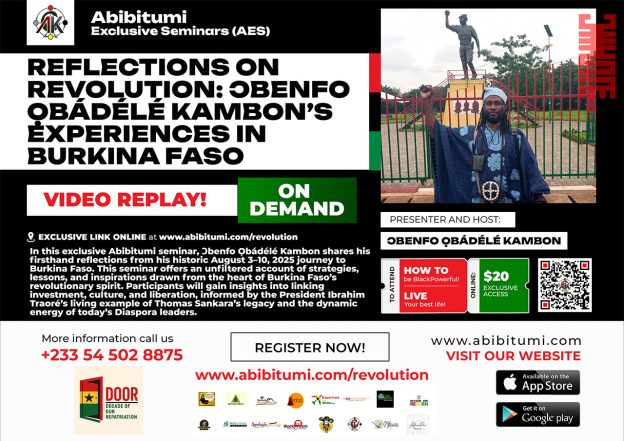
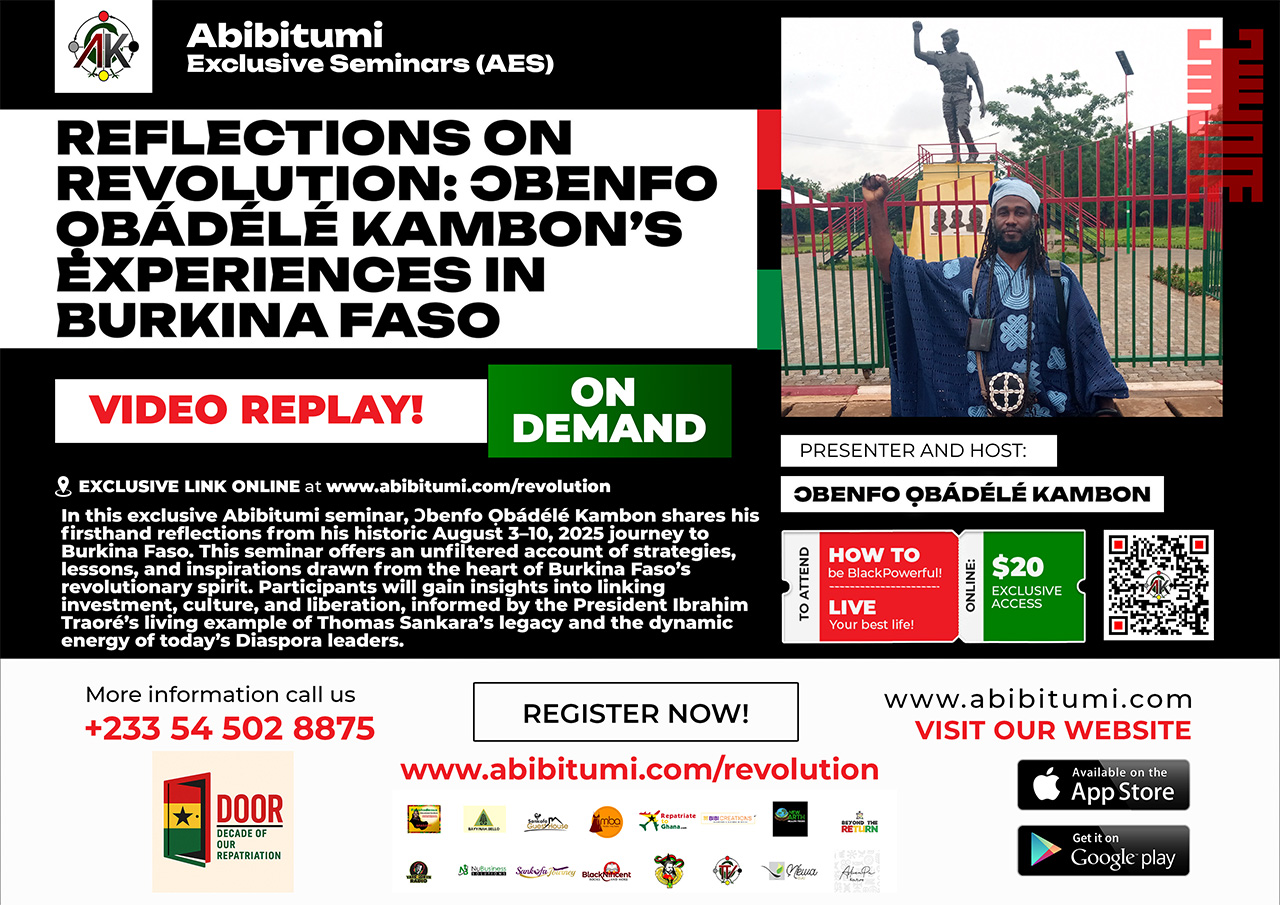
    The Burkina Faso Pan-Afrikan revolution lives — and Ɔbenfo Ọbádélé Bakari Kambon walked directly into its heart. From August 3–10, 2025, he traveled to Burkina Faso for high-level meetings, deep cultural engagements, and firsthand encounters with the living legacy of Thomas Sankara. Furthermore, he returned with insights that every Afrikan person on this planet needs to hear. This is not commentary from a distance. This is testimony from the ground.

    Ɔbenfo Kambon is the architect of Abibitumi — a Pan-Afrikan education and liberation platform rooted in Ma’at and Abibifahodie. He is a world-renowned linguist, scholar, and freedom strategist. Moreover, his work consistently connects Afrikan language, culture, and consciousness to the urgent project of Black liberation. When he speaks on revolutionary experience, he speaks with both scholarly precision and lived commitment. In addition, his voice carries the weight of decades devoted to our people’s freedom.

    Watch the Replay: Burkina Faso Pan-Afrikan Revolution Insights from Ɔbenfo Kambon

    On August 17, 2025, Ɔbenfo Kambon delivered his reflections in an Abibitumi Exclusive Seminar. He unpacked what he witnessed, what he felt, and what it means for the global Afrikan community. As a result, this replay is now available for just $20.00. Most importantly, your purchase earns you 1000 Abibisika — Black Gold Points — within the Abibitumi ecosystem. Therefore, investing in this seminar means investing directly in your own liberation education and community standing.

    Sankara’s Burkina Faso demonstrated that Afrikan people can govern themselves with dignity, discipline, and revolutionary love. Consequently, studying that legacy today is not nostalgia — it is strategy. Ɔbenfo Kambon’s direct experiences in Burkina Faso bring that strategy into the present moment. Furthermore, this seminar gives our community access to knowledge that mainstream platforms will never provide. However, Abibitumi exists precisely for this purpose — to deliver liberatory knowledge directly into Afrikan hands. Watch the replay now and let the revolution instruct you.

    Watch / Get it here: Reflections on Revolution — Abibitumi Exclusive Seminar Replay