Tag: twi

  • What Akan Spelling Errors Reveal About How We Think in Our Language

    What Akan Spelling Errors Reveal About How We Think in Our Language

    Akan writing and language

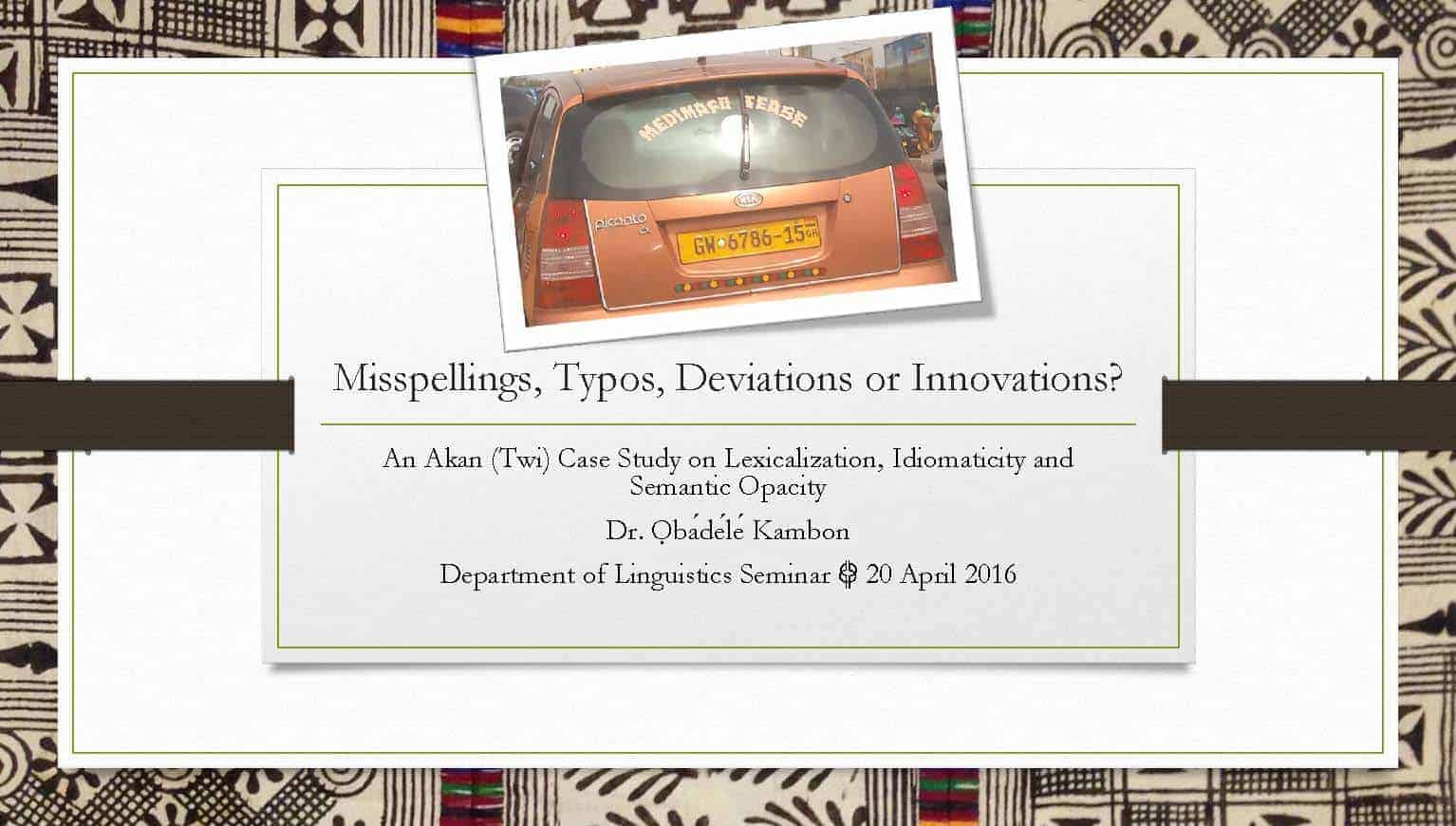
    Akan writing and language hold secrets that standard orthography alone cannot reveal. Most linguists dismiss irregular spellings as errors. However, Ɔbenfo Ọbádélé Bakari Kambon asks a deeper, more powerful question: what if those “errors” are actually windows into how Afrikan people think? This landmark 2016 seminar presentation challenges the very foundation of how we evaluate written language.

    Ɔbenfo Ọbádélé Kambon, architect of Abibitumi and world-renowned Pan-Afrikan linguist at the Department of Linguistics, delivered this 84-minute lecture with his signature scholarly precision. Furthermore, he grounds every argument in the lived reality of Akan (Twi) speakers and writers. Many of these speakers have never formally studied the standard orthography. As a result, their writing reveals something profound — not deficiency, but a living cognitive map of meaning-making. This is Abibifahodie in action: reclaiming the right to interpret our own linguistic reality.

    Why Akan Writing and Language Demand a Liberated Lens

    Ɔbenfo Kambon introduces three critical concepts to reframe this conversation: lexicalization, idiomaticity, and semantic opacity. Together, these tools expose how meaning solidifies inside a language over time. In addition, they explain why a “misspelling” may actually reflect deep semantic knowledge rather than ignorance. This is not a lecture about correcting our people. Most importantly, it is a lecture about understanding them — fully, brilliantly, and on our own terms. The 89-slide PowerPoint PDF accompanies the video and deepens every argument presented.

    This combo bundle — video and secured downloadable PDF — belongs in every Afrikan scholar’s library. Students, educators, community linguists, and parents raising children in Akan-speaking homes will all find transformative value here. Furthermore, this work strengthens our collective capacity to build Afrikan-centered language education. However, its significance extends beyond the classroom. It speaks directly to Abibifahodie — the liberation of Afrikan minds from frameworks that were never built for us. This is Abibitumi doing exactly what it was created to do: arming our people with knowledge that sets us free.

    Watch the lecture and download the full slide deck today. 👉 Get it here at Abibitumi.com — only $20.00.

  • Reclaiming What Was Taken: Language, Identity & Black Liberation Through SankÉ”fa

    Reclaiming What Was Taken: Language, Identity & Black Liberation Through Sankɔfa

    intergenerational Black liberation

    Intergenerational Black liberation begins with one decisive act — returning to retrieve what was taken from us. Sankɔfa, the sacred Akan principle of looking back to move forward, is not merely symbolic. It is a living methodology. It is a call to action for every Afrikan person serious about freedom. Furthermore, it demands that we transmit our culture, our language, and our identity to every generation that follows us.

    Ɔbenfo Ọbádélé Bakari Kambon — Pan-Afrikan linguist, scholar, and architect of Abibitumi — answers that call directly in this powerful presentation. He draws from his own lived experience of Sankɔfa. He shows how language is not simply a communication tool. Most importantly, he reveals how language is the very vessel of consciousness, identity, and liberation. Through Twi, Mdw Ntr, and Afrikan-centered practice, Ɔbenfo Kambon demonstrates what it truly means to reclaim who we are. As a result, this lecture reaches far beyond theory into transformative, practical wisdom.

    How Sankɔfa Fuels Intergenerational Black Liberation and Cultural Continuity

    Culture does not preserve itself. We must consciously transmit it. In this lecture, Ɔbenfo Kambon walks us through the responsibility that Afrikan parents, educators, and community builders carry. However, he does not stop at identifying the problem. He equips us with the tools — language immersion, cultural practice, and Abibifahodie-centered education — to do the work. In addition, he models this transmission through his own journey as a father, scholar, and freedom builder. Every serious student of Pan-Afrikanism will recognize the urgency embedded in every word he delivers.

    This lecture belongs in every Afrikan home, classroom, and liberation study group. The Kmtyw of this generation have a sacred obligation to carry forward what our ancestors built. Furthermore, we must build new structures that ensure our children never lose themselves again. Abibitumi continues to make that mission possible by preserving and distributing transformative works like this one. Do not wait to access this essential piece of Pan-Afrikan scholarship. Watch it, study it, and share it with your community today.

    Watch / Get it here: SANKƆFA: My Experience – Intergenerational Transmission of Language, Identity & Liberation — Available now for $20.00.

  • Why Your Name Holds the Key to Afrikan Liberation

    Why Your Name Holds the Key to Afrikan Liberation

    Pan-Afrikan name power

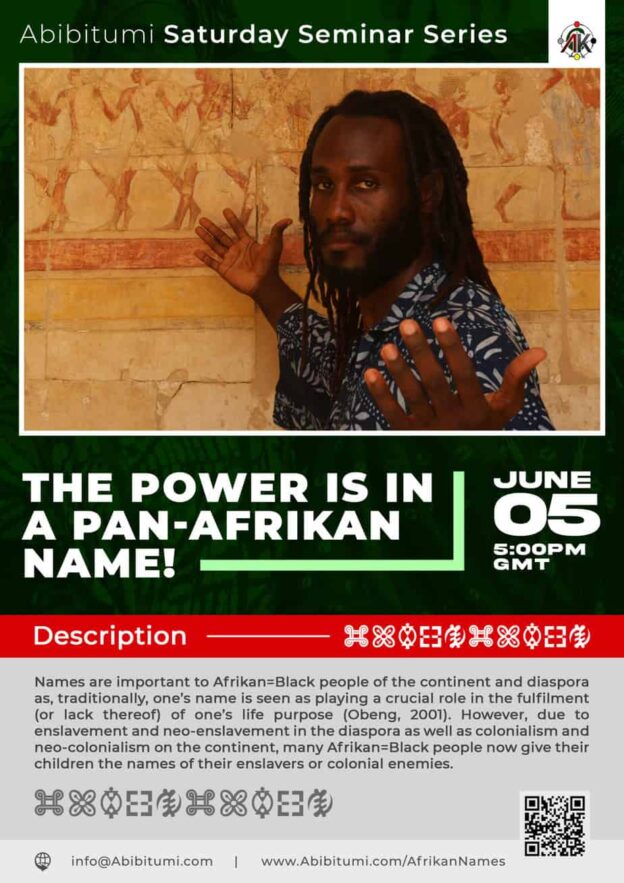
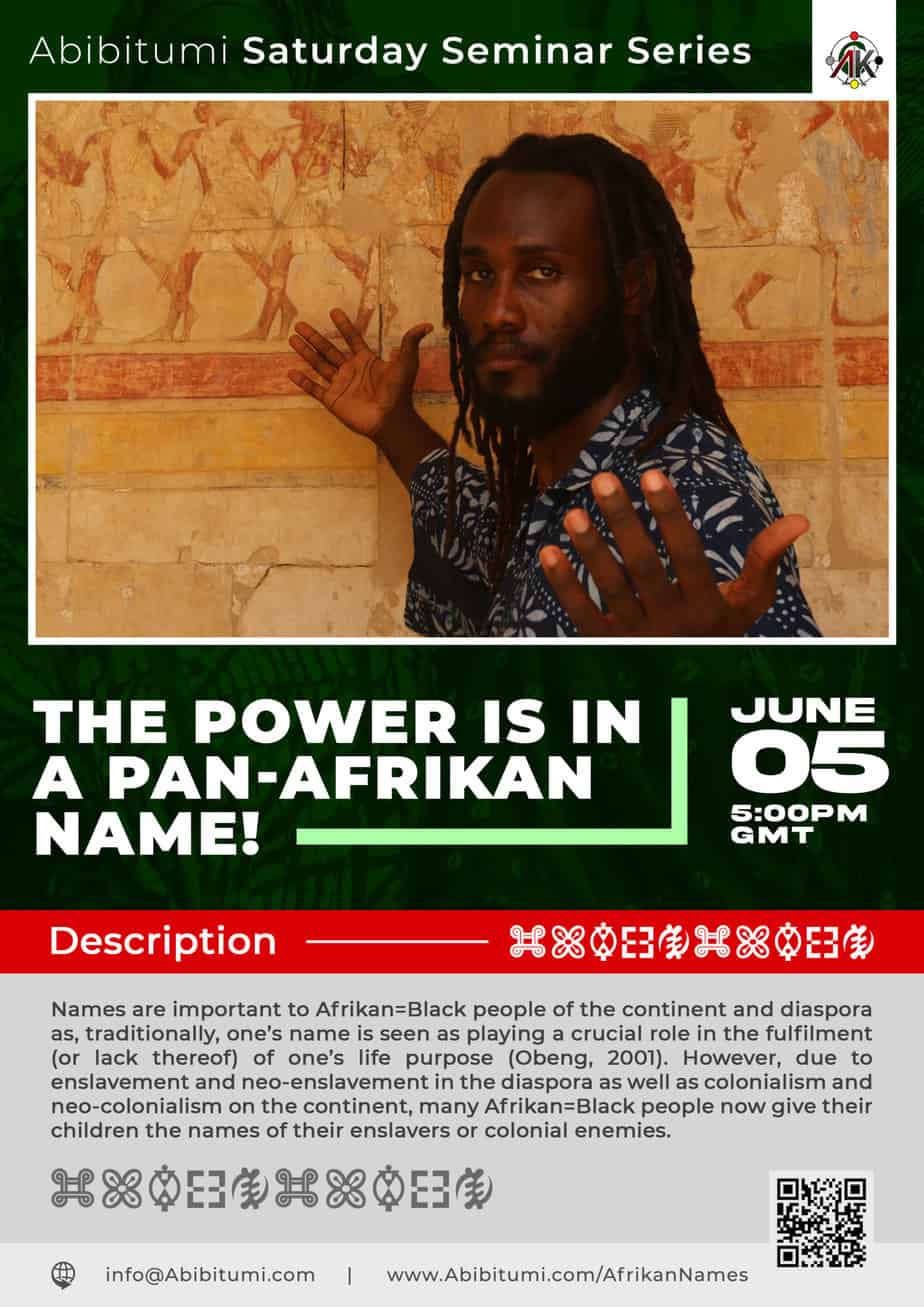
    Pan-Afrikan name power is not a trend — it is a spiritual and cultural truth our ancestors have always known. Names, in traditional Afrikan thought, shape destiny. They carry purpose, lineage, and life force. However, colonialism and enslavement severed millions of Afrikan=Black people from that sacred connection. As a result, many of us today carry the names of our oppressors without question.

    Ɔbenfo Ọbádélé Bakari Kambon — world-renowned Pan-Afrikan linguist and architect of Abibitumi — addresses this wound directly. In this powerful Saturday Seminar, he examines how naming practices among Afrikan=Black people have been deliberately disrupted. Furthermore, he traces how neo-colonialism on the continent and neo-enslavement in the diaspora both continue this erasure. This is not abstract scholarship. This is Abibifahodie in action.

    Reclaim Pan-Afrikan Name Power for Your Family and Future

    Giving our children the names of enslavers is not innocent tradition. It is a continuation of cultural warfare. Ɔbenfo Kambon draws on foundational research — including Obeng (2001) — to show that a name fulfils or undermines one’s life purpose. In addition, he connects naming to the broader work of cultural restoration across the continent and diaspora. Most importantly, he equips us with the knowledge to make conscious, liberating choices for our children and ourselves.

    This seminar belongs in every Afrikan household, classroom, and community space. Students, parents, scholars, and community builders will all find it transformative. Abibitumi continues to provide the tools our people need to walk fully in purpose and power. Do not let another generation grow up disconnected from the names — and the destiny — that belong to them. Watch and get it here: The Power Is in a Pan-Afrikan Name.

  • Kamose Stelae Decoded: Afrikan Languages, Strategy & Black Liberation at ASCAC 2025

    Kamose Stelae Decoded: Afrikan Languages, Strategy & Black Liberation at ASCAC 2025

    Kamose Stelae Black liberation

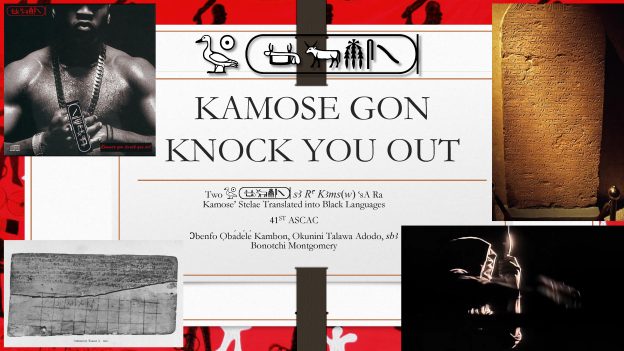
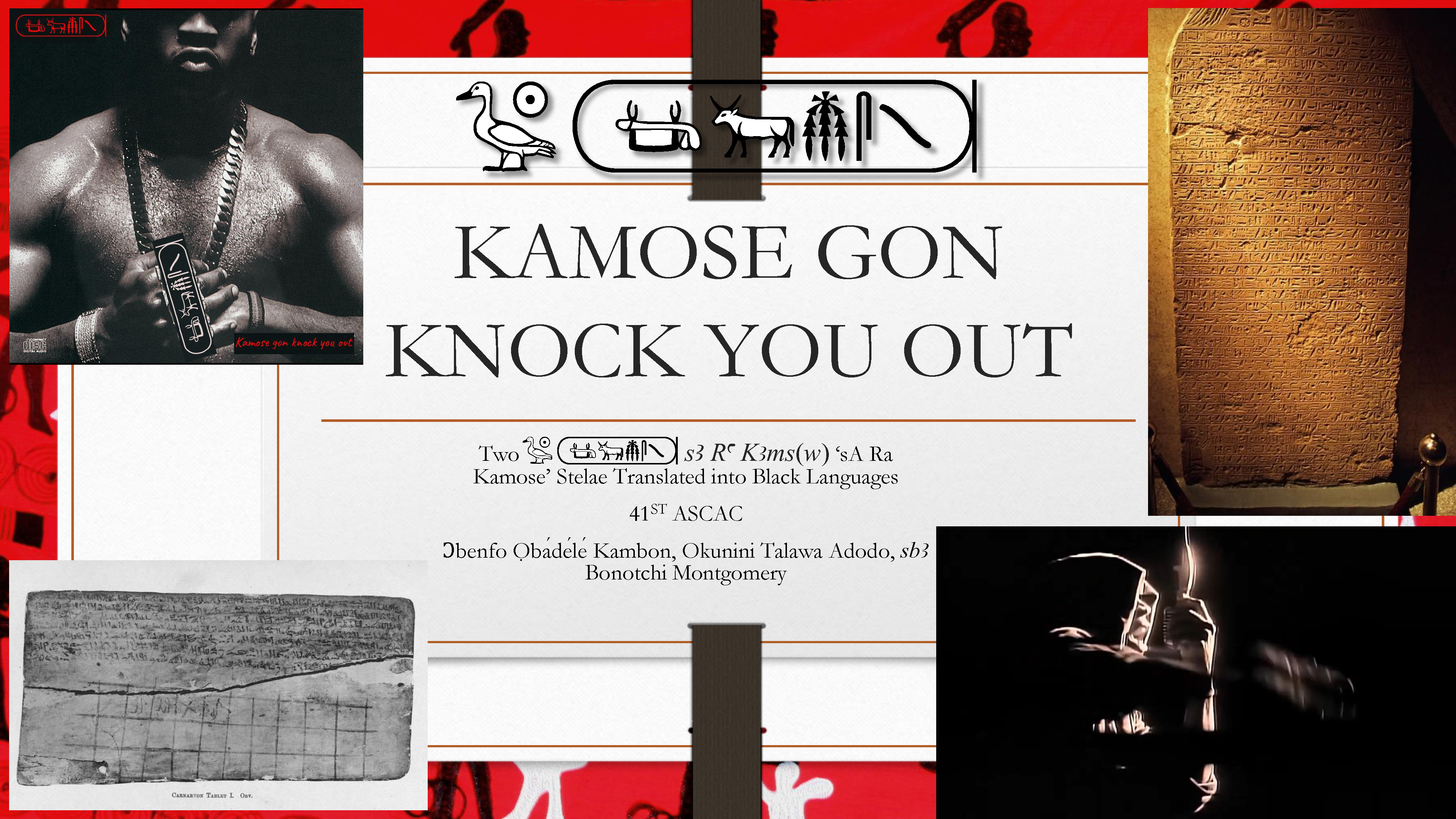
    The Kamose Stelae Black liberation analysis delivered at ASCAC 2025 is exactly the scholarship our people need right now. Ɔbenfo Ọbádélé Bakari Kambon — architect of Abibitumi and world-renowned Pan-Afrikan linguist — joined forces with Okunini Talawa Adodo and sbA Bonotchi Montgomery. Together, they brought a 49-minute intellectual and strategic masterclass to the 41st annual ASCAC conference. Furthermore, this presentation does not simply translate ancient text. It resurrects the living voice of our ancestors and points it directly toward Abibifahodie.

    Ɔbenfo Kambon grounds his scholarship in Afrikan languages, Afrikan thought, and the unapologetic pursuit of Black liberation. As a result, his work never sits comfortably inside colonial academic frameworks. Instead, it dismantles them. In this presentation, he and his colleagues move through the Kamose Stelae with linguistic precision, cultural authority, and strategic clarity. Most importantly, they demonstrate that the Kmtyw were not passive victims of history. They were warriors, planners, and liberators. That legacy belongs to us.

    Why the Kamose Stelae Black Liberation Framework Matters Today

    Pharaoh Kamose did not wait. He organized, strategized, and moved against the forces occupying Kemet. In addition, his recorded words — preserved in the stelae — carry strategic wisdom that speaks directly to our current struggle. Ɔbenfo Kambon and the presenters decode that wisdom using Afrikan languages, including Twi and Yoruba. Furthermore, they connect ancient military and political strategy to the living reality of Pan-Afrikan liberation today. This is not nostalgia. This is a roadmap.

    This exclusive recording is available now through Abibitumi — the premier platform for Pan-Afrikan education and community-centered liberation scholarship. Scholars, students, community builders, and parents fighting for their children’s minds will all find deep value here. Moreover, at just $20.00, this 49-minute presentation delivers irreplaceable knowledge that no mainstream institution will ever offer. However, access to this kind of scholarship requires that we support the infrastructure that makes it possible. Therefore, invest in your liberation today. Watch the full presentation and download the slides now.

    Watch / Get it here: Kamose Gon Knock You Out – ASCAC 2025 | Abibitumi