Tag: philosophy

  • Who Owns Afrikan Philosophy? The Battle for Kemet Explained

    Who Owns Afrikan Philosophy? The Battle for Kemet Explained

    Afrikan philosophy and Kemet

    Afrikan philosophy and Kemet represent two of the most contested intellectual battlegrounds in the modern world. For centuries, forces hostile to Afrikan liberation have worked to separate Black people from their philosophical heritage. Furthermore, they have worked to erase Kemet — ancient Kmt — from its rightful place in Afrikan intellectual history. This lecture confronts that erasure directly, powerfully, and without apology.

    Ɔbenfo Ọbádélé Bakari Kambon — architect of Abibitumi and world-renowned Pan-Afrikan linguist — delivers this three-hour masterclass as Week 14 of the Foundations of Kmtyw (Afrikan=Black) Thought course. In addition, the lecture draws on Jacob H. Carruthers’ landmark text Intellectual Warfare, situating the battle for Kmt within a broader struggle for epistemological sovereignty. As a result, students gain not only historical knowledge but also a sharpened analytical lens. Ɔbenfo Kambon does not simply teach philosophy — he equips Afrikan people to wield it.

    Why the Battle for Afrikan Philosophy and Kemet Still Matters Today

    The African Thinkers Program was designed to fill a critical gap. Most MPhil and PhD students never encounter genuinely Afrikan modes of thought. However, this course changes that. It introduces core principles, patterns, and histories of knowledge production across Afrika and the Afrikan World — from antiquity to the present. Most importantly, it centers the Kmtyw — the ancient Black builders of Kmt — as originators of philosophical thought, not recipients of it. This lecture includes a full 53-slide secured PDF, giving serious scholars a structured framework for deep study.

    Abibifahodie — Afrikan liberation — demands that we reclaim every domain stolen from us. Philosophy is no exception. Indeed, intellectual warfare is real, and this lecture names it clearly. The Foundations of Kmtyw Thought series builds the epistemological foundation that every Pan-Afrikan scholar, student, parent, and community builder deserves. In addition, at only $20 for over three hours of rigorous instruction, this resource makes no compromises on depth or quality. Therefore, whether you are entering graduate study or deepening your liberation praxis, this lecture belongs in your collection.

    Watch now and get the full Video + Secured PDF Combo here:
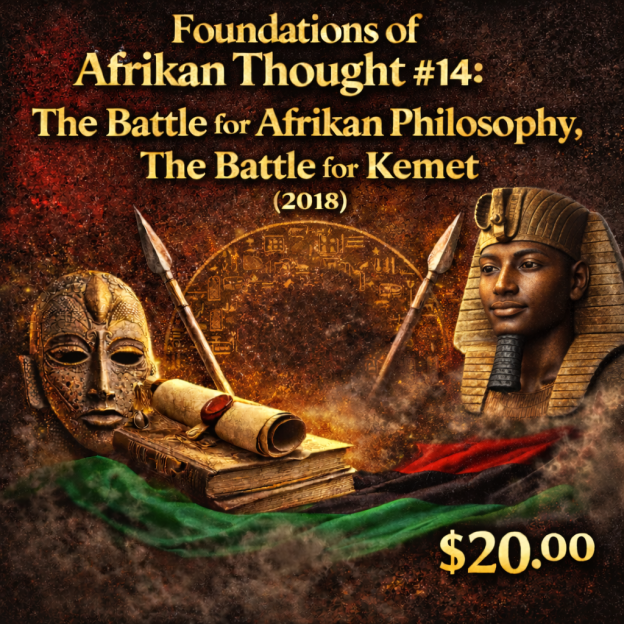
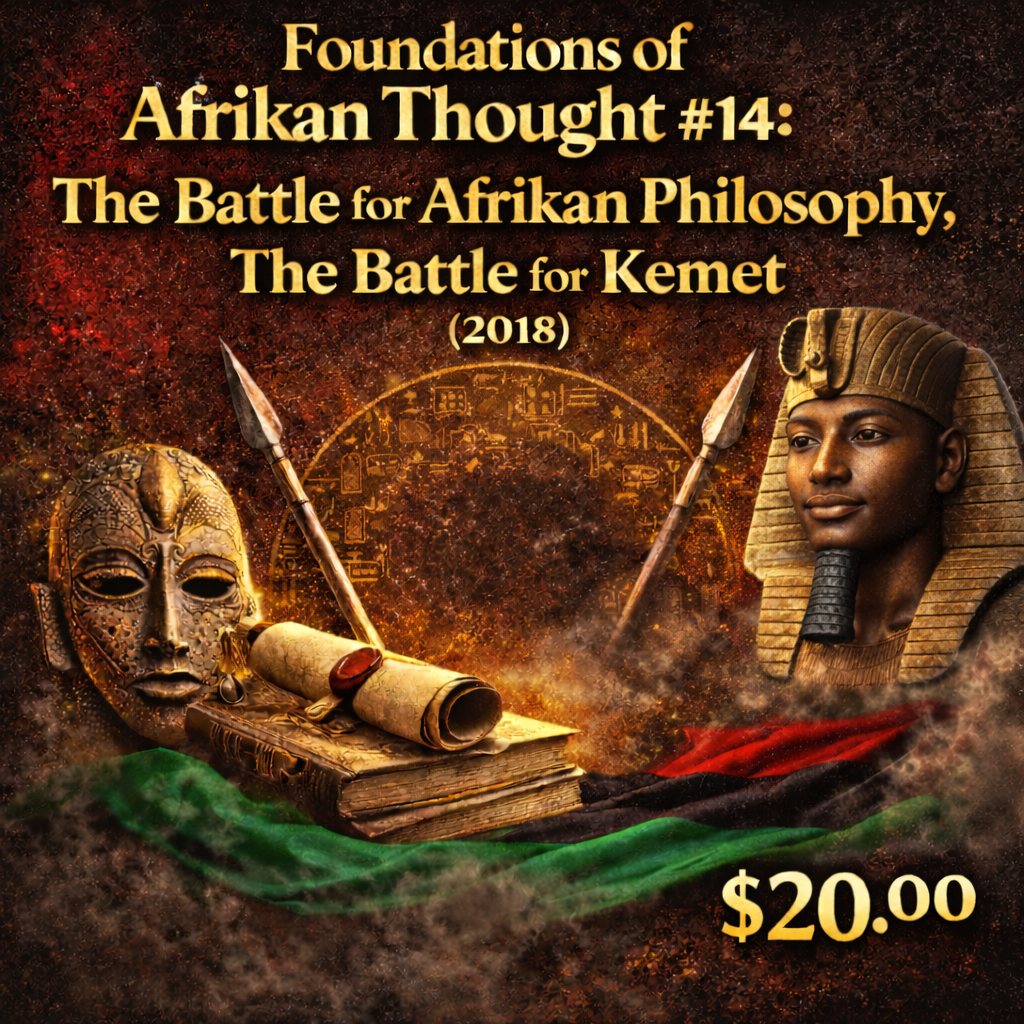
    Foundations of Afrikan Thought #14 — The Battle for Afrikan Philosophy, The Battle for Kemet (2018)

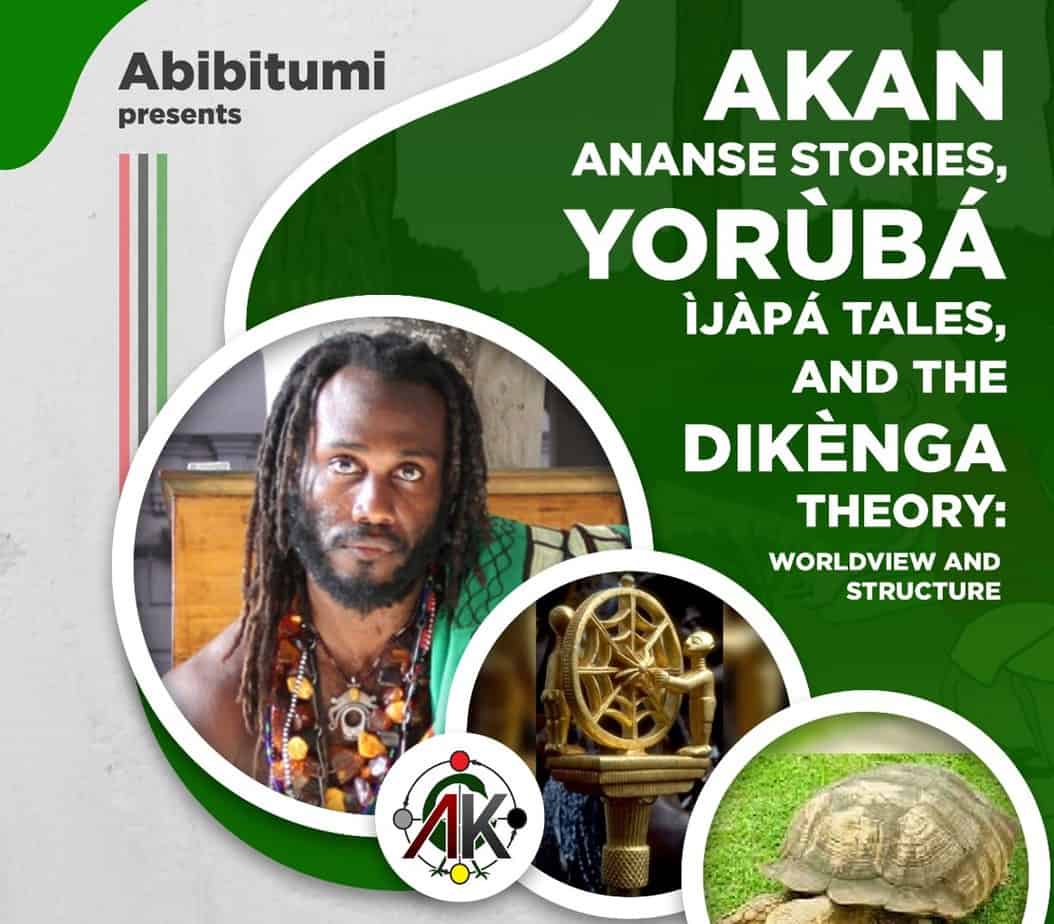
  • Akan Ananse, Yorùbá ÃŒjàpá, and the Dikènga Theory: Reclaiming Afrikan Literary Analysis

    Dikènga theory Afrikan stories

    The Dikènga theory Afrikan stories framework reveals something profound: our stories were never simply linear. They move in cycles. They mirror the cosmos. Ɔbenfo Ọbádélé Bakari Kambon — Pan-Afrikan linguist, scholar, and architect of Abibitumi — presents a revolutionary lecture applying the Bakôngo cosmogram to Akan Ananse and Yorùbá Ìjàpá tales. As a result, what emerges is a wholly Afrikan method of literary analysis. Furthermore, this approach dismantles the Eurocentric lens that has long distorted our understanding of Afrikan oral tradition.

    Fu-Kiau declared that “nothing exists that does not follow the steps of the cyclical Kongo cosmogram.” Ɔbenfo Kambon takes that declaration seriously. He tests it rigorously. In this study, he applies what he terms the Dikènga theory of literary analysis to these beloved story traditions. Consequently, concepts like “storylines” and “timelines” give way to something deeper — patterned, cyclical structures embedded in material, spatial, and temporal phenomena. Most importantly, this is not a borrowed framework. This is Afrikan cosmology doing exactly what it was designed to do.

    Why the Dikènga Theory Transforms How We Read Afrikan Stories

    Ananse and Ìjàpá are not merely trickster figures. They are cosmological agents. Their stories encode the worldview, structure, content, and function of Afrikan thought. However, Western literary theory has consistently failed to honor this depth. The Dikènga theory Afrikan stories approach corrects that failure completely. In addition, it gives scholars, students, parents, and community builders a powerful tool rooted in our own intellectual traditions. Abibifahodie demands that we stop interpreting ourselves through outside eyes. This lecture answers that demand directly and boldly.

    This lecture comes with both video and slides. Therefore, you can engage the material visually and analytically. Whether you are a seasoned scholar or a first-generation student of Pan-Afrikan thought, this resource meets you fully. Moreover, the Abibitumi platform exists precisely to deliver this level of scholarship directly to Afrikan people globally. This is liberation education. This is Kmtyw wisdom applied to Afrikan literary heritage. Do not miss it. Watch the full lecture and download the slides today.

    Watch / Get it here: VIDEO + SLIDES: Akan Ananse Stories, Yorùbá Ìjàpá Tales and the Dikènga Theory

  • Does Kemetic Philosophy Deserve a Seat at the Table? Ɔbenfo Kambon Says It Built the Table.

    Kemetic philosophy validity

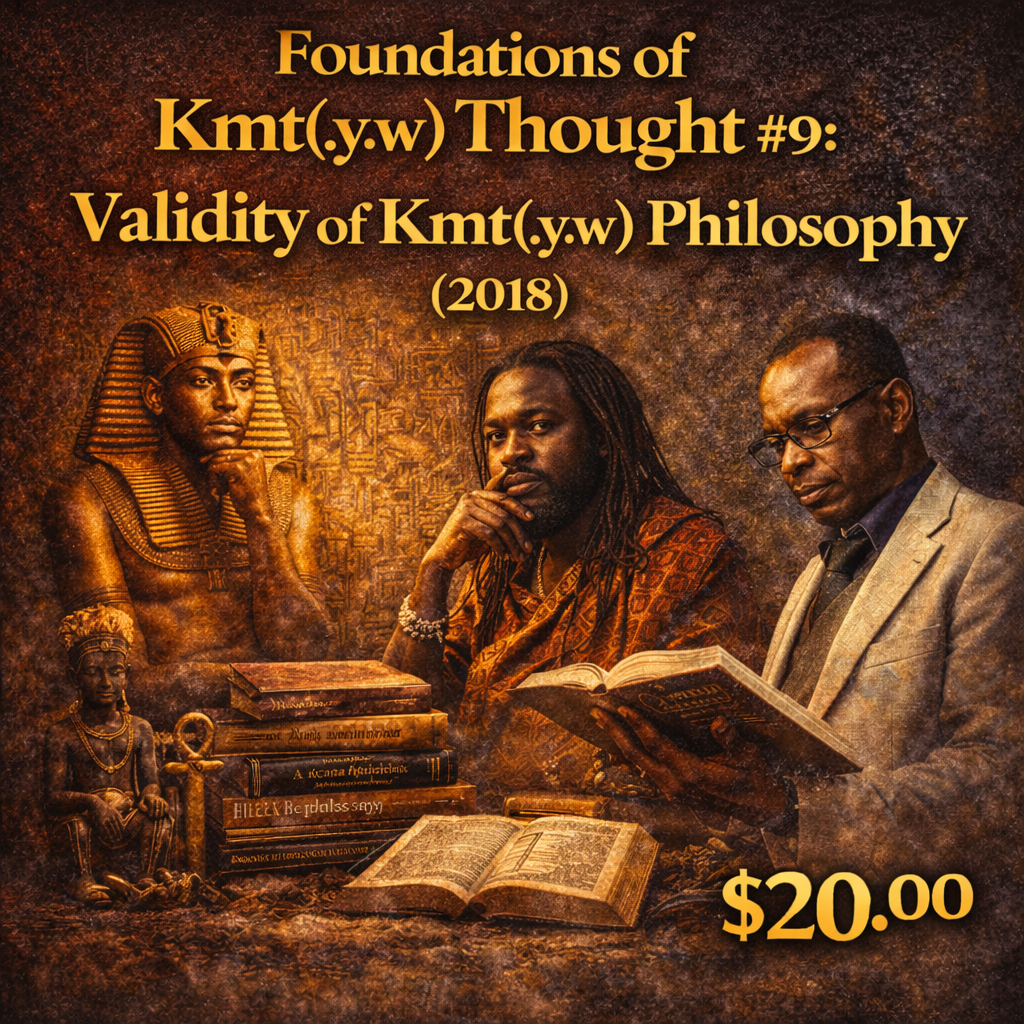
    Kemetic philosophy validity is not a question — it is a declaration. For too long, Western academia has dismissed or stolen the intellectual legacy of the Kmtyw. Ɔbenfo Ọbádélé Bakari Kambon confronts that theft directly. In this landmark lecture, he rebuilds the epistemological foundation that Afrikan people deserve and require. Furthermore, he does so with rigorous scholarship rooted in liberation.

    This is Week 9 of the Foundations of Kmt(.y.w) Thought series. The session runs nearly three hours — two hours, fifty-three minutes of uncompromising intellectual work. Ɔbenfo Kambon draws from essential texts by Chukwunyere Kamalu, Théophile Obenga, and Kwasi Wiredu. As a result, the lecture does not simply argue for Afrikan philosophy. It demonstrates it. In addition, the accompanying 32-slide secured PDF gives students a structured guide through every major concept covered. This is not passive learning. Most importantly, it is active reclamation.

    Why the Validity of Kemetic Philosophy Changes Everything for Abibifahodie

    Recognizing the validity of Kemetic philosophy shifts the entire axis of Black intellectual life. It places Afrikan people at the origin — not the margin — of human thought. Ɔbenfo Kambon challenges students to reject borrowed frameworks. He insists that our ancestors in Kmt produced a complete, coherent, and powerful philosophical system. However, that system has been systematically buried. This lecture unearths it. Furthermore, it equips scholars, students, and community builders with the language and logic to defend Afrikan intellectual sovereignty. Abibitumi was built precisely for this purpose.

    The Kmtyw Thinkers Program fills a critical gap in global epistemology. It does not ask for permission from European institutions. Instead, it centers the Afrikan mind as the standard. This course belongs in every home, classroom, and liberation circle in the Afrikan world. Moreover, the $20 investment returns generational value. The lecture is available as a video and secured PDF combo — structured, substantive, and built for serious study. Do not wait to reclaim what has always been yours.

    Watch it and get the PDF here: Foundations of Kmt(.y.w) Thought #9 — Validity of Kmt(.y.w) Philosophy (2018)

  • Why Kemet Matters: Reclaiming the Black Identity of Ancient Kmt

    Why Kemet Matters: Reclaiming the Black Identity of Ancient Kmt

    why Kemet matters

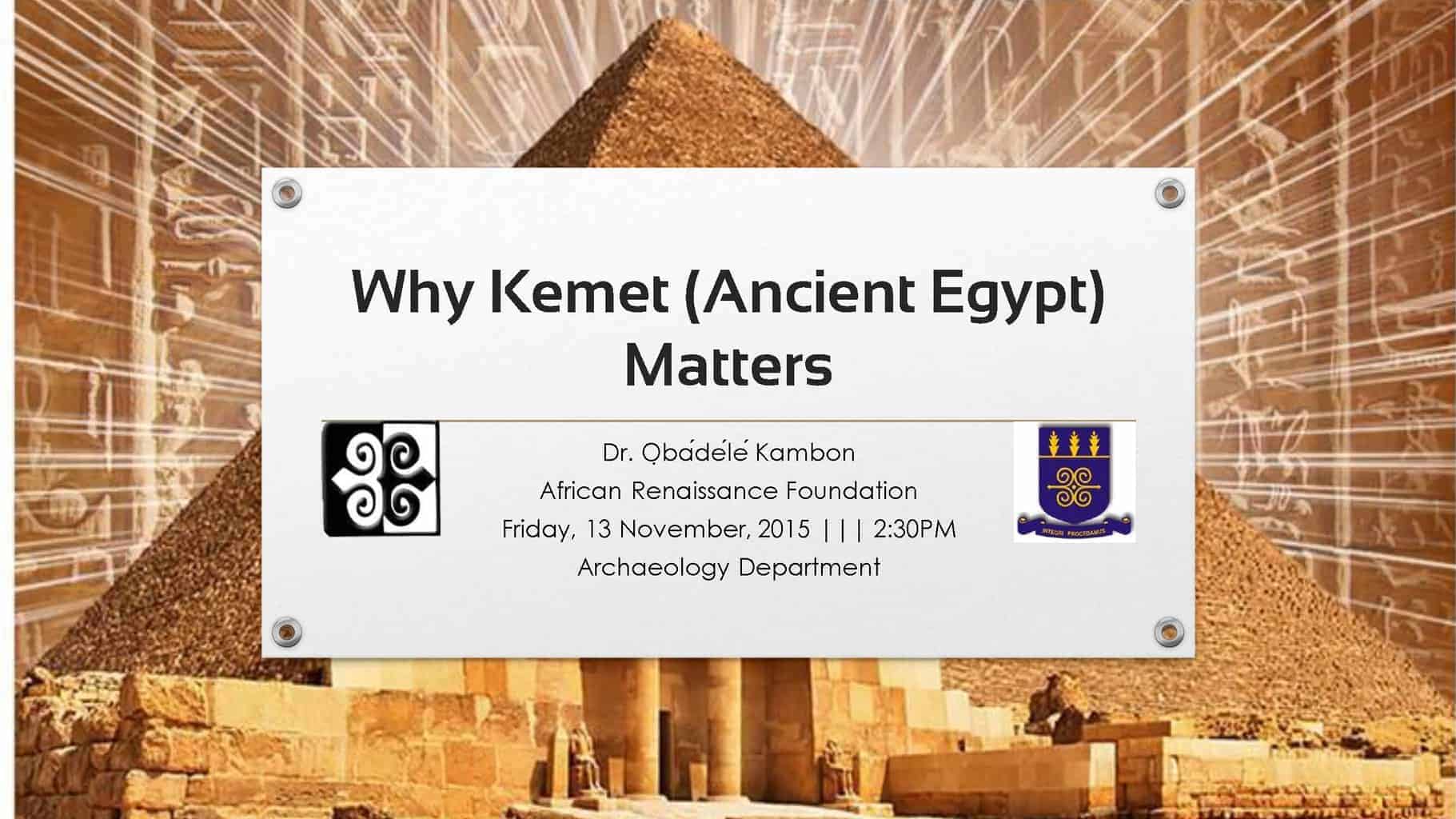
    Why Kemet matters is not an academic curiosity — it is a question of liberation. For generations, non-Black Egyptologists have waged a deliberate campaign of disinformation. They replaced the indigenous term Kmt — meaning “Land of Black people” — with the hollow phrase “Ancient Egypt.” Furthermore, they replaced Kmtyw — meaning “Black people” — with the equally obscuring “Ancient Egyptians.” As a result, the entire legacy of a Black civilization became buried under layers of academic malpractice and intellectual fraud.

    This erasure is not accidental. It is systematic. It strips Afrikan people of their ancestral identity, their spiritual inheritance, and their civilizational greatness. Moreover, it renders the very language, culture, and philosophy of the Kmtyw unintelligible to their own descendants. In addition, it empowers anti-Black collaborators within academia to continue rewriting our story without our consent. Abibifahodie — Black Liberation — demands that we reclaim these names, these truths, and this history for ourselves.

    How Ɔbenfo Kambon’s Lecture Restores the Truth of Why Kemet Matters

    Ɔbenfo Ọbádélé Bakari Kambon — world-renowned Pan-Afrikan linguist and architect of Abibitumi — dismantles this fraud with precision and power. In this three-hour, twenty-six-minute seminar, he delivers 129 slides of evidence-based, liberation-centered scholarship. He uses the names the Kmtyw called themselves. Consequently, what was once obscured becomes brilliantly clear. Most importantly, Ɔbenfo Kambon grounds every argument in the indigenous language of Kmt itself — not in the distortions of outsiders. This is the kind of scholarship that builds free minds and free people.

    This lecture belongs in every Afrikan household, classroom, and community space. Students gain intellectual grounding. Scholars gain a rigorous framework. Parents gain tools to teach their children the truth. Furthermore, community builders gain a shared foundation rooted in Ma’at — truth, justice, and cosmic order. Abibitumi exists precisely to deliver this caliber of knowledge directly to Afrikan people worldwide. Therefore, do not wait. Invest in your liberation today.

    📺 Watch it now and get the slides: SSS Video Recording + Slides: Why Kemet Matters — Available at Abibitumi.com

  • Does Afrikan Philosophy Have Validity? Ɔbenfo Kambon Answers Definitively

    Does Afrikan Philosophy Have Validity? Ɔbenfo Kambon Answers Definitively

    Afrikan philosophy validity

    Afrikan philosophy validity is not a question — it is a declaration. For too long, colonial frameworks have attempted to erase, dismiss, and delegitimize the profound intellectual traditions of Afrikan people. However, that erasure ends here. In this landmark 2016 lecture, Ɔbenfo Ọbádélé Bakari Kambon — Pan-Afrikan linguist, scholar, and architect of Abibitumi — delivers a masterful defense and affirmation of Kmtyw philosophical thought. Furthermore, he grounds that affirmation in thousands of years of documented Afrikan genius.

    This is Week 9 of the Foundations of Kmtyw (Afrikan=Black) Thought course series. In nearly three hours of rigorous instruction, Ɔbenfo Kambon draws from essential texts by Chukwunyere Kamalu, Théophile Obenga, Emmanuel Eze, and Kwasi Wiredu. Most importantly, he centers Kemet — ancient Black civilization — as the philosophical bedrock of Afrikan people globally. As a result, students walk away with an unshakeable intellectual foundation. In addition, the accompanying 32-slide secured PDF reinforces every key concept presented in the lecture.

    Why This Lecture on Afrikan Philosophy Validity Belongs in Every Black Scholar’s Collection

    This lecture does not ask for permission to exist. Instead, it commands intellectual space for Afrikan thought on its own terms. Obenga’s African Philosophy: The Pharaonic Period grounds the discussion in pre-colonial truth. Moreover, Wiredu’s comparative framework sharpens students’ critical analysis across traditions. Ɔbenfo Kambon synthesizes these texts with extraordinary clarity and purpose. Consequently, this course session equips scholars, students, parents, and community builders with the tools to dismantle anti-Afrikan intellectual attacks. Abibifahodie — Black Liberation — demands this level of philosophical grounding.

    Abibitumi was built precisely for this work. Every product on this platform serves the liberation of Afrikan people worldwide. Therefore, this lecture is not merely academic — it is an act of resistance and reclamation. Whether you are a seasoned researcher or beginning your journey into Kmtyw thought, this session will sharpen your mind and strengthen your commitment to Abibifahodie. Do not wait to secure this resource for yourself and your community.

    Watch and get it here: Foundations of Kmtyw (Afrikan=Black) Thought #9 — Abibitumi.com