Tag: Maat

  • Reclaiming Kemet: Why True Decolonization Must Begin With Afrikan Time and Ma’at

    Reclaiming Kemet: Why True Decolonization Must Begin With Afrikan Time and Ma’at

    Classical Kemet decolonization

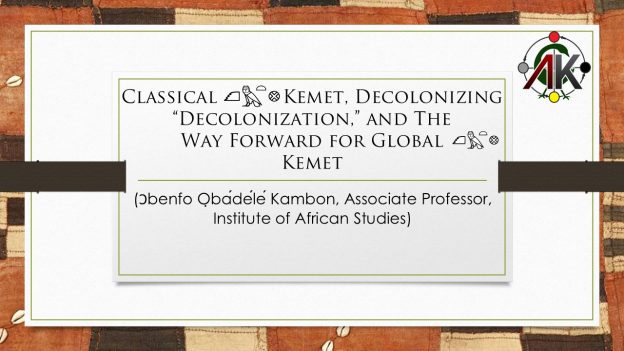
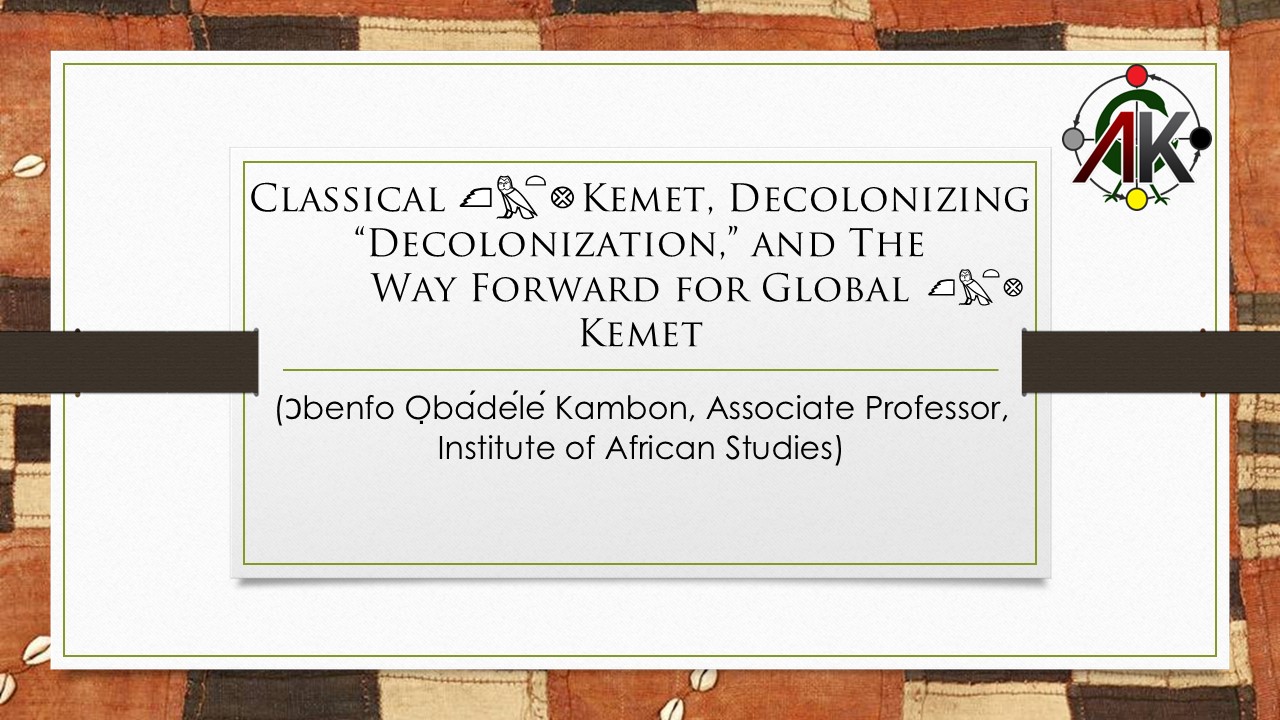
    Classical Kemet decolonization is not a metaphor — it is a mandate. In January 2025, Ɔbenfo Ọbádélé Bakari Kambon, Associate Professor of African Studies at the University of Ghana, delivered a landmark presentation at the Pan-African Leadership Institute’s Transformational Leadership Immersion Course. Furthermore, he did so in one of the most hallowed academic spaces on the continent — the Institute of African Studies, University of Ghana. This was not a routine lecture. It was a declaration.

    Over three hours and across 94 meticulously crafted slides, Ɔbenfo Kambon dismantled aAmw eurasian frameworks at their root. He challenged the very word “decolonization” — exposing how even our liberation language can carry colonial contamination. Most importantly, he restored the cyclic Afrikan concept of time against the linear eurasian distortion that has misdirected our people for centuries. When we understand time as Kmtyw understood it, we stop chasing eurasian endpoints. Instead, we return to the rhythm of Ma’at — harmony, balance, and cosmic order as a living practice.

    How Classical Kemet Decolonization Restores Ma’at as the Way Forward

    Ma’at is not a relic. It is the operating system of Afrikan liberation. Ɔbenfo Kambon’s presentation makes this undeniable. He re-centers Ma’at not as a dusty museum concept but as the guiding principle for Black people building power globally. In addition, he connects the thought of Kmtyw — Black people — directly to contemporary struggle and strategy. As a result, this lecture does not simply inform. It transforms. Every scholar, student, parent, and community builder who watches this will leave with a sharper, more grounded vision of Abibifahodie.

    This is precisely the work that Abibitumi was built to carry. We do not offer passive education. We offer tools for liberation. This three-hour masterclass — complete with all 94 slides — is available now for just $20. However, its value is immeasurable. If you are serious about understanding Classical Kemet decolonization and walking the path of Ma’at with clarity and conviction, this presentation is essential. Watch it, study it, and share it with your community.

    Watch / Get it here: Classical Kemet, Decolonizing “Decolonization,” and The Way Forward for Global Kemet

  • Thomas Sankara’s Legacy Lives: How Ibrahim Traoré Is Reigniting Burkina Faso’s Revolution

    Thomas Sankara’s Legacy Lives: How Ibrahim Traoré Is Reigniting Burkina Faso’s Revolution

    Ibrahim Traoré revolution

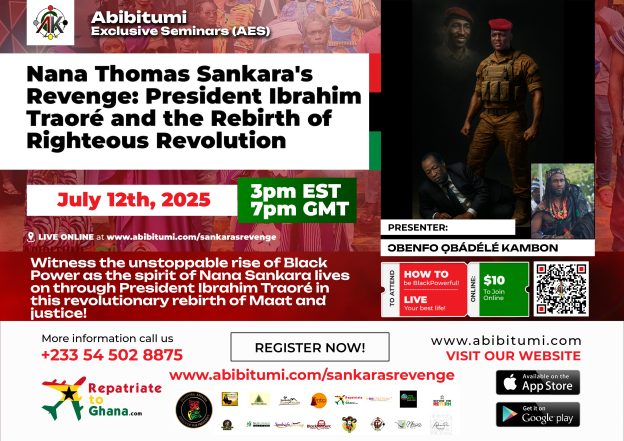
    The Ibrahim Traoré revolution is not an accident — it is an answer. Burkina Faso is rising again, and the world is paying attention. Afrikan people across the globe are watching a young leader boldly reclaim sovereignty, dignity, and direction. This is precisely the moment Ɔbenfo Ọbádélé Bakari Kambon foresaw and prepared us to understand.

    Ɔbenfo Kambon — architect of Abibitumi and tireless servant of Abibifahodie — delivers this lecture with the precision and power our people deserve. He connects Nana Thomas Sankara’s revolutionary legacy directly to the present moment. Furthermore, he strips away the colonial media’s distortions and replaces them with clarity. As a result, we see Traoré not as a military figure alone, but as a vessel carrying unfinished liberation work. This is Pan-Afrikan scholarship doing what it must — arming our people with truth.

    Why the Ibrahim Traoré Revolution Matters for Pan-Afrikan Liberation

    Sankara did not simply govern Burkina Faso. He modeled what self-determination looks like under fire. In addition, he showed Afrikan people that sovereignty requires sacrifice and strategic courage. However, colonialism struck him down before his work was complete. Now, decades later, Traoré stands in that same fire. Most importantly, he is refusing to be extinguished. Ɔbenfo Kambon traces these connections with the depth and rigor that only a scholar rooted in Ma’at can provide. This lecture is essential viewing for every Afrikan serious about liberation.

    This re-air by popular demand proves our community recognizes quality. Afrikan students, scholars, parents, and community builders all need this analysis. Moreover, understanding this moment in Burkina Faso helps us see the larger pattern of righteous revolution across the continent. The Kmtyw did not build civilization by ignoring their moment — and neither should we. Therefore, do not sleep on this lecture. Watch it, study it, share it with your people. For just $10.00, you gain access to transformative Pan-Afrikan knowledge delivered by one of our greatest living scholars. Get it here and let the revolution inside you be ignited: Watch / Get it here.

  • Ma’at vs. Egalitarianism: What Ayi Kwei Armah Got Wrong About Kmt

    Ma’at vs. Egalitarianism: What Ayi Kwei Armah Got Wrong About Kmt

    Ma'at vs egalitarianism

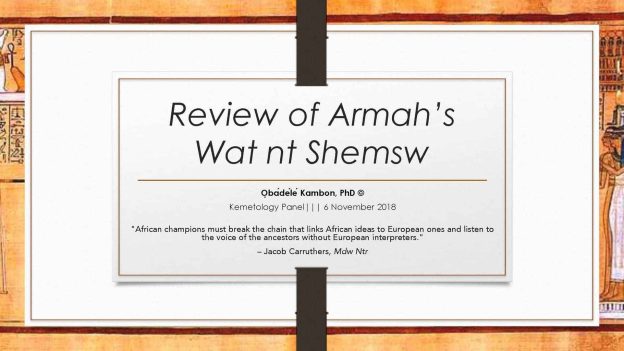
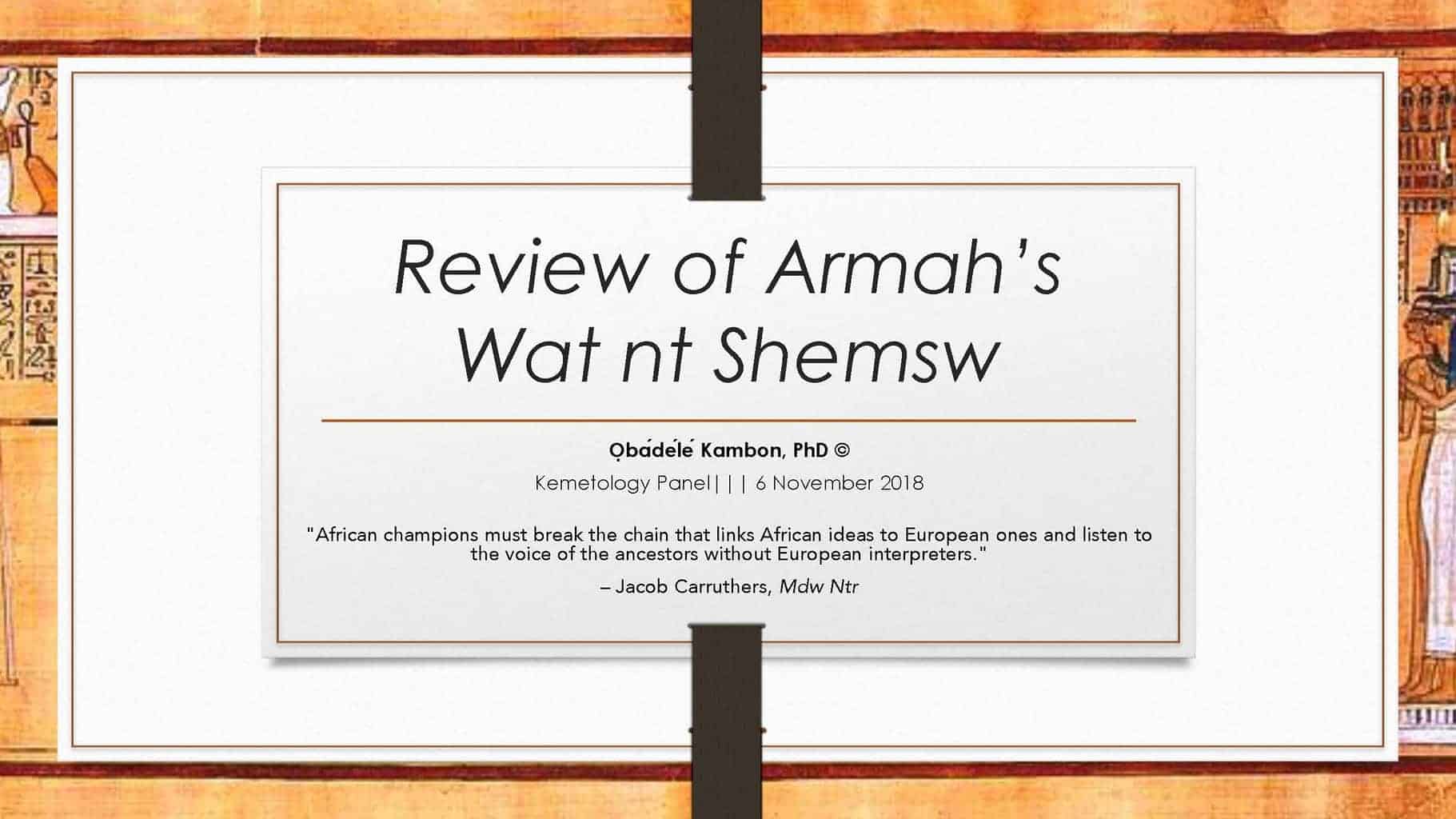
    The debate around Ma’at vs egalitarianism strikes at the very heart of how we understand our Afrikan ancestral civilization. Many scholars accept distorted frameworks without question. However, Ɔbenfo Ọbádélé Bakari Kambon refuses that surrender. In this powerful lecture, he delivers a rigorous, unflinching critique of Ataa Ayi Kwei Armah’s Wat Nt Shemsw: The Way of Companions. Furthermore, he exposes how the text misrepresents the culture, myths, and history of classical Kmt — the Land of Black People.

    Ataa Armah’s work follows a deeply flawed Egyptological convention. It artificially splits Kmt’s continuous historical flow into so-called pre-dynastic and dynastic periods. As a result, it frames these periods as diametric opposites. The former receives praise as “egalitarian” and positive. The latter — characterized as monarchy — is cast as its corrupt opposite. Most importantly, Ɔbenfo Kambon demonstrates that this framing carries no evidentiary support. It distorts the lived reality of the Kmtyw people entirely.

    Why the Ma’at vs Egalitarianism Distinction Matters for Abibifahodie

    This is not a small academic disagreement. Distorting the ethical and spiritual principles of our ancestors has real consequences. Replacing Ma’at — the divine, ordered principle of truth, justice, and cosmic balance — with Western egalitarianism misrepresents what the Kmtyw actually built and believed. In addition, it smuggles foreign ideological frameworks into Afrikan thought under the cover of liberation rhetoric. Ɔbenfo Kambon makes clear that Abibifahodie demands we hold our ancestral record with precision and integrity.

    This lecture is essential viewing for every serious student of Afrikan history, spirituality, and liberation philosophy. Ɔbenfo Ọbádélé Kambon equips us with the analytical tools to defend our ancestral truth against distortion — whether intentional or not. Therefore, we must study deeply, critique boldly, and build our understanding on solid Afrikan ground. Do not miss this critical contribution to Pan-Afrikan scholarship. Watch and get it here: AI Maat vs Egalitarianism — Abibitumi.com.

  • Restoring Ma’at: Why Afrikan People Must Reclaim Divine Order Now

    Restoring Ma’at: Why Afrikan People Must Reclaim Divine Order Now

    restoring Ma'at

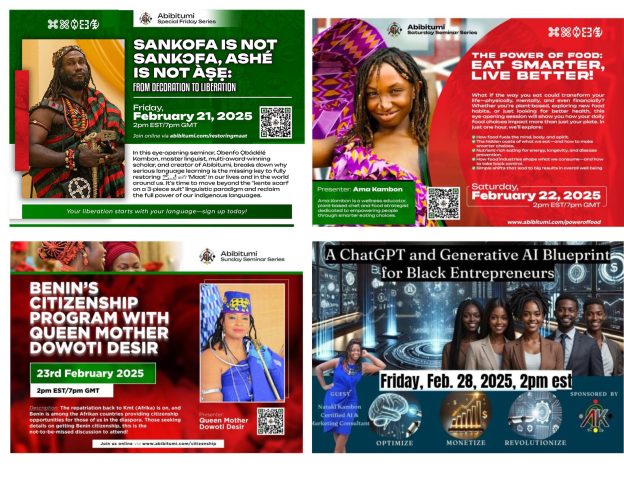
    Restoring Ma’at is not a metaphor — it is a mandate for every Afrikan person serious about liberation. For too long, our people have operated under systems designed to sever us from truth, justice, and cosmic balance. Furthermore, the consequences of that severance touch every dimension of Black life — spiritual, political, economic, and cultural. Ɔbenfo Ọbádélé Bakari Kambon, world-renowned Pan-Afrikan linguist and architect of Abibitumi, brings this truth into sharp, uncompromising focus. In this essential seminar, he breaks down what Ma’at truly means — and what it demands of us right now.

    Why Restoring Ma’at Is Central to Abibifahodie

    Ma’at — the ancient Afrikan principle of truth, justice, balance, and reciprocity — is not a relic. It is a living framework our ancestors encoded into civilization itself. The Kmtyw did not separate spirituality from governance, or ethics from community. As a result, when we restore Ma’at, we are not performing nostalgia. Instead, we are rebuilding the very foundation that sustained Afrikan greatness for millennia. Ɔbenfo Kambon does not simply lecture on this — he models it through his life, his scholarship, and the institution he built with Abibitumi.

    This February Seminar Bundle delivers that transformative teaching directly into your hands. Most importantly, it does so at an accessible price point — just $28 — so that economic barriers do not block Afrikan people from their own liberation knowledge. In addition, this recording is an Abibitumi exclusive, meaning you will not find this depth of analysis anywhere else. Every dollar you invest here flows back into the infrastructure of Pan-Afrikan education and Abibifahodie. That is Ma’at in action.

    However, do not let this moment pass you by. Serious students of Afrikan liberation understand that knowledge requires action. Share this resource with your family, your study circle, and your community. Therefore, reclaim what colonialism tried to erase — your connection to cosmic order, ancestral wisdom, and collective power. The path back to ourselves runs directly through Ma’at. Watch and get it here: February Seminar Bundle — Restoring Ma’at.

  • Black Therapy, Black Power: Heal Your Mind and Reclaim Your Liberation

    Black Therapy, Black Power: Heal Your Mind and Reclaim Your Liberation

    Black therapy Black power

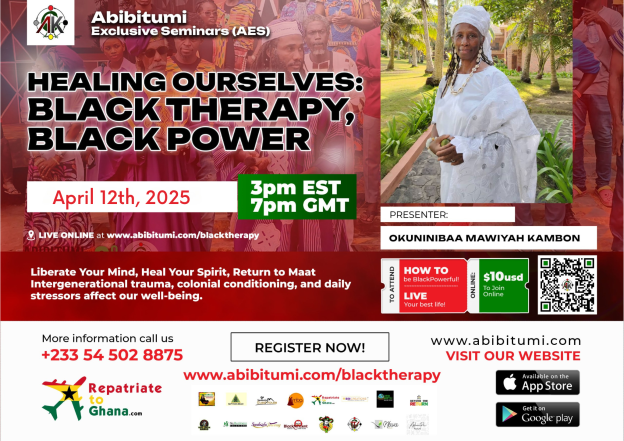
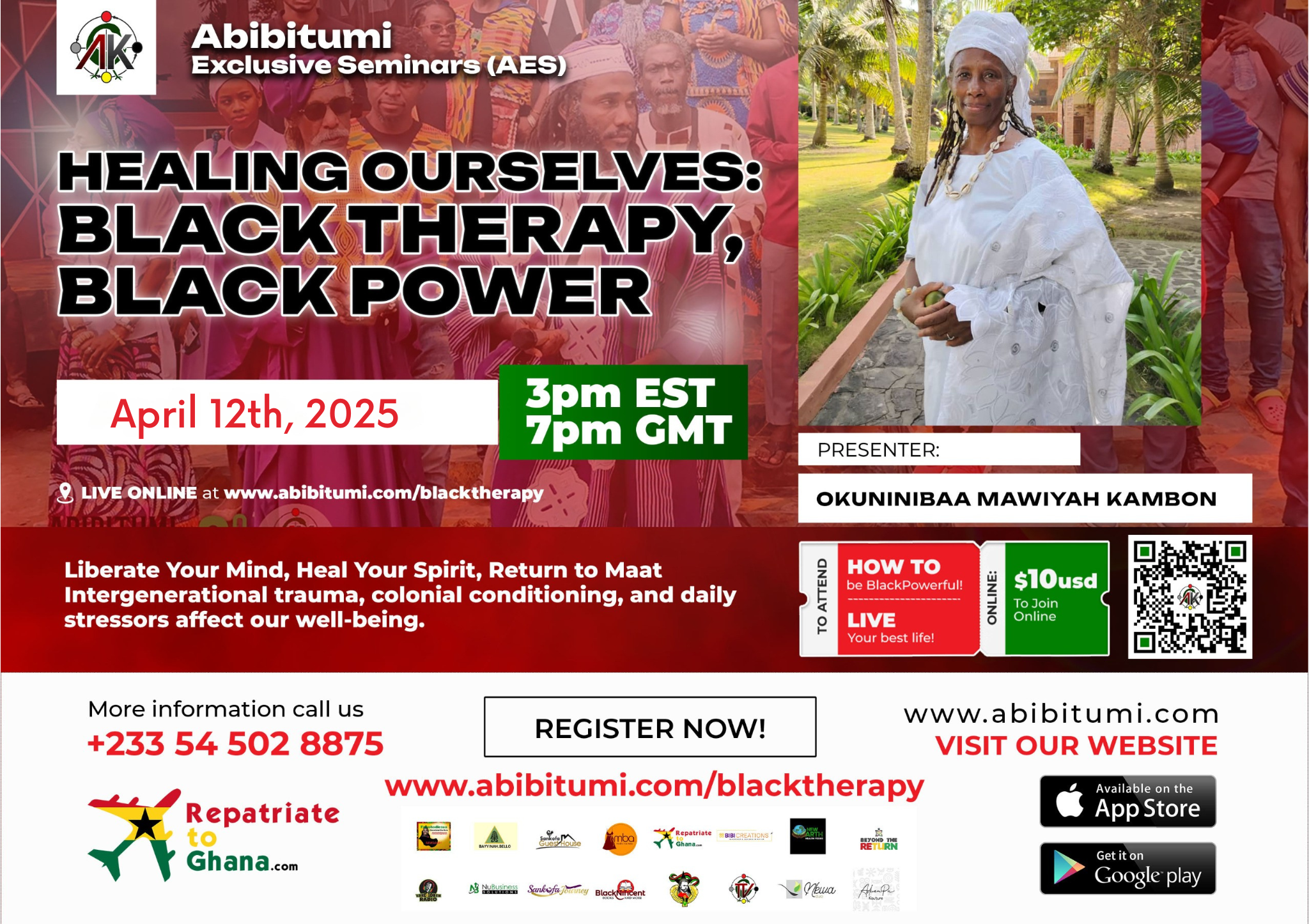
    Black therapy Black power is not a slogan — it is a sacred obligation. Our people carry the weight of colonialism, intergenerational trauma, and daily spiritual warfare. Furthermore, that weight does not disappear through silence or assimilation. It demands a radical, Afrikan-centered response. This powerful video replay delivers exactly that.

    Why Black Therapy and Black Power Must Go Hand in Hand

    Okuninibaa (Dr.) Mawiyah Kambon leads this transformative session with clarity, courage, and deep Afrikan wisdom. She exposes how colonial conditioning attacks our minds from within. In addition, she illuminates how trauma moves across generations — and how we can break that cycle with intention. Most importantly, she grounds every teaching in Ma’at, the foundation of Afrikan holistic wellness. This is not Western therapy repackaged. This is our healing, on our terms.

    Over the course of 1 hour and 25 minutes, Okuninibaa Kambon guides us through recognizing hidden colonial wounds. She then offers Afrikan approaches to restoring mind, body, and spirit together. As a result, viewers leave this session with real tools — not theories alone. This work connects directly to Abibifahodie, the liberation of Afrikan people from every system designed to diminish us. Healing, therefore, is not separate from the struggle. Healing IS the struggle.

    Abibitumi exists to deliver exactly this kind of unapologetic, life-changing knowledge to our global community. This session is available now as an exclusive video replay for just $20. However, its value is immeasurable. Whether you are a healer, a student, a parent, or a community builder, this session meets you where you are. Most importantly, it calls you forward — toward wholeness, toward power, toward Ma’at. Do not wait to begin your return.

    ▶ Watch the full session here: Healing Ourselves: Black Therapy, Black Power — Get It Now at Abibitumi.com