Category: Obadele Kambon Lectures

Category for the exclusive lectures by Ɔbenfo (Professor) Ọbádélé Bakari Kambon, PhD. “Ɔbenfo” Ọbádélé Bakari Kambon, Nana Kwame Pɛbi Datɛ I, helps Black people repatriate and get Ghanaian citizenship at RepatriateToGhana.com. He is a world-renowned master linguist, multi-award-winning scholar and the architect of Abibitumi the oldest and largest Black social education network on the planet. He completed his PhD in Linguistics at the University of Ghana in 2012, winning the prestigious Vice-Chancellor’s award for the Best PhD Thesis in the Humanities. He also won the 2016 and 2024 Provost’s Publications Awards for best published work in the UG College of Humanities. In 2019 he was the recipient of the [Nana] Marcus Mosiah Garvey Foundation award for excellence in Afrikan Studies and Education. Ɔbenfo Ọbádélé Kambon was awarded the 2020/2021 University of Lagos (UNILAG) Lagos Area Cluster Centre (LACC) Fellowship where he contributed significantly to the work of “reconfiguring” Afrikan Studies. In 2025, he was awarded the Kwame Nkrumah Award for Pan-African Leadership by the Pan-African Leadership Institute (PALI). He is an Associate Professor and served as Head of the Language, Literature and Drama Section of the Institute of African Studies at the University of Ghana and also served as Editor-in-Chief of the Ghana Journal of Linguistics (2016-2023). He served as Secretary of the African Studies Association of Africa from 2015-2020. He also played an instrumental role in 34 Abibifo ‘Black People’ of the Diaspora receiving Ghanaian citizenship in 2016 and many more receiving citizenship in 2019, 2022, and 2024. Having contributed to the Government of Ghana’s official Diaspora Engagement Policy, he now assists others interested in repatriation via RepatriateToGhana.com‘s Decade of Our Repatriation (DOOR Initiative), which has been endorsed by the Government of Ghana (Diaspora Affairs, Office of the President and Ghana Tourism Development Company). His multidisciplinary research interests include Serial Verb Construction Nominalization, Historical Linguistics, sbAyt nt Kmt(yw) ‘Studies of Black People’, & Abibifahodie ‘Black Liberation’.

  • How Video Is Transforming Afrikan Classrooms and Liberating Learners

    video in the Afrikan classroom

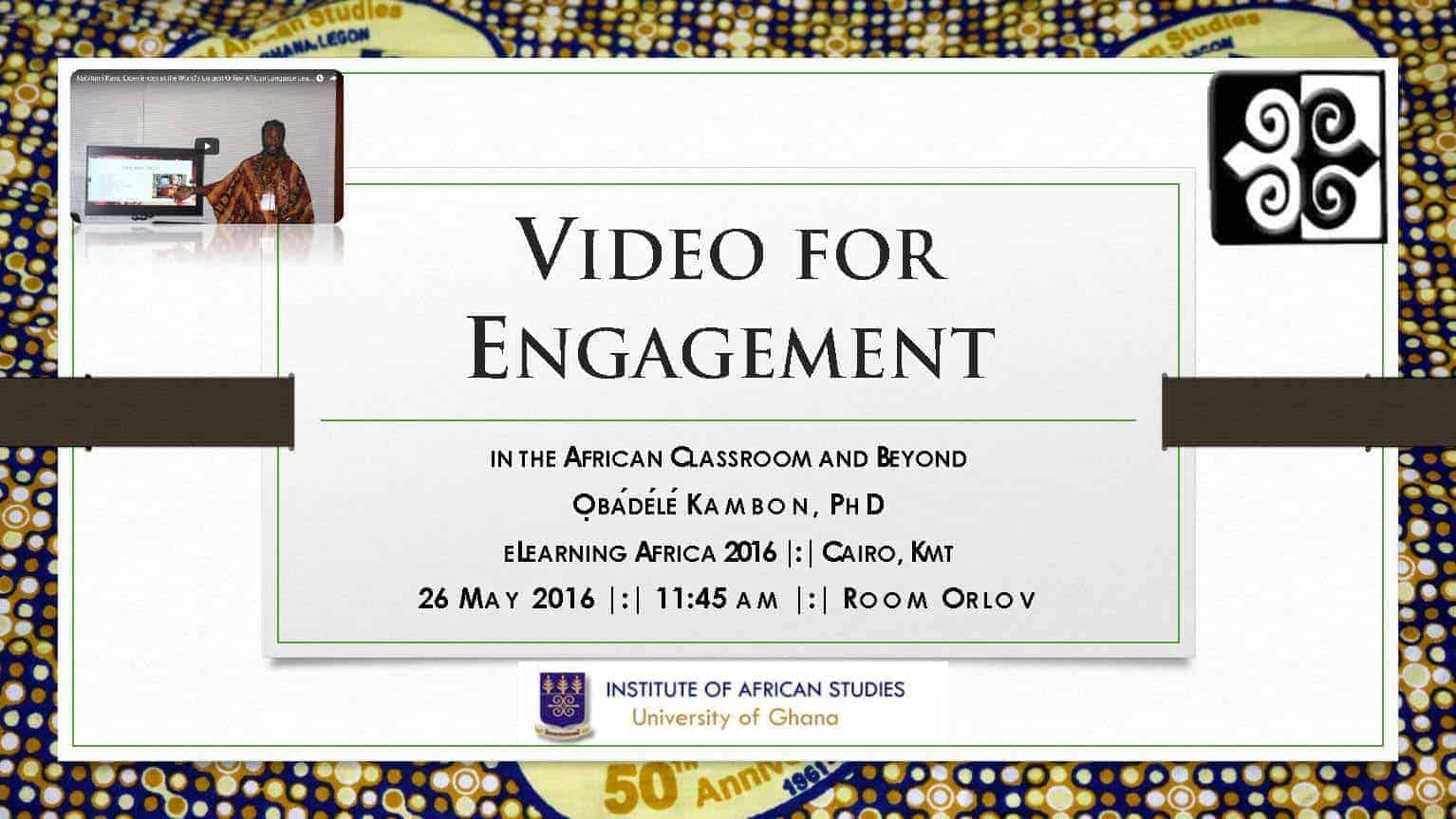
    Video in the Afrikan classroom is not a trend — it is a tool for liberation. In 2016, Ɔbenfo Ọbádélé Bakari Kambon, PhD, took the stage at eLearning Africa in Cairo, Kmt, to share exactly how. He delivered a powerful, practitioner-grounded presentation on using video to transform teaching, documentation, and community engagement. His work at the University of Ghana Institute of African Studies set a bold standard. Furthermore, his insights reach far beyond any single institution.

    Ɔbenfo Kambon’s Vision for Video in the Afrikan Classroom and Beyond

    At the University of Ghana, Ɔbenfo Kambon made video documentation central to classes and events. He did not theorize from a distance. Instead, he built real systems that served real students and communities. As a result, his approach demonstrates what Afrikan-centered pedagogy looks like in practice. Video becomes a living archive. It captures knowledge. It spreads that knowledge across generations and geographies. Most importantly, it places power directly in the hands of Afrikan educators and learners.

    This presentation runs 49 minutes and 8 seconds of concentrated, applicable wisdom. In addition, the bundle includes a secured, downloadable PDF of all 14 lecture slides. Together, they give you everything you need to implement video strategies in your classroom, organization, or community space. Ɔbenfo Kambon speaks from years of hands-on experience. His clarity and depth reflect the full force of Abibitumi’s commitment to Abibifahodie — Black Liberation through knowledge, language, and action. Every framework he shares serves that mission directly.

    Abibitumi exists to put transformative Afrikan scholarship into the hands of our people. This lecture does exactly that. Whether you are a teacher, a student, a parent, or a community builder, this resource will sharpen your thinking and expand your practice. Video in the Afrikan classroom is one powerful way we reclaim our narrative, preserve our knowledge, and build toward a liberated future. Therefore, do not let this resource pass you by. Invest in the scholarship that invests in us.

    Watch the lecture and download the slides here: Video for Engagement in the Afrikan Classroom and Beyond — Watch / Get It Here

  • Maat as Lived Practice: What Kemetic Wisdom Reveals About Death and the Afterlife

    Maat and the afterlife

    Maat and the afterlife are not separate philosophical concerns — they are one continuous, living reality in Afrikan thought. Across millennia, Afrikan people have understood that how you live directly shapes what awaits you after death. This is not abstract theology. This is ancestral science, encoded in the classical texts of Kmt and confirmed in the lived practices of Afrikan communities today.

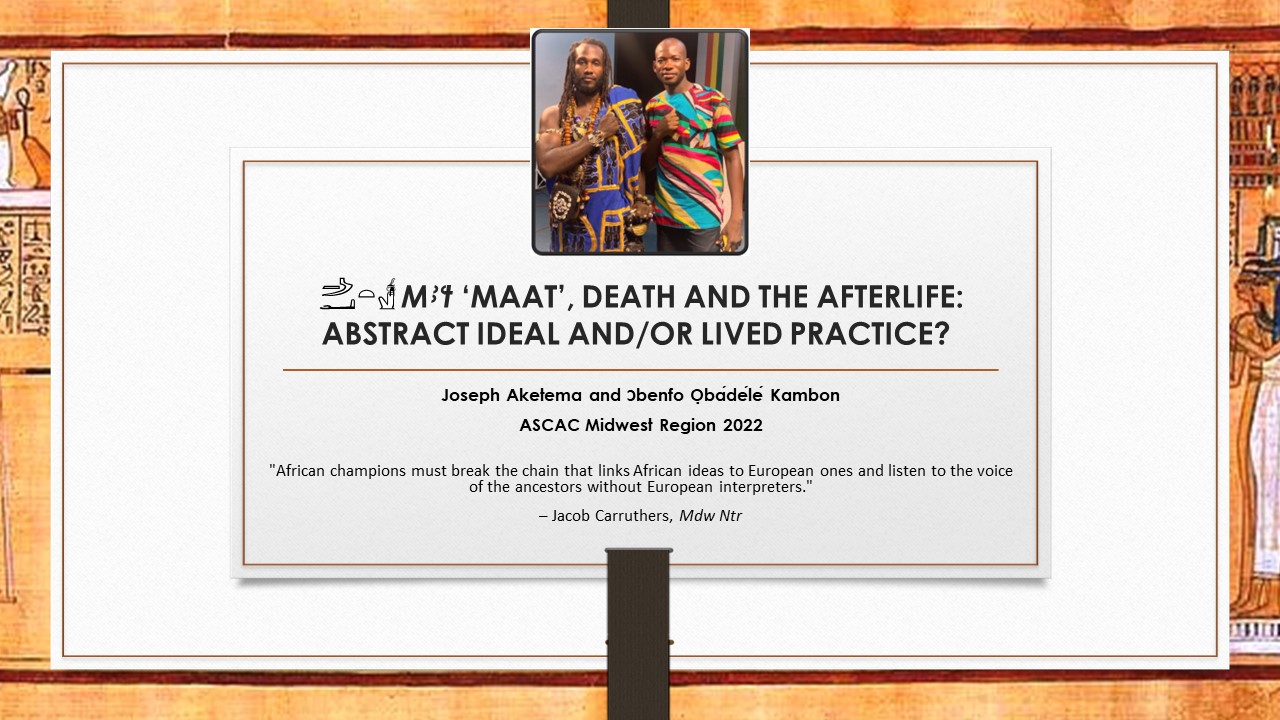
    Ɔbenfo Ọbádélé Bakari Kambon — Pan-Afrikan linguist, scholar, and architect of Abibitumi — delivers a masterful study that bridges the ancient and the contemporary. He draws on textual evidence from classical Kmt, the Black Nation, the land of the Kmtyw. Furthermore, he brings in attested cultural practices from the Kasena-Nankana people of contemporary Afrika. As a result, we see clearly that this knowledge never died. It endured. It transformed. Most importantly, it still guides Afrikan people today.

    How Maat and the Afterlife Shape Afrikan Living Practice

    Ɔbenfo Kambon demonstrates that one’s treatment of the body after death reflects deep communal values rooted in Mꜣꜥt. Additionally, he shows how conceptions of the spiritual afterlife directly influence how Afrikans choose to act in the physical world. This is Abibifahodie — Black liberation — in its most profound form. However, this wisdom has been deliberately suppressed, distorted, and erased. That suppression ends here. This lecture reclaims what was always ours.

    In addition, this presentation challenges us to move beyond surface-level engagement with Maat. Maat and the afterlife demand that we interrogate how we actually live — not merely what we profess to believe. Ɔbenfo Kambon’s scholarship, rooted in Abibitumi’s mission of Pan-Afrikan education, equips us to walk in alignment with our ancestors’ highest standards. Therefore, this lecture is not simply academic. It is a call to live rightly, die prepared, and continue contributing to our people across all planes of existence. Watch this essential lecture now and invest in your liberation.

    Watch / Get it here: Mꜣꜥt ‘MAAT’, Death and the Afterlife — $20.00

  • Akan Ananse, Yorùbá Ìjàpá, and the Dikènga Theory: Reclaiming Afrikan Literary Analysis

    Dikènga theory Afrikan stories

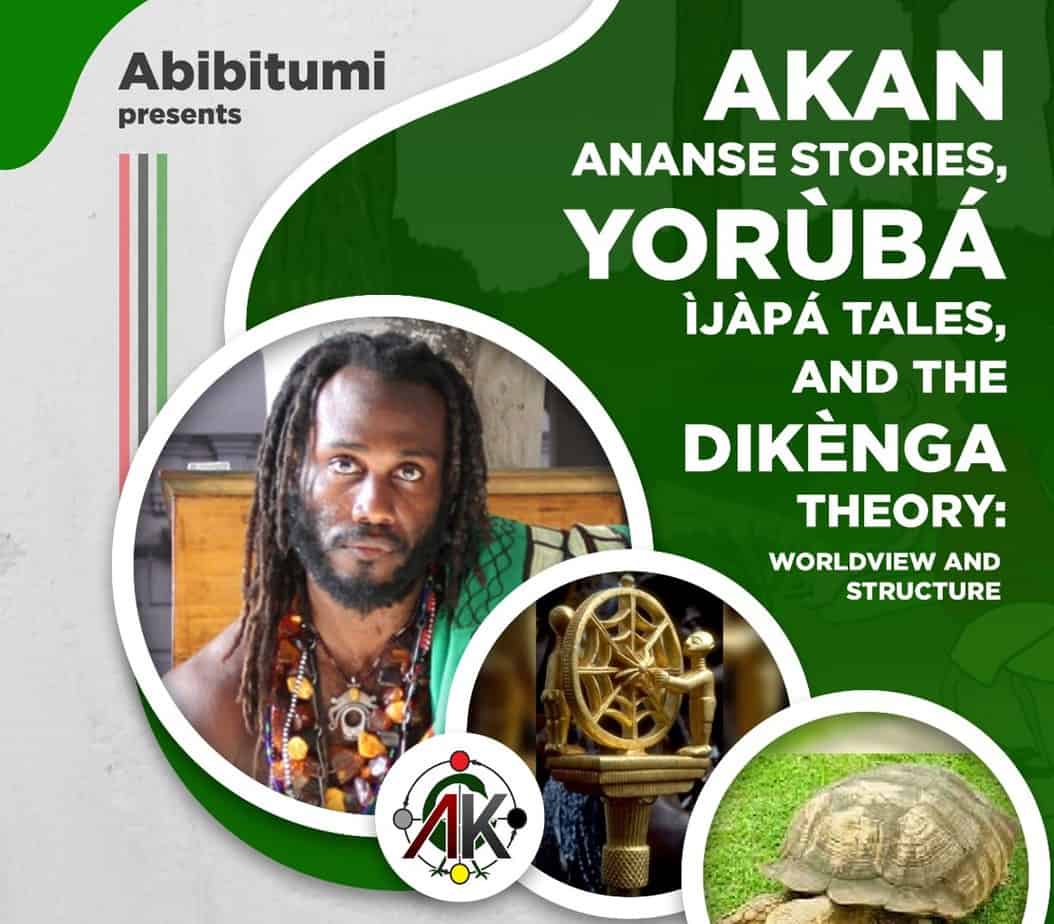
    The Dikènga theory Afrikan stories framework reveals something profound: our stories were never simply linear. They move in cycles. They mirror the cosmos. Ɔbenfo Ọbádélé Bakari Kambon — Pan-Afrikan linguist, scholar, and architect of Abibitumi — presents a revolutionary lecture applying the Bakôngo cosmogram to Akan Ananse and Yorùbá Ìjàpá tales. As a result, what emerges is a wholly Afrikan method of literary analysis. Furthermore, this approach dismantles the Eurocentric lens that has long distorted our understanding of Afrikan oral tradition.

    Fu-Kiau declared that “nothing exists that does not follow the steps of the cyclical Kongo cosmogram.” Ɔbenfo Kambon takes that declaration seriously. He tests it rigorously. In this study, he applies what he terms the Dikènga theory of literary analysis to these beloved story traditions. Consequently, concepts like “storylines” and “timelines” give way to something deeper — patterned, cyclical structures embedded in material, spatial, and temporal phenomena. Most importantly, this is not a borrowed framework. This is Afrikan cosmology doing exactly what it was designed to do.

    Why the Dikènga Theory Transforms How We Read Afrikan Stories

    Ananse and Ìjàpá are not merely trickster figures. They are cosmological agents. Their stories encode the worldview, structure, content, and function of Afrikan thought. However, Western literary theory has consistently failed to honor this depth. The Dikènga theory Afrikan stories approach corrects that failure completely. In addition, it gives scholars, students, parents, and community builders a powerful tool rooted in our own intellectual traditions. Abibifahodie demands that we stop interpreting ourselves through outside eyes. This lecture answers that demand directly and boldly.

    This lecture comes with both video and slides. Therefore, you can engage the material visually and analytically. Whether you are a seasoned scholar or a first-generation student of Pan-Afrikan thought, this resource meets you fully. Moreover, the Abibitumi platform exists precisely to deliver this level of scholarship directly to Afrikan people globally. This is liberation education. This is Kmtyw wisdom applied to Afrikan literary heritage. Do not miss it. Watch the full lecture and download the slides today.

    Watch / Get it here: VIDEO + SLIDES: Akan Ananse Stories, Yorùbá Ìjàpá Tales and the Dikènga Theory

  • Does Kemetic Philosophy Deserve a Seat at the Table? Ɔbenfo Kambon Says It Built the Table.

    Kemetic philosophy validity

    Kemetic philosophy validity is not a question — it is a declaration. For too long, Western academia has dismissed or stolen the intellectual legacy of the Kmtyw. Ɔbenfo Ọbádélé Bakari Kambon confronts that theft directly. In this landmark lecture, he rebuilds the epistemological foundation that Afrikan people deserve and require. Furthermore, he does so with rigorous scholarship rooted in liberation.

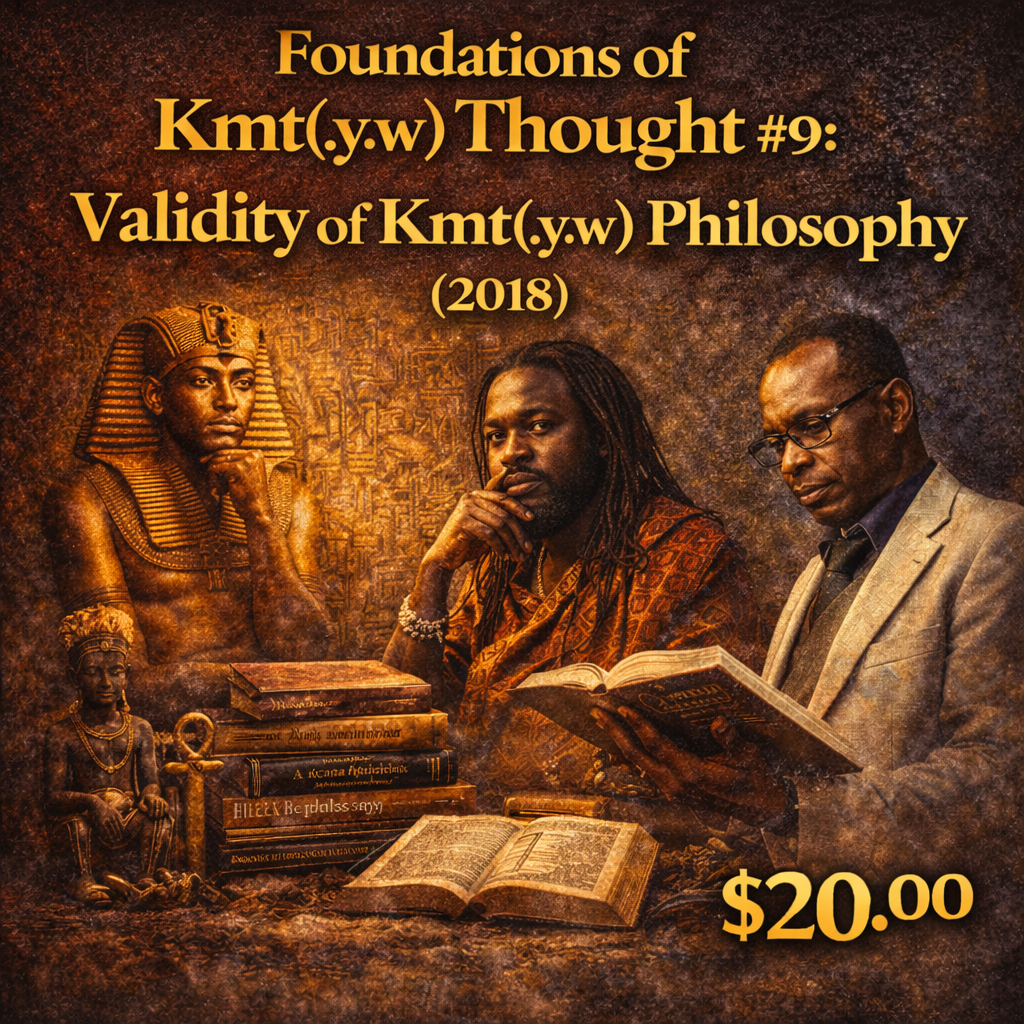
    This is Week 9 of the Foundations of Kmt(.y.w) Thought series. The session runs nearly three hours — two hours, fifty-three minutes of uncompromising intellectual work. Ɔbenfo Kambon draws from essential texts by Chukwunyere Kamalu, Théophile Obenga, and Kwasi Wiredu. As a result, the lecture does not simply argue for Afrikan philosophy. It demonstrates it. In addition, the accompanying 32-slide secured PDF gives students a structured guide through every major concept covered. This is not passive learning. Most importantly, it is active reclamation.

    Why the Validity of Kemetic Philosophy Changes Everything for Abibifahodie

    Recognizing the validity of Kemetic philosophy shifts the entire axis of Black intellectual life. It places Afrikan people at the origin — not the margin — of human thought. Ɔbenfo Kambon challenges students to reject borrowed frameworks. He insists that our ancestors in Kmt produced a complete, coherent, and powerful philosophical system. However, that system has been systematically buried. This lecture unearths it. Furthermore, it equips scholars, students, and community builders with the language and logic to defend Afrikan intellectual sovereignty. Abibitumi was built precisely for this purpose.

    The Kmtyw Thinkers Program fills a critical gap in global epistemology. It does not ask for permission from European institutions. Instead, it centers the Afrikan mind as the standard. This course belongs in every home, classroom, and liberation circle in the Afrikan world. Moreover, the $20 investment returns generational value. The lecture is available as a video and secured PDF combo — structured, substantive, and built for serious study. Do not wait to reclaim what has always been yours.

    Watch it and get the PDF here: Foundations of Kmt(.y.w) Thought #9 — Validity of Kmt(.y.w) Philosophy (2018)

  • How Colonialism Enters the Bedroom — And What Afrikan People Must Do About It

    bedroom colonialism Afrikan people

    Bedroom colonialism shapes the most intimate decisions Afrikan people make — and most of us never see it coming. Colonial ideology does not stay in boardrooms or textbooks. Instead, it follows us home. It enters our relationships, our family structures, and our most private spaces. Furthermore, it operates silently, which makes it far more dangerous than overt oppression. Understanding this pattern is not optional for those committed to Abibifahodie. It is essential.

    Ɔbenfo Kambon Breaks Down Bedroom Colonialism and Its Impact on Afrikan Liberation

    Ɔbenfo Ọbádélé Bakari Kambon — Pan-Afrikan linguist, scholar, and architect of Abibitumi — delivers this truth with precision and power. In this exclusive presentation, he names the colonial forces working inside Afrikan homes and minds. Moreover, he provides the intellectual and cultural tools we need to dismantle them. This is not a surface-level critique. Ɔbenfo Kambon goes deep, connecting language, psychology, culture, and power in ways that will permanently shift your thinking.

    As a result, this lecture stands as one of the most important offerings in the Abibitumi catalog. Many scholars address colonialism in politics or economics. However, few dare to examine how it penetrates the bedroom — how it governs who we love, how we love, and why. Bedroom colonialism among Afrikan people is a topic that demands courage to teach and courage to receive. Ɔbenfo Kambon brings both. In addition, he includes exclusive presentation slides that reinforce and extend every key point from the lecture.

    This resource is built for Afrikan scholars, students, parents, and community builders who refuse to leave any part of their lives unexamined. Most importantly, it is for those who understand that liberation must be total — or it is not liberation at all. The work of Abibitumi exists precisely for this moment. Therefore, do not wait to engage with one of the most critical conversations happening in Pan-Afrikan education today. For only $20.00, you receive the full video lecture and exclusive slides that will arm your mind and strengthen your community.

    Watch the lecture and get your exclusive presentation slides here: Bedroom Colonialism with Ɔbenfo Kambon — Watch / Get It Here.