Blog

  • Who Owns Afrikan Philosophy? The Battle for Kemet Explained

    Who Owns Afrikan Philosophy? The Battle for Kemet Explained

    Afrikan philosophy and Kemet

    Afrikan philosophy and Kemet represent two of the most contested intellectual battlegrounds in the modern world. For centuries, forces hostile to Afrikan liberation have worked to separate Black people from their philosophical heritage. Furthermore, they have worked to erase Kemet — ancient Kmt — from its rightful place in Afrikan intellectual history. This lecture confronts that erasure directly, powerfully, and without apology.

    Ɔbenfo Ọbádélé Bakari Kambon — architect of Abibitumi and world-renowned Pan-Afrikan linguist — delivers this three-hour masterclass as Week 14 of the Foundations of Kmtyw (Afrikan=Black) Thought course. In addition, the lecture draws on Jacob H. Carruthers’ landmark text Intellectual Warfare, situating the battle for Kmt within a broader struggle for epistemological sovereignty. As a result, students gain not only historical knowledge but also a sharpened analytical lens. Ɔbenfo Kambon does not simply teach philosophy — he equips Afrikan people to wield it.

    Why the Battle for Afrikan Philosophy and Kemet Still Matters Today

    The African Thinkers Program was designed to fill a critical gap. Most MPhil and PhD students never encounter genuinely Afrikan modes of thought. However, this course changes that. It introduces core principles, patterns, and histories of knowledge production across Afrika and the Afrikan World — from antiquity to the present. Most importantly, it centers the Kmtyw — the ancient Black builders of Kmt — as originators of philosophical thought, not recipients of it. This lecture includes a full 53-slide secured PDF, giving serious scholars a structured framework for deep study.

    Abibifahodie — Afrikan liberation — demands that we reclaim every domain stolen from us. Philosophy is no exception. Indeed, intellectual warfare is real, and this lecture names it clearly. The Foundations of Kmtyw Thought series builds the epistemological foundation that every Pan-Afrikan scholar, student, parent, and community builder deserves. In addition, at only $20 for over three hours of rigorous instruction, this resource makes no compromises on depth or quality. Therefore, whether you are entering graduate study or deepening your liberation praxis, this lecture belongs in your collection.

    Watch now and get the full Video + Secured PDF Combo here:
    Foundations of Afrikan Thought #14 — The Battle for Afrikan Philosophy, The Battle for Kemet (2018)

  • Sacred Afrikan Masks from Ghana: Gye Nyame, Cedar Wood & Cowries for Your Home or Office

    Sacred Afrikan Masks from Ghana: Gye Nyame, Cedar Wood & Cowries for Your Home or Office

    authentic Afrikan masks Ghana

    Authentic Afrikan masks from Ghana carry the living memory of our ancestors. This extraordinary pair—male and female—was handcrafted exclusively by traditional woodcarving guild members. Furthermore, Abibitumi’s in-house expert carver commissioned this one-of-a-kind piece with deep intentionality. It is not decoration. It is declaration.

    Each mask stands tall at 4.92 feet and spans 1.27 feet wide. Real copper, brass, and cowries are inlaid with fine, meticulous detail. Most importantly, the central theme is Gye Nyame—one of the most sacred Adinkra symbols of Akan cosmology. In Twi, it proclaims: AbÉ”deÉ› santann yi firi tete: obi nte aseÉ› a É”nim n’ahyÉ›aseÉ›. This means the procession of creation is eternal. No one witnessed its beginning. No one will witness its end—except the Divine. As a result, owning this piece means anchoring that truth in your space.

    Why Authentic Afrikan Masks from Ghana Belong in Your Sacred Space

    Ɔbenfo Ọbádélé Bakari Kambon—world-renowned Pan-Afrikan linguist and architect of Abibitumi—built this platform to reconnect Afrikan people with their cultural heritage. In addition, Abibitumi curates physical sacred objects that reinforce that reconnection daily. These masks do exactly that. Place them in your home, your office, or your community space. However, understand this: they are not mere art. They are portals to ancestral consciousness. Cedar wood grounds the spirit. Cowries call forth abundance. Copper and brass honor royalty.

    This pair is currently available at 50% off—now $2,000, reduced from $4,000. Therefore, now is the time to invest in your cultural foundation. Abibifahodie—Black Liberation—begins inside our homes and sacred spaces. Furthermore, every piece you bring into your environment either affirms your identity or erodes it. Choose affirmation. Choose Abibitumi. Secure your authentic Afrikan masks from Ghana today and let Gye Nyame watch over your space with power and permanence.

    Get yours here: Pair of Authentic Afrikan Masks from Ghana — Abibitumi

  • Who Is Afrikan? The Answer That Changes Everything for Black Liberation

    Who Is Afrikan? The Answer That Changes Everything for Black Liberation

    who is Afrikan

    Who is Afrikan — and why does that question carry the weight of our liberation? This is not an abstract debate. It is a question with real consequences for Black people across the entire globe. When we allow others to define us, we lose the power to define our own future. Ɔbenfo Ọbádélé Bakari Kambon, Pan-Afrikan linguist and architect of Abibitumi, answers this question directly, rigorously, and without compromise.

    In this landmark presentation, Ɔbenfo Kambon draws on genotype, phenotype, historical identity, linguistic evidence, and conceptual analysis. Furthermore, he traces our self-conception as Black people back over 4,300 years. He presents visual and historical evidence that roots Afrikan identity firmly in Blackness — not geography. Most importantly, he demonstrates that this is not a new idea. The Kmtyw knew who they were. We can know who we are.

    Why Defining Who Is Afrikan Is Central to Black Power

    When the term “Afrikan” expands to mean anyone living on the continent, something dangerous happens. As a result, our collective identity fractures. Our political power dilutes. Our unity dissolves. Ɔbenfo Kambon walks through these repercussions with precision and care. He shows how the manipulation of this single term serves anti-Black agendas. However, the solution is not complicated. Clarity about who is Afrikan rebuilds the foundation that Abibifahodie demands. In addition, that clarity honors the work of our ancestors who never abandoned their identity — even under colonization.

    This presentation — Abibitumi ho Nkɔmmɔbɔ! Conversations about Black Power! — includes 61 slides and runs over 84 minutes of transformative scholarship. Therefore, it is an essential resource for scholars, students, parents, and community builders everywhere. You also receive a secured PDF of all slides for deeper study. This is not entertainment. This is ammunition for liberation. Black people globally deserve access to this knowledge — and now you have it. Therefore, do not wait. Your community needs this understanding today.

    Watch the full presentation and get your secured PDF slide bundle now at Abibitumi — the home of Pan-Afrikan education and Abibifahodie.
    👉 Watch / Get it here — $20.00

  • Why Detoxifying Your Body Is an Act of Afrikan Liberation

    Why Detoxifying Your Body Is an Act of Afrikan Liberation

    detoxifying the body

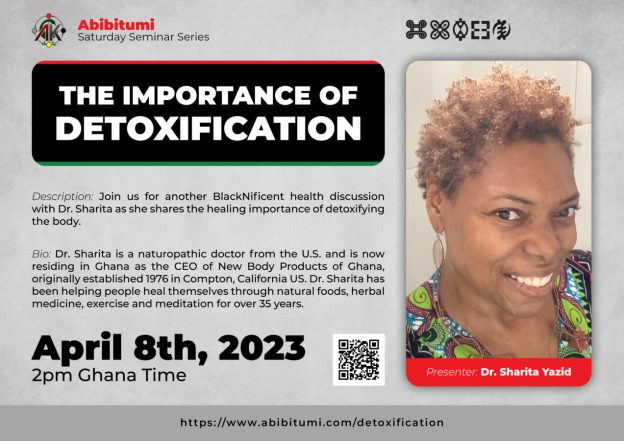
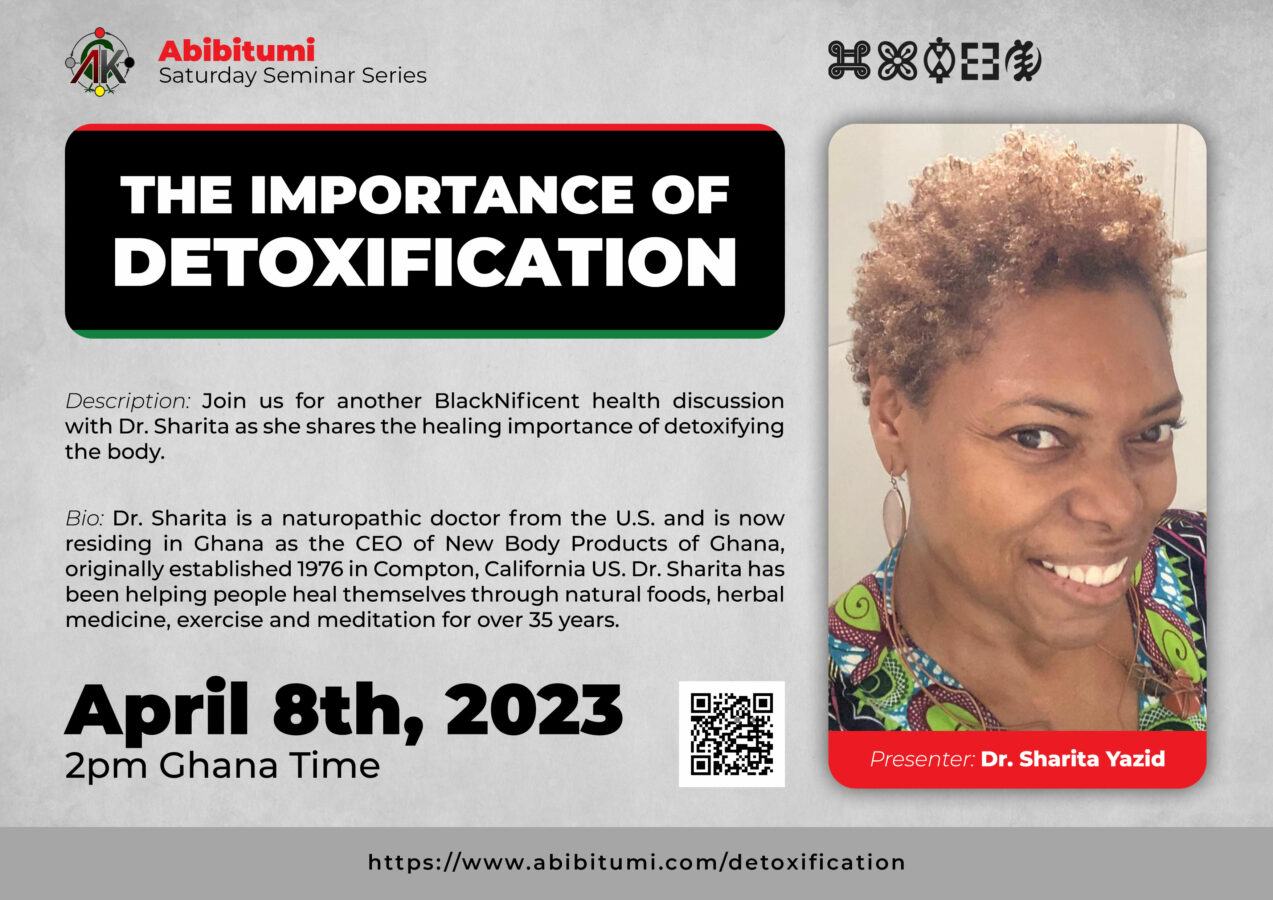
    Detoxifying the body is not simply a wellness trend — it is a revolutionary act of self-preservation for Afrikan people. Our communities face relentless environmental, dietary, and chemical assaults daily. As a result, reclaiming our physical health becomes inseparable from reclaiming our freedom. Abibitumi continues to lead this charge by bringing world-class Afrikan healers directly to our people.

    Ɔyaresafo (Dr.) Sharita Yazid delivers exactly that kind of transformative knowledge. In this BlackNificent health discussion, she breaks down the healing science of detoxification with clarity and purpose. Furthermore, she roots her teaching in the wellness traditions and lived realities of Afrikan people globally. This is not generic health advice. This is liberation medicine.

    The Power of Detoxifying the Body for Afrikan Healing and Freedom

    Most importantly, Dr. Sharita equips us with practical tools we can apply immediately. She explains how toxins accumulate and why cleansing the body restores vitality, clarity, and strength. In addition, she connects physical detoxification to our broader pursuit of Abibifahodie — Black Liberation in every dimension of life. Healthy Afrikan people build stronger families, communities, and movements. Therefore, this seminar is essential viewing for every conscious Afrikan seeking wholeness.

    Abibitumi exists to resource Afrikan people with knowledge that heals, builds, and liberates. This recording is part of an exclusive Seminar Series curated for scholars, parents, healers, and community builders across the Afrikan world. However, access requires your intentional investment — because liberation knowledge has value. Do not sleep on this resource. Watch it today and take your health back into your own hands.

    🎥 Watch / Get it here: The Importance of Detoxification — Abibitumi Exclusive Seminar

  • Akan and Yoruba Share the Same Roots — Here’s the Linguistic Proof

    Akan and Yoruba Share the Same Roots — Here’s the Linguistic Proof

    Akan Yoruba sound correspondences

    Akan Yoruba sound correspondences are not coincidence — they are evidence of a shared Afrikan linguistic ancestry. Ɔbenfo Ọbádélé Bakari Kambon, world-renowned Pan-Afrikan linguist and architect of Abibitumi, brings this evidence into sharp focus. His groundbreaking presentation applies rigorous comparative linguistics to data drawn from the Swadesh Lists. As a result, Afrikan people gain a powerful, scholarly window into their own deep history.

    In this lecture, Ɔbenfo Kambon examines lexical cognates found in both Akan (Twi) and Yoruba. Furthermore, he applies implicational laws of sound change to reconstruct Proto-Benue-Kwa — the ancestral proto-language from which both languages descend. This work centers the initial consonant position, known as C1, as a key site of analysis. Most importantly, this is not abstract theory. This is Afrikan people reclaiming the record of their own linguistic and cultural continuity.

    Why Reconstructing Akan Yoruba Sound Correspondences Matters for Abibifahodie

    Language is power. Knowing how Afrikan languages connect across geography and time strengthens collective Afrikan identity. In addition, this research challenges Eurocentric frameworks that have long fragmented and misrepresented Afrikan linguistic heritage. Ɔbenfo Kambon’s methodology is precise, disciplined, and unapologetically centered on Afrikan people. His reconstruction of Proto-Benue-Kwa pushes comparative linguistics forward — and it does so on Afrikan terms. Scholars, students, and community builders alike will find this presentation both intellectually rigorous and deeply affirming.

    This video lecture includes the full presentation slides for deeper study and reference. However, this resource is not just for academics. Parents teaching their children Twi or Yoruba will find new meaning in the sounds they already speak. Community builders working toward Abibifahodie — Black Liberation — need exactly this kind of foundational knowledge. Abibitumi exists to make this scholarship accessible to all Afrikan people everywhere. Watch, study, and share this work widely.

    Watch / Get it here: Recurrent Sound Correspondences of Akan and Yoruba — Video + Presentation Slides | $20.00