Author: Abibitumi Ahemfie

  • Reclaim Your Table: Cooking and Eating Like an Afrikan Is an Act of Liberation

    Reclaim Your Table: Cooking and Eating Like an Afrikan Is an Act of Liberation

    cooking and eating like an Afrikan

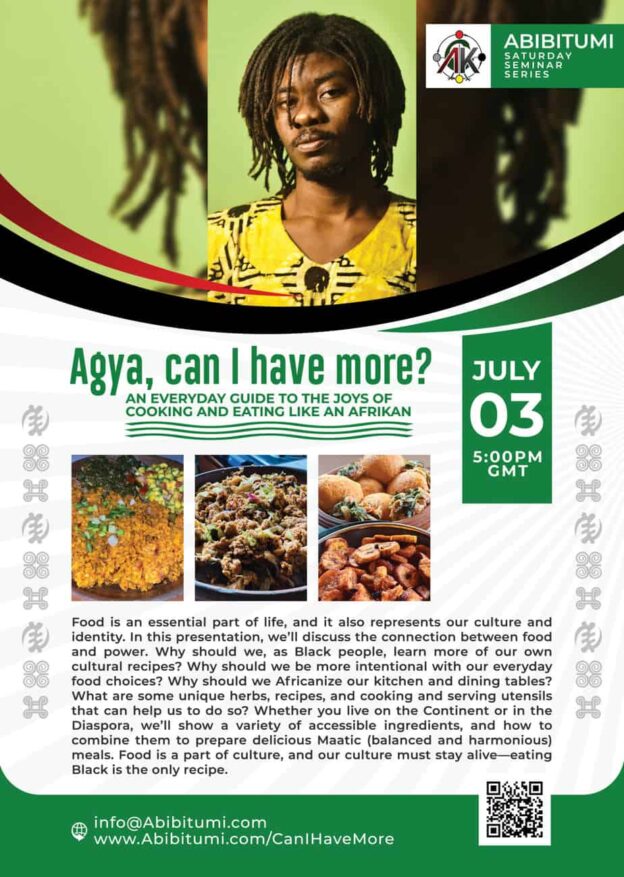
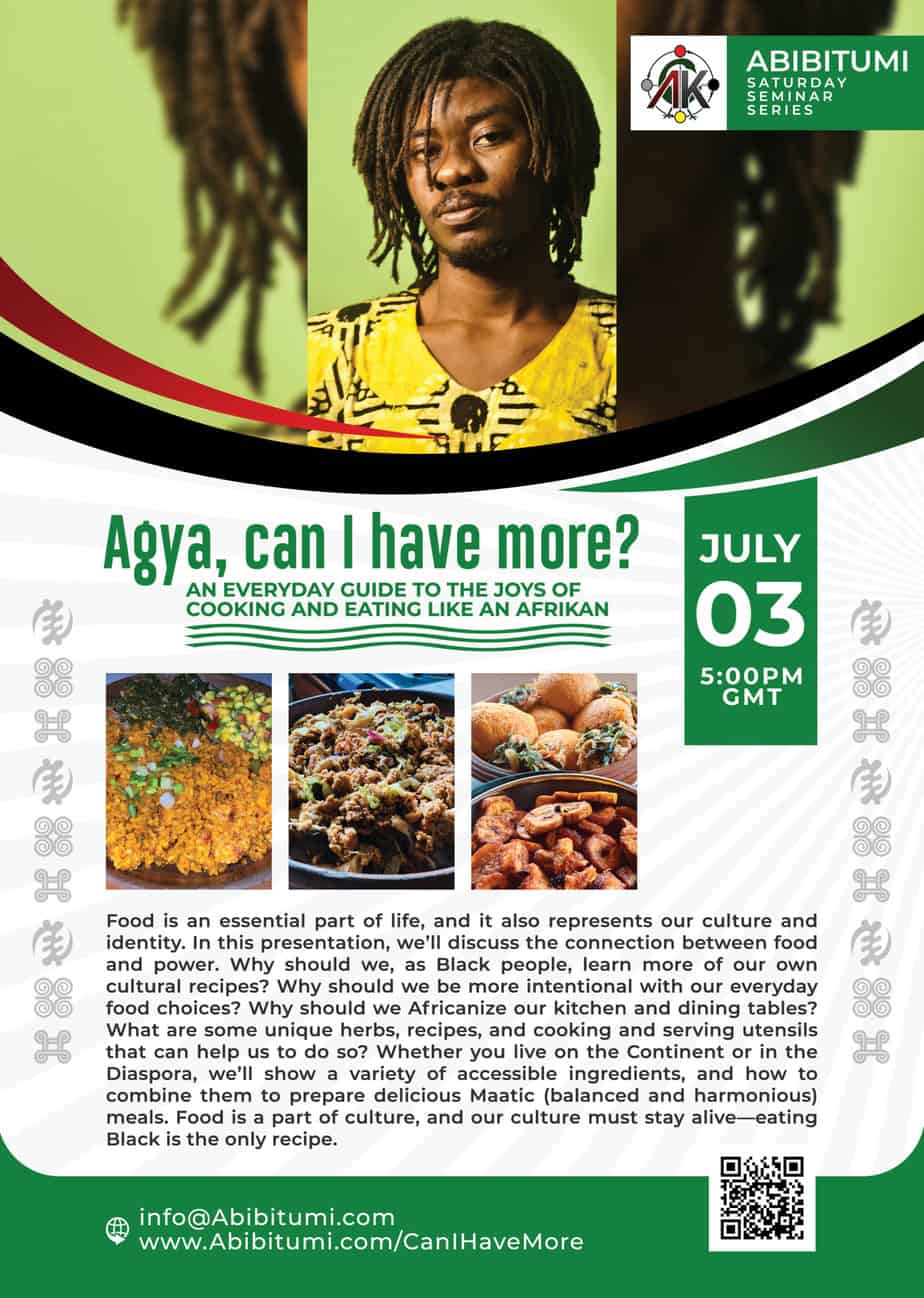
    Cooking and eating like an Afrikan is one of the most powerful and intentional acts of self-determination available to us today. Food is never neutral. Furthermore, every meal we prepare either affirms our culture or erases it. As Afrikan people — whether on the Continent or in the Diaspora — we must reclaim our kitchens as sacred, sovereign spaces. Our food carries memory, medicine, and Ma’at within every ingredient.

    Why Cooking and Eating Like an Afrikan Builds Real Power

    In this electrifying Saturday Seminar, Ɔbenfo Ọbádélé Bakari Kambon — Pan-Afrikan linguist, scholar, and architect of Abibitumi — guides us through the deep connection between food and liberation. He challenges us to Afrikanize our tables with intention. Moreover, he introduces unique herbs, recipes, and serving utensils rooted in Afrikan tradition. Most importantly, he shows how accessible these practices truly are. This is not abstract theory. This is daily, practical Abibifahodie.

    Why should we learn our own cultural recipes? Because knowledge of self begins in the body. In addition, when we cook from our own traditions, we nourish our families with cultural truth. Every deliberate food choice strengthens our collective identity. However, when we abandon our foodways, we hand our health and our heritage to systems that were never built for us. Reclaiming Afrikan cooking is therefore an act of resistance and restoration.

    This seminar delivers Maatic — balanced and harmonious — guidance for real everyday life. Ɔbenfo Kambon presents a rich variety of ingredients available to both Continent and Diaspora communities. As a result, no one is left out of this conversation. Students, parents, elders, and community builders will all find something transformative here. Cooking and eating like an Afrikan has never felt more joyful, more purposeful, or more urgent. Watch this presentation and bring the power of Abibitumi directly to your table.

    Watch / Get it here: Agya, Can I Have More? — Abibitumi Saturday Seminar Series

  • How Language Shapes Power: A Must-Watch Discussion on the Ambiguity of Words

    How Language Shapes Power: A Must-Watch Discussion on the Ambiguity of Words

    power of language

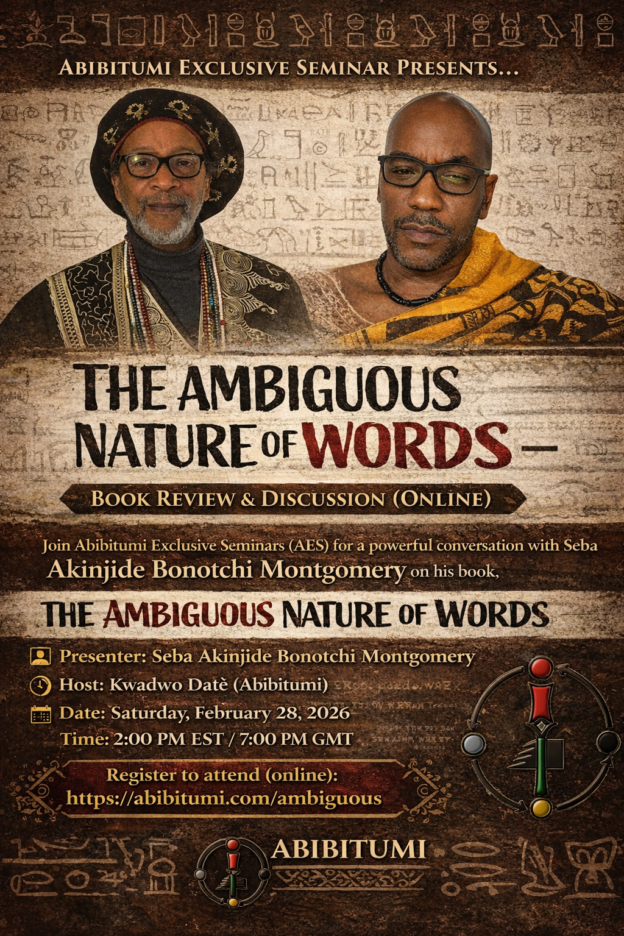
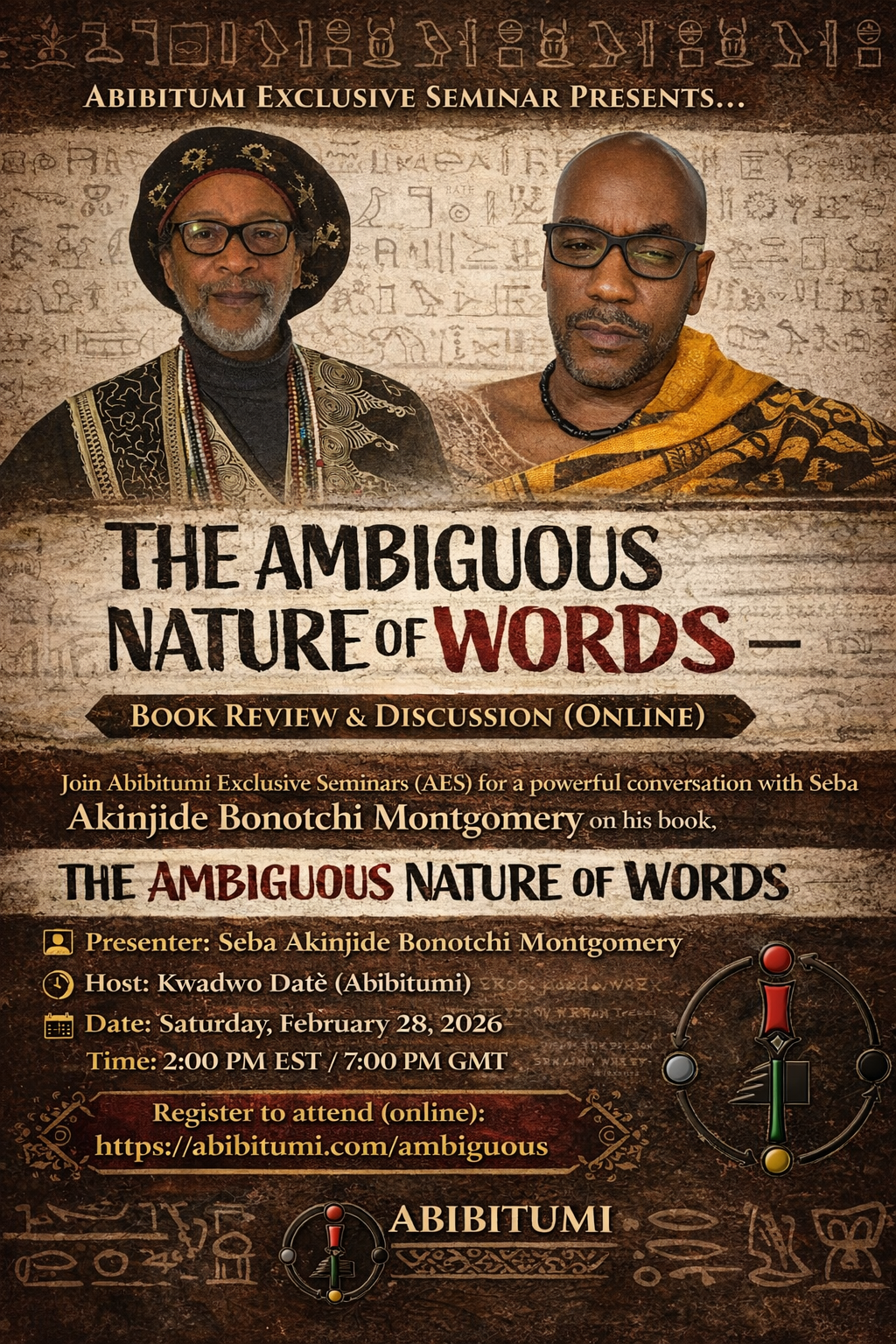
    The power of language is not neutral — it builds worlds, buries truths, and reinforces systems of domination. Abibitumi brings you a rare and intellectually charged dialogue that confronts this reality head-on. Kwadwo of Abibitumi sits in direct conversation with Seba Bonotchi Montgomery, author of The Ambiguous Nature of Words. Together, they unpack how words carry weight far beyond their surface meanings.

    This discussion goes deep. Seba Montgomery examines how language shapes perception, constructs identity, and either fortifies or dismantles systems of power. Furthermore, he challenges us to interrogate the words we use every day. As a result, this conversation becomes more than literary — it becomes a tool for liberation. Most importantly, it speaks directly to Kmtyw people navigating a world where language has long been weaponized against us.

    Why the Power of Language Matters for Abibifahodie

    Abibifahodie — Black Liberation — demands that we command our own narratives. Ɔbenfo Ọbádélé Bakari Kambon, world-renowned Pan-Kmtyw linguist and architect of Abibitumi, has built this entire platform on that foundation. In addition, Abibitumi consistently elevates voices like Seba Montgomery’s precisely because linguistic sovereignty is liberation work. Words name our reality. However, when we do not control that naming, others define us on their terms. This discussion arms you with clarity, critical thinking, and renewed respect for the language we speak and study.

    This recording belongs in your personal liberation library. Scholars, students, community builders, and parents will all find something essential here. The conversation is honest, rigorous, and unapologetically centered on Kmtyw people and our collective future. Furthermore, the power of language comes alive in this exchange — not as an abstract concept, but as a living, breathing force. Do not miss it. Watch and own this discussion today.

    Watch / Get it here: https://stg-abibitumi-rpd-3fbq.ue1.rapydapps.cloud/product/book-discussion-the-ambiguous-nature-of-words/

  • The Danger of a Single Story: What Ancient Sources Reveal About Israel and Black People

    The Danger of a Single Story: What Ancient Sources Reveal About Israel and Black People

    Israel and Black people

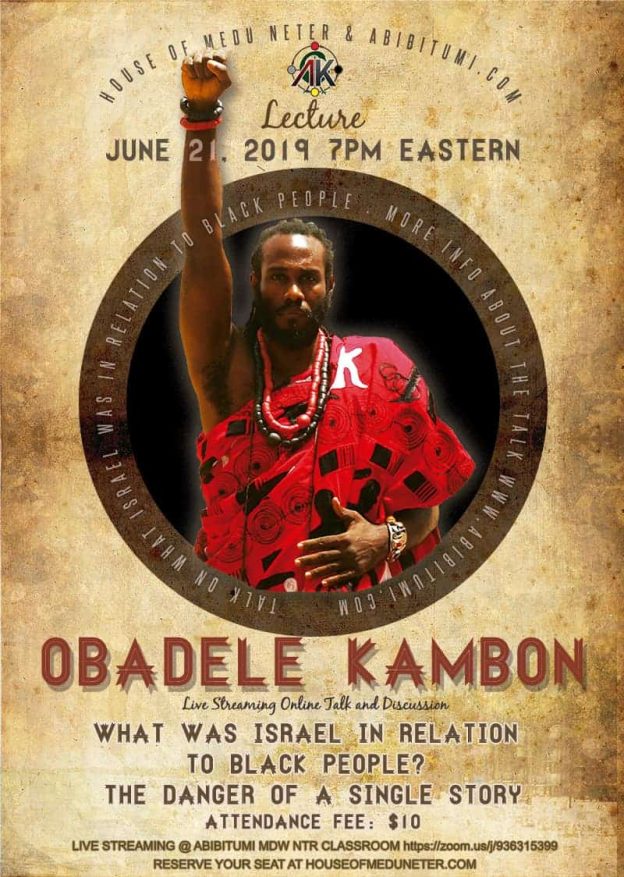
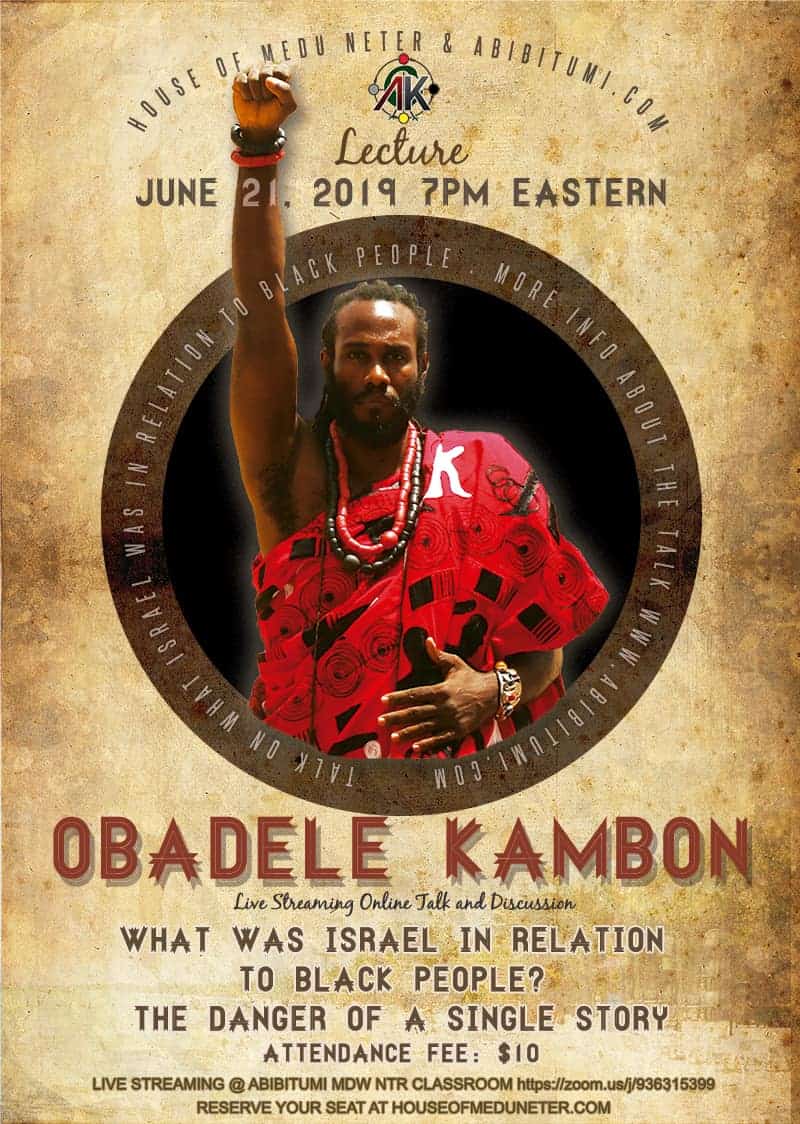
    The relationship between Israel and Black people is not defined by one story — and ancient historical sources prove it. For too long, a single biblical narrative has shaped how Kmtyw understand a critical chapter of their own history. However, primary texts from the ancient and classical world tell a far more complex and empowering story. That story centers Kmtyw — Black people, the Ancient Egyptians — as sovereign agents who acted decisively in their own defense.

    Ɔbenfo Ọbádélé Bakari Kambon, world-renowned Pan-Kmtyw linguist and architect of Abibitumi, delivers this truth with precision and power. In this landmark lecture, he draws directly from ancient and classical historical sources. Furthermore, he connects the expulsion of the Hyksos to the Exodus narrative in ways that fundamentally challenge the dominant account. As a result, viewers walk away with a richer, more grounded understanding of Kmtyw history. This is not revisionism — this is restoration.

    Reclaiming Kmtyw History: Beyond the Single Story of Israel and Black People

    Multiple ancient accounts document how the Hyksos expulsion unfolded. In addition, these accounts differ significantly from the story most people know. Ɔbenfo Kambon examines these differences with scholarly rigor and Afrikan-centered purpose. Most importantly, he equips students, scholars, parents, and community builders with the critical tools to research primary sources themselves. This lecture runs 2 hours and 18 minutes. It includes 89 detailed slides. Together, they form a comprehensive and liberatory educational resource rooted in Ma’at.

    Abibifahodie demands that Kmtyw people reclaim their historical narrative — fully and without apology. Therefore, this lecture is not optional enrichment. It is essential study. The danger of a single story is real, and its consequences shape how Black people see themselves and their relationship to power. Furthermore, transcending that single story is an act of liberation. Invest in your knowledge. Invest in your people. Get access now and study the full lecture with all 89 slides for just $20.

    👉 Watch / Get it here: https://stg-abibitumi-rpd-3fbq.ue1.rapydapps.cloud/product/what-was-israel-in-relation-to-black-people-the-danger-of-a-single-story-2/

  • Building Liberation: How Kmtyw Architecture Reflects the Black Worldview

    Building Liberation: How Kmtyw Architecture Reflects the Black Worldview

    Kmtyw worldview architecture

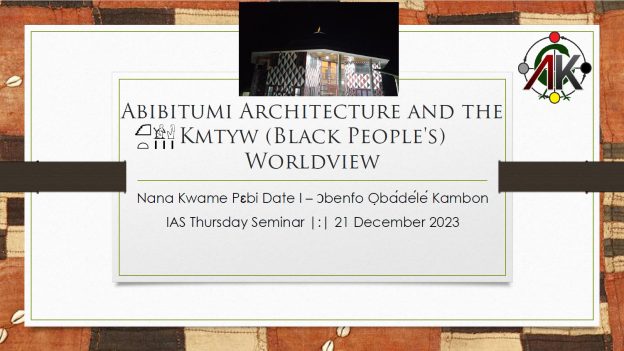
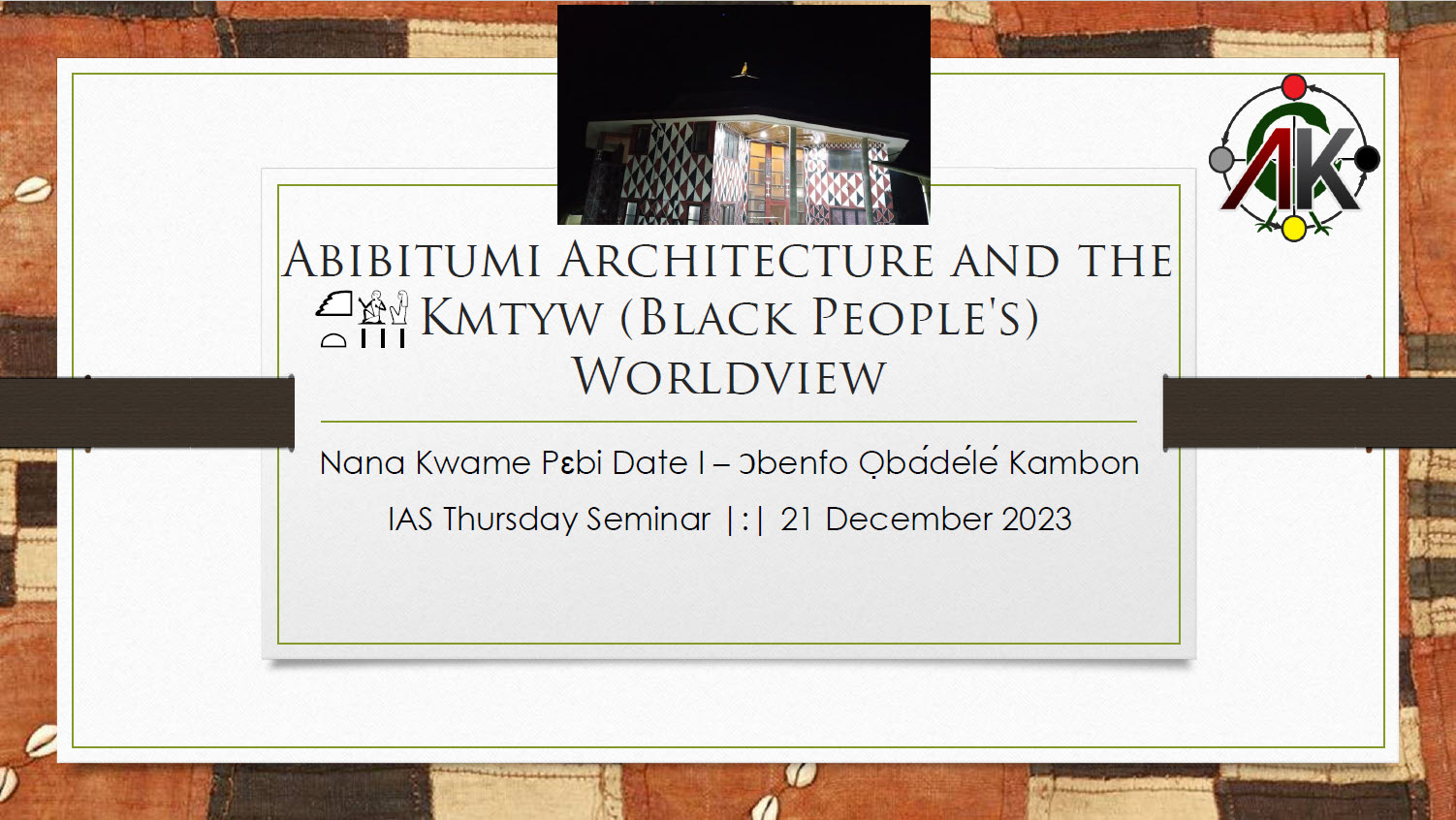
    Kmtyw worldview architecture is not theory — it is living, breathing practice. Ɔbenfo Ọbádélé Bakari Kambon has done what few scholars dare: he built his cosmology into stone, earth, and wood. This landmark lecture reveals how Abibitumi Ahemfie — the Abibitumi Palace — was designed as a family-based, intergenerational residential and work space. Furthermore, every element of the structure carries intentional meaning rooted in classical Kmt knowledge systems.

    The building draws from creation stories across ḫmnw, iwnw, mn nfr, and wꜣst. In addition, it incorporates cosmological wisdom from the Dogon, Bakôngo, Basongye, Bambara, Fɔn, and Kasena-Nankana peoples. As a result, the structure becomes a monument to Kmtyw continuity — not a museum piece, but a living home. Earth blocks, stone floors, wood ceilings, and solar orientation all serve specific etiological and ontological purposes. Most importantly, the exclusive reliance on Rꜥ — the sun — as an energy source reflects deep alignment with ancestral principles.

    How Ɔbenfo Kambon Brings the Kmtyw Worldview Architecture to Life

    Significant numbers are woven into the structure through geometric shapes and bomborisi painting. These are not decorations — they are cosmological statements. Ɔbenfo Ọbádélé Kambon treats architecture as a form of scholarship and liberation praxis. Therefore, every design choice answers to Ma’at and to the ancestors. This lecture makes that entire process visible, accessible, and teachable to the broader Kmtyw community. Furthermore, it demonstrates that Abibifahodie requires us to build differently — physically, intellectually, and spiritually.

    This presentation is essential for scholars, students, architects, and community builders committed to Abibifahodie. However, it speaks equally to parents and families who want their living spaces to reflect who they truly are. Ɔbenfo Kambon’s work through Abibitumi continues to set the standard for Pan-Afrikan education grounded in ancestral truth. As a result, this lecture is not simply a purchase — it is an investment in how we understand, build, and inhabit our world. Watch it, study it, and build from it.

    Watch / Get it here: Abibitumi Architecture and the Kmtyw Worldview — Ɔbenfo Ọbádélé Kambon

  • W.E.B. Du Bois and the Fight for Black Human Rights — A Pan-Afrikan Perspective

    W.E.B. Du Bois and the Fight for Black Human Rights — A Pan-Afrikan Perspective

    Du Bois human rights

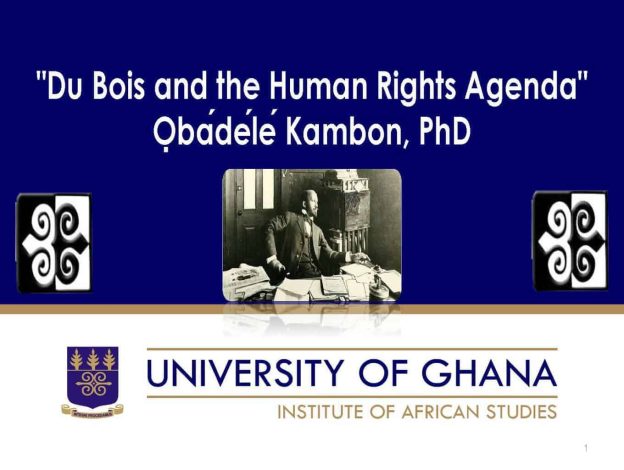
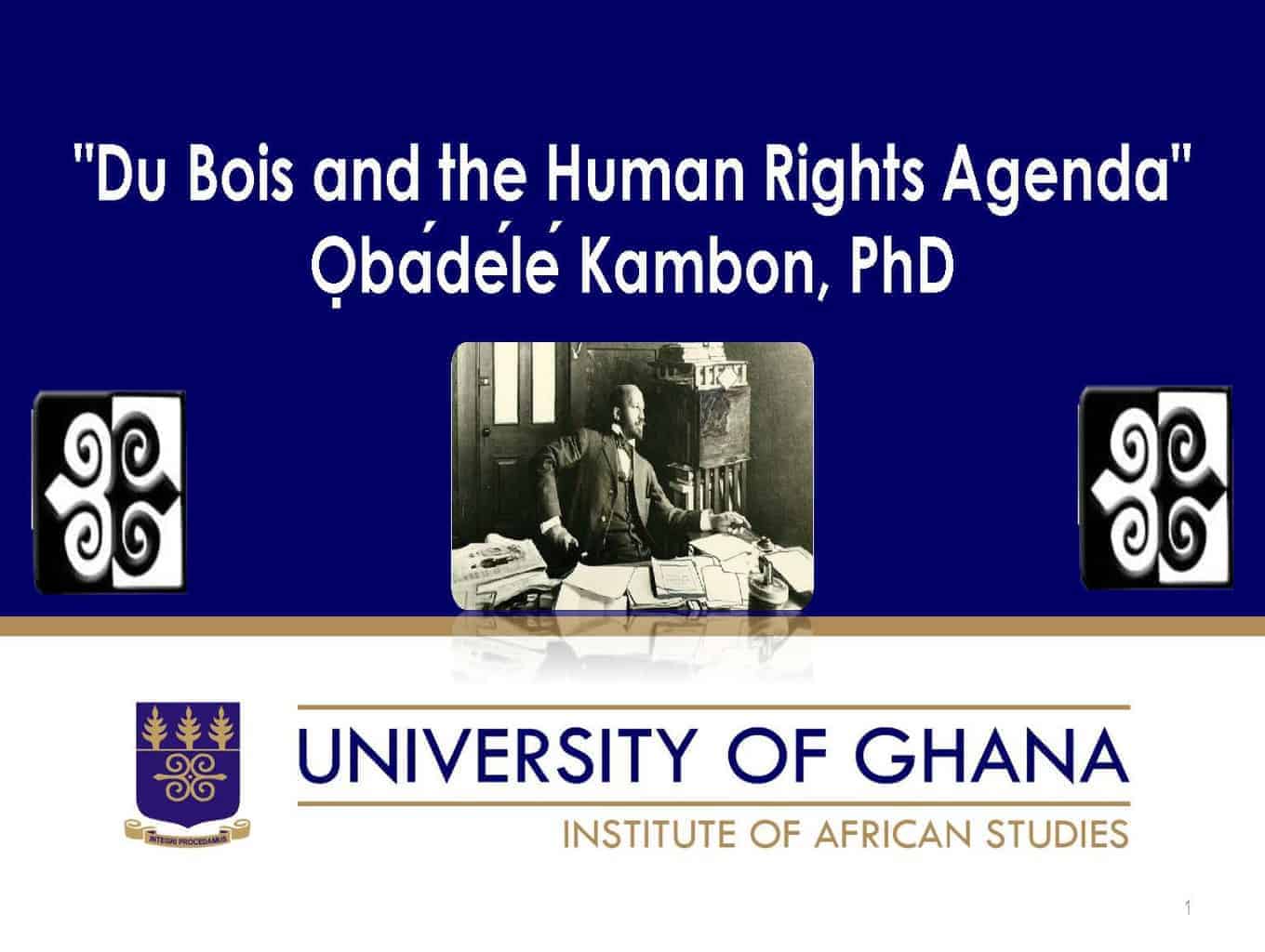
    Du Bois human rights scholarship remains one of the most urgent intellectual inheritances Kmtyw people carry forward today. W.E.B. Du Bois did not simply theorize — he organized, agitated, and demanded full humanity for Black people on a global stage. His vision reached far beyond reform. It was a declaration of Abibifahodie. Furthermore, understanding that vision through a Pan-Afrikan lens transforms how we apply it now.

    Ɔbenfo Ọbádélé Bakari Kambon — world-renowned Pan-Kmtyw linguist and architect of Abibitumi — delivers exactly that transformation in this landmark lecture. Recorded at the 150th Anniversary Symposium honoring Du Bois, this 35-minute presentation cuts through distortion and centers Kmtyw liberation. Ɔbenfo Kambon does not merely commemorate Du Bois. Instead, he excavates the radical human rights agenda that mainstream academia consistently buries. As a result, Kmtyw scholars and community builders gain a sharper, more honest framework for action.

    Why Ɔbenfo Kambon’s Lecture on Du Bois Human Rights Matters Now

    This is not a surface-level tribute. Ɔbenfo Kambon grounds Du Bois’s human rights framework in the living struggle for Black liberation. He connects historical Pan-Afrikan thought to present-day conditions Kmtyw people face worldwide. Moreover, the included 20-slide secured PDF PowerPoint gives you a study tool you can return to again and again. Together, the video and slides form a complete resource. In addition, the content speaks directly to scholars, students, parents, and every Kmtyw person building toward freedom.

    This combo bundle — video stream plus downloadable slides — is available now for just $20. Most importantly, every purchase directly supports Abibitumi and the broader mission of Pan-Kmtyw education. Do not wait for institutions to teach you this. Kmtyw people must build and sustain their own knowledge infrastructure. This lecture is one powerful block in that foundation. Watch it, study it, share it with your community.

    Watch the lecture and download the slides here: https://stg-abibitumi-rpd-3fbq.ue1.rapydapps.cloud/product/du-bois-and-the-human-rights-agenda-150th-anniversary-symposium/