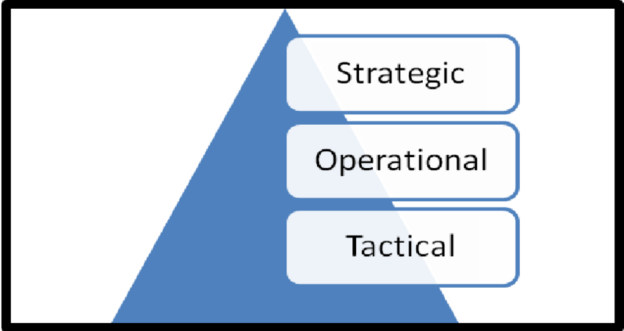
Figure 1. Levels of Warfare
This graphic shows the levels of war as a distinct hierarchy with marginally overlapping areas between the strategic and the operational and between the tactical and the operational. In this hierarchical structure, there is no overlap between the tactical and the strategic as suggested by the description in Joint Publication 3-0, Joint Operations. (Figure from Joint Publication 1, Doctrine for the Armed Forces of the United States)
Author: Kalanfa
-
Levels of Warfare
-

Military Strategy – its Goals – Part 1
Farafinna is being attacked in various ways, such as: Ideologically, Institutionally, Cross-boarder crimes and killings , Media Infiltration, and Educationally. In order to combat this a nation must go through steps before committing troops to neutralize what threatens social cohesion. Ideally a commander chooses a course of action that minimizes damage to his troops while maximizing damage to the threat and to accomplish this, there is Military Strategy and its goals.
What is the goal of Military Strategy?
-
Assess all developing, real, possible, potential, and predicted threats
-
Determine realistic, sustainable, and viable concepts and visions for deterring conflict
-
Influence and shape the national, regional, continental, and international political and security or military environments
-
Conduct actions to defend against, destroy, degrade, or neutralize any threat the nation may face
Assess then determine, Influence then conduct; All of these must be combined so that realistic outcomes are accomplished.
Within the military strategy there are two types:
National and Operational and they work together to maintain a nations social cohesion.
What exactly are National and Operational Military Strategies?
The goals of National strategies are:
-
Assess all threats
-
Deter and prevent conflict
-
Influence and shape environments
-
Destroy and neutralize threats
Operational strategy defined by author Eeben Barlow, is “ the ‘strategic intent’ of a campaign or theatre commander, defined as a campaign strategy or ‘theatre design’. It must allow for the identification of operational objectives and the development of numerous options for striking and annihilating the enemy or threat. The state initiates operational level strategy within a defined area of anticipated operations when required.”
In his book on mobile warfare, Col Roland De Vries listed major areas that are needed to develop operational level military strategies, they are as follows:
-
The threats and how they are deployed and postured
-
The constraints on military action in terms of terrain, climatic conditions, access routes, obstacles,infrastructure, rules of engagement, population distribution, time, and distance (several of these form part of the assessment of the operational environment)
-
The aims, objectives, and focus of potential enemy(s) or threats
-
The state’s national goals and objectives
-
The state’s position with regard to allies, international relations, and regional activities
-
The regional military balance and the resources and capabilities available to the state
-
The manpower available to the state
-
The national consciousness and the will of the government and the populace
-
The importance and advantages of a proactive approach
-
The use of the media in enhancing and supporting the will of the populace and positively influencing the region and the continent
The above allows the military planner to plan and acquire the appropriate forces in order to see a military operation to successful completion.
It becomes apparent that just kicking out the “bad guys” is not so simple as it is made to appear in Hollywood. There are hours of planning, cross planning and looking at each of those plans to determine what combinations of events would make it fail and which combination of events would allow for success before committing troops and supplies to the conflict zone.
Understanding the above allows one to start seeing the big picture and what a nation’s commander must do before committing troops. You should consider these points as you read current news on conflict zones within Farafinna.
Source: Composite Warfare: The Conduct of Successful Ground Force Operations in Africa.
-
-

War and the Enemy
What is the enemy? Who is the enemy? How is the enemy defined within the context of a military campaign?
An enemy could be defined under the following areas:
- Armed forces of a belligerent or hostile government
- Armed anti-government forces
- Dissidents
- 5th columnists
- Revolutionaries and their supporters
- Well armed criminal groups
As one can see the lines are not clearly defined, one spilling into the other. What starts off as well armed criminal groups turns into citizens/dissidents unhappy with the current government mobilizing themselves with anti-government forces. Note: one concrete responsibility of a leader is to maintain social cohesion- without it a society breaks down going towards internal chaos.
What does a state do when faced with these kinds of enemies?
Is it a swift campaign or a protracted war?
There is an saying “You must not fight too often with one enemy or you will teach him all your art of war” and this goes doubly for those fighting both internal and external enemies. Once your enemy has learned what you do and how you do it then the situation is either evened out leading the table being turned and the enemy taking lead. This leads us to the next section which looks at factors that motivate people to becoming an enemy of the state.
Contributing factors that Motivate the enemy
- Religious Extremism
- Radical Ideology
- Ethnic / Cultural Fanaticism
- Xenophobia
- Criminal desire
- Various political and Economic thought
- Superstition—yes, this due to consistent witch hunting, leading to hanging and violence upon those labeled as witches without due process. The acts going unchecked can allow affected families to join those who desire harm to the state.
- The Geneva Convention protocols are ignored simply cause those acting against the state do not recognize much less accept them and in some cases are not aware they exist, thus, They will play by their own rules.
Media usage by the enemy
Due to consistent use of social media, the enemy has an easier time passing around information quickly making it difficult for the general population to verify the information being passed around. This is some cases leads to the state shutting down all social media to cut short the issue.
Part of a successful propaganda campaign is to tell the truth mix with lies. Note example below from current social media in July 2024:
Kamala Harris Facts:
- She was raised in Canada, not California
- She is not African-American, her mother is East-Indian and her father is Bahamian
- She started her political career by having an affair with a married man and slept her way up the ladder
- She in-imprisoned over 2000 Blacks for simple marijuana possession while she was California AG
- By her own father’s admission, she is a descendant of one of Hamilton Brown’s, one of the largest slave owners/traders in Bahamian history
Can you figure out what was changed and what is accurate? If not, then consider how this is done when you have a population with little to no means of verifying the information being fed to them. This is how the enemy can utilize social media to gain supporters.
“To underestimate the enemy is foolish, and to overestimate him a mistake.”
The above example make it difficult to define the enemy and when it becomes difficult to define the enemy it become difficult to apply the appropriate measure to stop them. Those in the war cabinet have much to consider when assessing an enemy and these assessment can be categorized as:
- Political level
- Intelligence level
- Military level
- Law enforcement level
- Populace level
- Economic level
- Perception level
- Each one of the level requires planning and a different set of tactics so that the enemy can be neutralized avoiding a break down in society.
- In conclusion: When we see Farafin armies mobilizing troops and assets, it implies they have gone through these steps to before committing soldiers on the ground.
Source: Composite Warfare: The Conduct of Successful Ground Force Operations in Africa.
-

A general view on the hierarchy of war
Picking up from my last entry. Let us review the following areas:
The general functions of the armed forces:
- To continually assess the politico-military environment and the real, potential, or predicted threats against the state
What are these threats? Environmental? Factions within the country? Rogue dissidents that come for pay back?
Let us reason on real threats and perceived threats by using (interests and means)
The nation and its commander must gather accurate data to assess threats and then based on the threats they must have the means to implement a plan to disrupt and neutralize the threats.
This can be currently seen with Islamic militant groups in the Sahara. They have the interests, which is religious and the means to incite and cause disorder within a geographic area.
Armed forces must address this to able to accurately fight them.
The remainder of the areas are straight forward and logical.
- To deter hostile forces that aspire to collapse and replace the government or seize areas that may provide economic or political advantages
- To contain hostile forces that have commenced offensives against the government
- To neutralize hostile forces that pose a direct armed threat to the state and the government
- To degrade the command and control structures of hostile forces
- To exhaust hostile forces
- To annihilate hostile force
Which brings us to a hierarchy of war.
Hierarchy of war
This is defined as a specific hierarchy of decision making that takes place before troops are committed to a mission.
- National Strategy
- National Security Strategy
- National Military strategy
- Campaign Strategy
- Operational Designs
- Operating Environment
In order for the military to be effective the nation must have an established a National Strategy about how it wants to position itself over the short, medium and long term. It must define the role that the government intends the state to play domestically, regionally and internationally.
The National security Strategy supports the National Strategy, which allows the formation of a National Security Strategy.
As you can see one build upon the other until all areas are defined.
One can start to see contributing factors as to why many of our Farafinna nations have issues with maintaining internal peace.
One of those reasons is that the current nations were not set up in a way to fulfill 100% nationhood from those that seek its demise, thus, what you end of up having is an armed force that serves external interests in a way that protects the economic viability of resources being taken out the country to its external enemies.
Currently, we can see a massive change in nations such as Mali, Niger, Burkina Faso, and CAF. They all have to define a national strategy that suits their needs and then follow through with a national security strategy which what one is seeing today with an military alliance between them to seek out those that disrupt and bring disorder on account of external interests.
-

Purpose of armed forces in Farafinna
What are Farafinna armed forces doing to decrease security issues?
Let us first define this and reason from there.
The general functions of the armed forces:
- To continually assess the politico-military environment and the real, potential, or predicted threats
against the state - To deter hostile forces that aspire to collapse and replace the government or seize areas that may
provide economic or political advantages - To contain hostile forces that have commenced offensives against the government
- To neutralize hostile forces that pose a direct armed threat to the state and the government
- To degrade the command and control structures of hostile forces
- To exhaust hostile forces
- To annihilate hostile forces
Establishing the context brings about several questions:
To what degree is each army participating based on the above parameters?
Do they have the means to do so?
What constitutes a hostile force?
What are the predicted threats that a state must consider before, during and after taking armed action?
These entries will be part of a mini-series on armed forces within Farafinna and what they have to consider that is unique to the continent.
- To continually assess the politico-military environment and the real, potential, or predicted threats